
Introduction
The decision to commit capital towards a conventional office lease has become one of the more contentious deliberations facing established SME founders and country managers across the Asia-Pacific region.
Industry research consistently indicates that fitting out a bare-shell unit can absorb between fifty thousand and two hundred thousand Singapore dollars before the first invoice is even raised, an outlay that grows progressively harder to justify when commercial leases extend for thirty-six months or longer in markets that rarely sit still for that duration.

For the executive responsible for stewarding both balance sheet integrity and operational momentum, the calculus has shifted considerably.
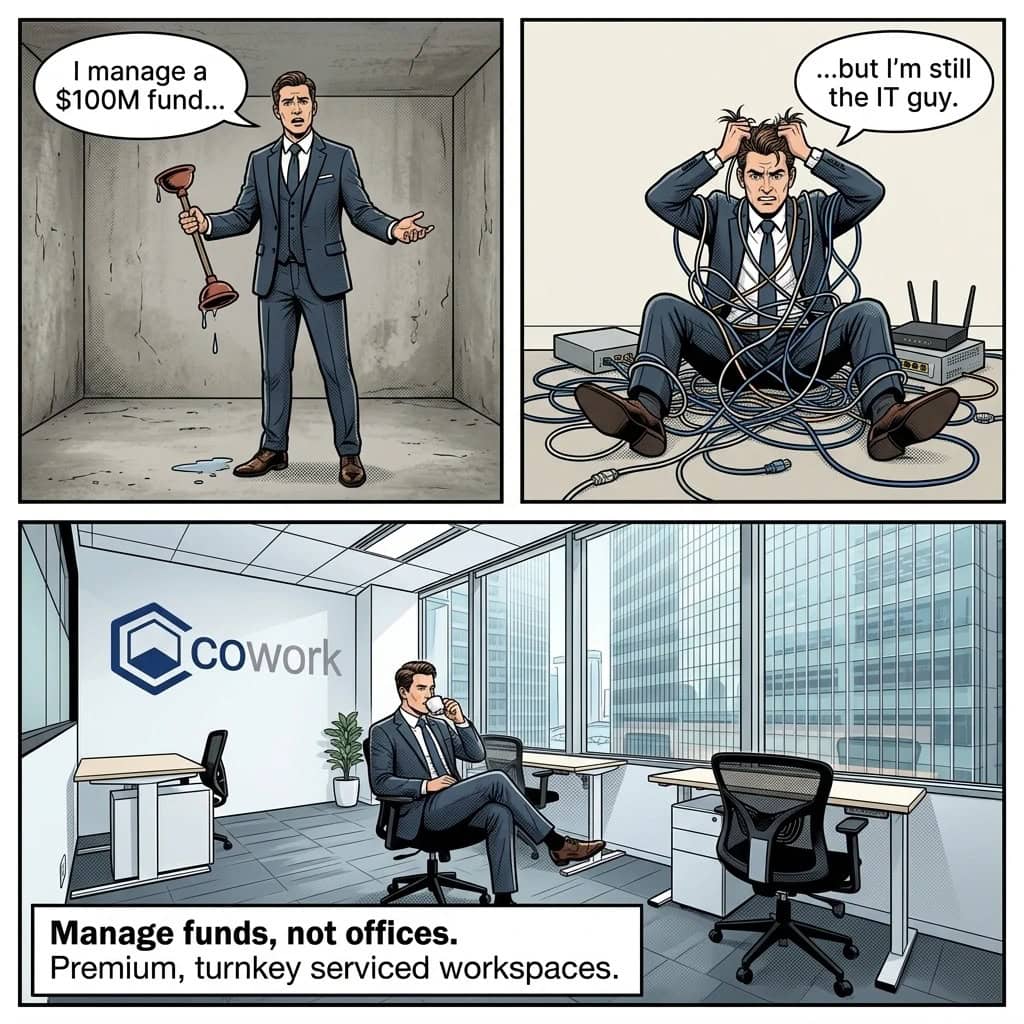
Our serviced offices at 6 raffles quay are engineered with enterprise-grade Cat 6A network infrastructure, offer a markedly different proposition for serviced office IT services setup. Rather than diverting working capital towards depreciating fit-outs, server rooms, and structured cabling that will need to be torn out at the end of a tenancy, our serviced office model permits the modern executive to retain agility while projecting the prestige of a Central Business District address.
The administrative burden of managing utility providers, internet service contracts, cleaning rosters, and reception staff is consolidated into a single line item, freeing the senior team to concentrate on revenue-generating priorities.
This guide is intended for the SME director, managing partner, or country manager who recognises that a serviced office is no longer simply a temporary expedient.
It has matured into a strategic platform for businesses seeking stability without rigidity, prestige without capital expenditure, and scalability without renegotiation. The following sections examine the technological backbone that distinguishes a credible serviced office headquarters from a glorified hot-desking arrangement, with particular attention to the IT services that warrant deployment within a Cat 6A-enabled environment.
Why Our Cat 6A Network Infrastructure Matters for Professional Services
Before turning to the specific services worth installing, it is worth pausing to appreciate why the underlying cabling specification matters at all. Many businesses assume that all network infrastructure is broadly equivalent, an assumption that tends to dissolve the moment a video conference stutters during a critical client pitch or a file transfer to overseas counsel slows to a crawl during a closing.
Cat 6A cabling is rated to support transmission speeds of up to 10 Gigabits per second across distances of one hundred metres, with substantially improved shielding against electromagnetic interference compared with its Cat 5e or Cat 6 predecessors. For a legal practice handling encrypted document exchanges, a recruitment firm operating cloud-based applicant tracking systems, or a technology consultancy running development environments alongside customer-facing demonstrations, this headroom is not academic. It is the difference between infrastructure that supports the business as it grows and infrastructure that becomes a constraint within eighteen months.
Our serviced offices have invested in Cat 6A throughout the premises and have, in effect, future-proofed the digital backbone on behalf of every member. The capital cost of that investment, which would otherwise sit on the SME's books, has already been absorbed on your behalf. What remains is the deployment of services that capitalise on this foundation.
The following services represent the considered recommendations drawn from years of supporting professional services members within our serviced offices, observing which configurations consistently deliver stable, scalable operations. They are presented in order of typical priority, although the optimal sequence will vary depending on the nature of the business.
1. Traders Station Setup
For firms involved in financial services, commodities, foreign exchange, or any treasury-adjacent activity, a properly configured traders station is non-negotiable. A traders station typically refers to a multi-monitor workstation, often arranged in a four-screen or six-screen configuration, capable of running market data terminals, order management systems, and analytical platforms simultaneously without latency.
Within our Cat 6A-enabled serviced offices, a traders station benefits from the low-latency wired connectivity that wireless networks simply cannot match for time-sensitive applications.
The dedicated network point ensures that price feeds and execution platforms remain consistently responsive, even when other members on the floor are conducting bandwidth-intensive activities. For those running Bloomberg, Refinitiv, or proprietary trading platforms, this stability translates directly into operational confidence.
The setup process generally encompasses ergonomic monitor mounting, dedicated power circuits to prevent disruption from neighbouring electrical loads, and uninterruptible power supply integration where the trading function warrants such redundancy. Our serviced offices have experience supporting financial services members and have encountered these requirements before, allowing us to accommodate them without protracted discussions.
2. File Server and Network Attached Storage
The question of where to store sensitive client documents, transaction records, and intellectual property is one that quietly preoccupies most professional services directors. Public cloud storage, while convenient, raises questions of data sovereignty, jurisdictional exposure, and ongoing subscription costs that compound over time. A locally hosted file server or Network Attached Storage device, deployed within the secure environment of our serviced offices and accessed over Cat 6A cabling, offers an alternative that some firms find more aligned with their compliance posture.
A NAS unit configured with appropriate redundancy, typically through a RAID array, provides centralised storage that staff can access at gigabit speeds without sending data to external servers. This is particularly valuable for legal teams handling large discovery files, recruitment firms maintaining extensive candidate libraries, and consultancies working with substantial datasets. The combination of local performance and the option for encrypted off-site backup gives the business both speed and resilience.
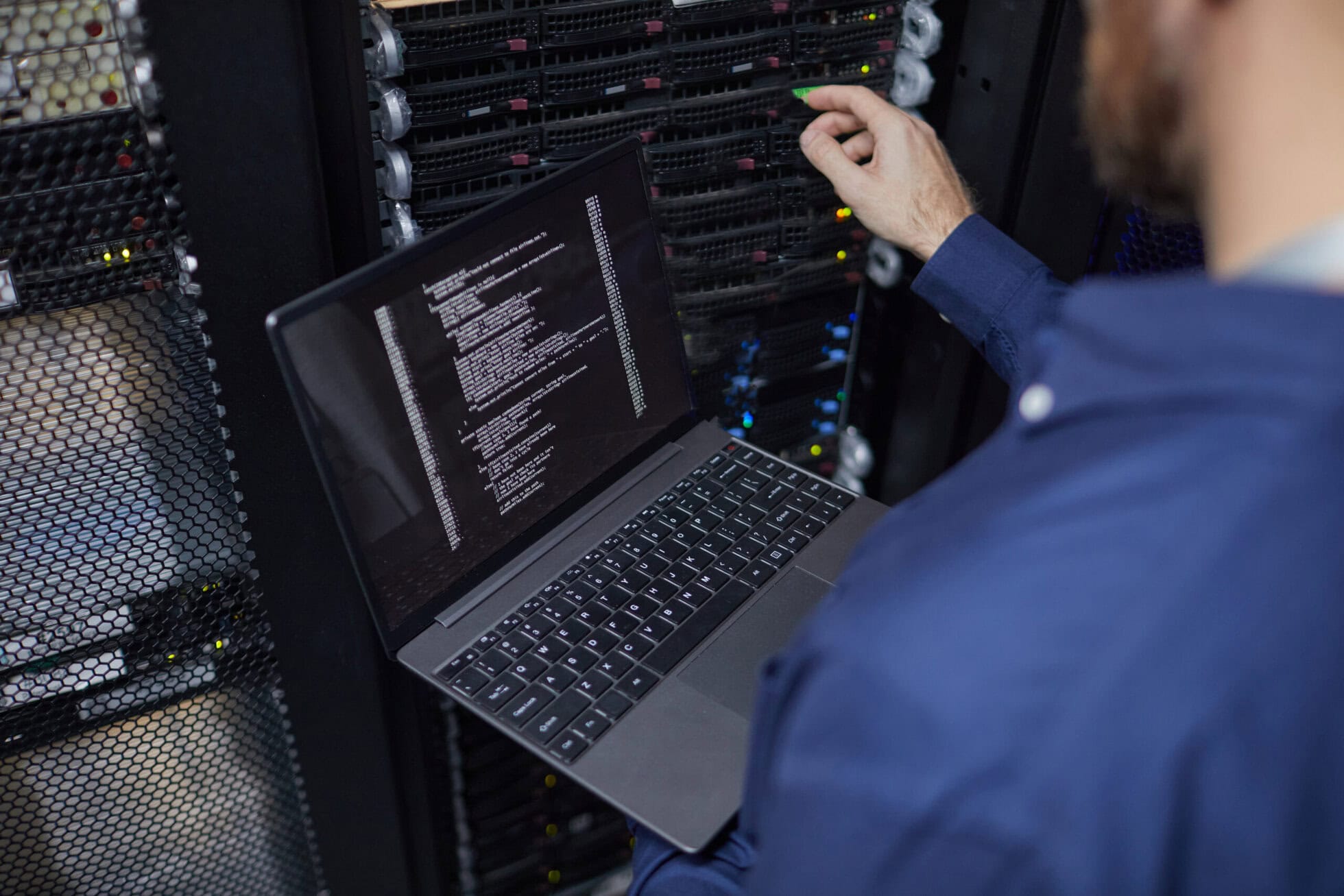
Our role here is typically to provide the rack space (if required), power, cooling, and network connectivity required to host the device securely.
The business retains full control over the data itself, which addresses one of the more persistent concerns about workspace solutions: the perception that flexibility necessarily entails compromise on control.
3. Dedicated Internet Connection
Shared internet connections, even when nominally fast, can become a source of frustration during peak business hours. A dedicated internet connection, sometimes referred to as a leased line or symmetrical fibre service, ensures that the business's bandwidth is reserved exclusively for its own use, with consistent upload and download speeds that do not fluctuate based on neighbouring activity.
For a director negotiating a transaction over video conference, conducting a remote arbitration hearing, or presenting to a board of directors located across multiple time zones, the assurance of a dedicated connection is meaningful. Service-level agreements typically guarantee uptime in the range of ninety-nine point nine per cent, with defined response times for any disruption. The cost is higher than a shared service, but the stability often justifies the premium for client-facing operations.
Our serviced offices can typically arrange a dedicated circuit alongside the standard shared service, allowing the business to route critical traffic over the dedicated link while general office activity continues on the communal connection. This hybrid approach delivers performance where it matters without unnecessary expenditure on bandwidth that would otherwise sit idle.
4. VoIP Telephone System
The traditional desk telephone has not disappeared, but its underlying technology has evolved considerably. A Voice over Internet Protocol system replaces conventional copper-line telephony with digital voice traffic carried over the same network infrastructure that supports data traffic. For a firm operating across multiple jurisdictions, or one that anticipates expanding to new markets within the next eighteen to twenty-four months, the advantages are difficult to dismiss.
VoIP allows the business to maintain a single corporate number that can be answered from any location, route calls intelligently based on caller identification or time of day, and integrate directly with customer relationship management platforms to log interactions automatically. Call recording, voicemail-to-email transcription, and conference bridging are typically included as standard features rather than premium add-ons.
When deployed over Cat 6A cabling with appropriate Quality of Service configuration, VoIP delivers call clarity that is often superior to traditional telephony. The line items for international calling tend to fall substantially as well, given that VoIP traffic is treated as data rather than carrier-routed voice. For country managers with regular communication needs across the Asia-Pacific region, the cost differential can be considerable over the course of a year.
5. Dedicated Printers and Multifunction Devices
It might seem incongruous to dwell on printing in an article concerned with digital infrastructure, but the printer remains a stubbornly important element of professional services workflow. Document execution, court filings, certified true copies, and physical client deliverables continue to require reliable, secure, and appropriately specified printing capabilities.
A dedicated multifunction device, networked over Cat 6A and configured with secure print release, ensures that confidential documents do not sit unattended in a communal output tray where they might be observed or collected by the wrong individual. Authentication via personal identification number, badge, or mobile application releases the document only when the authorised user is present at the device. For firms handling sensitive matters, this is a meaningful operational safeguard.
The choice between leasing a dedicated device and using the shared printing facilities provided within our serviced offices is one that each business must weigh against its own confidentiality requirements and printing volumes. For higher-volume or higher-sensitivity operations, the dedicated approach typically pays for itself through reduced waste, faster throughput, and tighter control over document flow.
6. CCTV and Access Control Integration
Physical security, while not strictly an IT service, has become inseparable from digital infrastructure in modern serviced offices. Closed-circuit television systems are now almost universally deployed as Internet Protocol cameras, transmitting high-definition footage over the network and storing it on dedicated network video recorders or cloud-based platforms.
For a business with its own enclosed suite within our serviced offices, the option to deploy supplementary cameras within reception areas, server rooms, or document storage areas provides an additional layer of assurance that complements the building-wide security infrastructure. Access control systems, similarly networked, can record entry and exit events for staff and visitors, providing an audit trail that may be relevant for compliance frameworks or internal governance.
Cat 6A cabling supports both the bandwidth required for high-resolution video feeds and the Power over Ethernet capability that allows cameras and access control readers to operate without separate power supplies. This dramatically simplifies deployment and reduces the visual clutter associated with traditional security installations.
Frequently Asked Questions
1. What is the difference between a serviced office and a co-working space?
Our serviced offices provide a private, lockable suite with dedicated furniture, telephony, and IT infrastructure, typically secured under a flexible licence agreement. Our co-working space generally offers a shared suite with dedicated tables, suited to individual professionals or very small teams.
2. How quickly can a serviced office be ready for occupation?
Our serviced offices can be configured and ready for move-in within twenty-four to seventy-two hours of agreement signing, given that the core infrastructure is already in place. This stands in contrast to conventional fit-outs, which routinely require eight to sixteen weeks.
3. Can I install my own IT equipment in a serviced office?
Yes, our serviced offices routinely accommodate member-supplied equipment such as servers, NAS devices, traders stations, and specialised peripherals. We can provide the network connectivity, power, and rack space required to integrate the equipment securely. Fees apply.
4. Is the internet connection in a serviced office secure enough for legal or financial work?
Our serviced offices provide enterprise-grade firewalling, segmented networks for individual members, and the option to layer dedicated leased lines for additional isolation. Businesses in regulated industries should confirm specific arrangements with our team before commitment.
5. What does Cat 6A cabling actually mean for my business?
Cat 6A is a network cabling standard supporting transmission speeds up to ten Gigabits per second over one hundred metres, with shielding that minimises interference. In practical terms, it provides a substantial performance ceiling that supports growing data demands without future recabling.
6. Can I scale my serviced office space up or down as my team changes?
Flexibility is one of the principal advantages of our serviced office model. We permit members to expand into adjoining suites, contract to smaller configurations, or relocate within the same building as headcount changes, typically with notice periods measured in weeks rather than years.
7. Are utility bills, cleaning, and reception included in the monthly fee?
In a fully serviced arrangement, the standard monthly licence fee typically covers electricity, air conditioning, cleaning, building security, reception services, and basic internet connectivity. Telephone usage, dedicated bandwidth, printing volumes above a threshold, and meeting room time may be charged separately.
8. What about confidentiality and privacy for client meetings?
A suite within our serviced offices is fully enclosed with lockable doors, providing the same level of physical privacy as a conventional office. Reception staff are trained in confidentiality protocols, and meeting rooms can be reserved for private discussions with appropriate soundproofing.
9. How does a serviced office support business stability during market volatility?
By converting fixed capital expenditure into a predictable monthly operating expense, our serviced office model permits the business to adjust its footprint in response to market conditions without absorbing sunk costs in fit-outs or breaking long-term leases.
10. What IT support is typically available in a serviced office?
Our serviced offices maintain an in-house technical team to address connectivity, telephony, and basic infrastructure matters. We have also built dedicated IT capability that can extend support to bespoke services beyond the standard scope.
Conclusion: Bringing It All Together

A serviced office, properly understood, is a strategic instrument for the executive who values agility, prestige, and operational stability in equal measure.
The deployment of well-considered IT services over a Cat 6A backbone transforms a workspace from a passive container into an active platform that supports the firm's commercial ambitions. Each of the services examined above, from traders stations through to integrated CCTV, contributes to an environment in which the senior team can concentrate on client outcomes rather than infrastructure logistics.
The recurring theme across all of these recommendations is the elimination of administrative friction. The director who has spent an afternoon on the telephone to a telecommunications provider, or who has waited weeks for a server installation, understands intuitively that the cumulative cost of these distractions far exceeds the line items on any quotation. Our serviced offices, configured with the services described above, remove those distractions almost entirely, allowing the leadership team to focus on what genuinely moves the business forward.
A Note on IT Support at CoWorkSpace
Beyond the standard infrastructure described above, our in-house IT team is available to respond to all technical matters relating to the CoWorkSpace environment.
We have also extended our capabilities to deliver outsourced IT services tailored to your firm's specific requirements, at fees that compare favourably to engaging external providers. This includes troubleshooting and helpdesk support, file server deployment and administration, Microsoft 365 licensing and configuration, domain registration, website creation, and a range of related services. Should your firm benefit from a single point of accountability for both workspace and technology, we would welcome the opportunity to discuss how we might support your operations.


This is a comprehensive guide! I appreciate the focus on Cat 6A infrastructure. It’s crucial for businesses that rely on stable internet connections.
I wonder if the costs of these serviced offices are reasonable for SMEs. With rising rental prices, it might be worth investigating.
It’s interesting to see how the nature of workspaces is changing. The flexibility offered here seems to suit modern businesses well.
What about security for data stored on local servers? Does this guide cover that aspect too?
I like how it focuses on the technical specifications. Having reliable infrastructure is non-negotiable for many sectors.
It’s about time we consider the long-term implications of office setups. Thanks for shedding light on Cat 6A and its benefits!
I think the concept of a serviced office being a strategic platform is spot on. I’d love to know more about potential downsides.
Great read! I just wish all serviced offices had the same level of infrastructure. Some places still lag behind.
This article got me thinking about our own office setup. We’re also in need of an upgrade to support our growth.