

Our serviced office at Raffles Quay is built for companies that need a headquarters presence with the agility to scale, without inheriting the risk profile of a long lease.
If you are an established small or medium enterprise director or country manager of a fintech company weighing professional image, stability, and cash-flow predictability, this article will be useful for you - we cover the the advantages for fintech companies in serviced offices in this article.
1. A CBD Headquarters Address That Signals Credibility To Clients, Banks, And Partners
In fintech, trust moves markets. Before a buyer reads your security documentation or a partner reviews your controls, they register a simpler signal: where you operate from, and whether your organisation presents as established.
A Central Business District address at Raffles Quay gives you the kind of "headquarters" imprint that supports:
- Client confidence during procurement, particularly when enterprise stakeholders are weighing vendor risk
- Partner comfort when you are onboarding regulated workflows and sensitive data exchanges
- Recruitment strength when senior hires want a credible, accessible workplace that reflects the role
In financial services, perception and diligence often travel together. A premium location tends to compress the time it takes for stakeholders to take you seriously, which is one quiet way a serviced office can improve sales velocity without adding headcount. Fintech teams that begin their search with a Cecil Street serviced office in mind, close to the banks and insurers they sell to, will find 6 Raffles Quay offers the same proximity just minutes away.
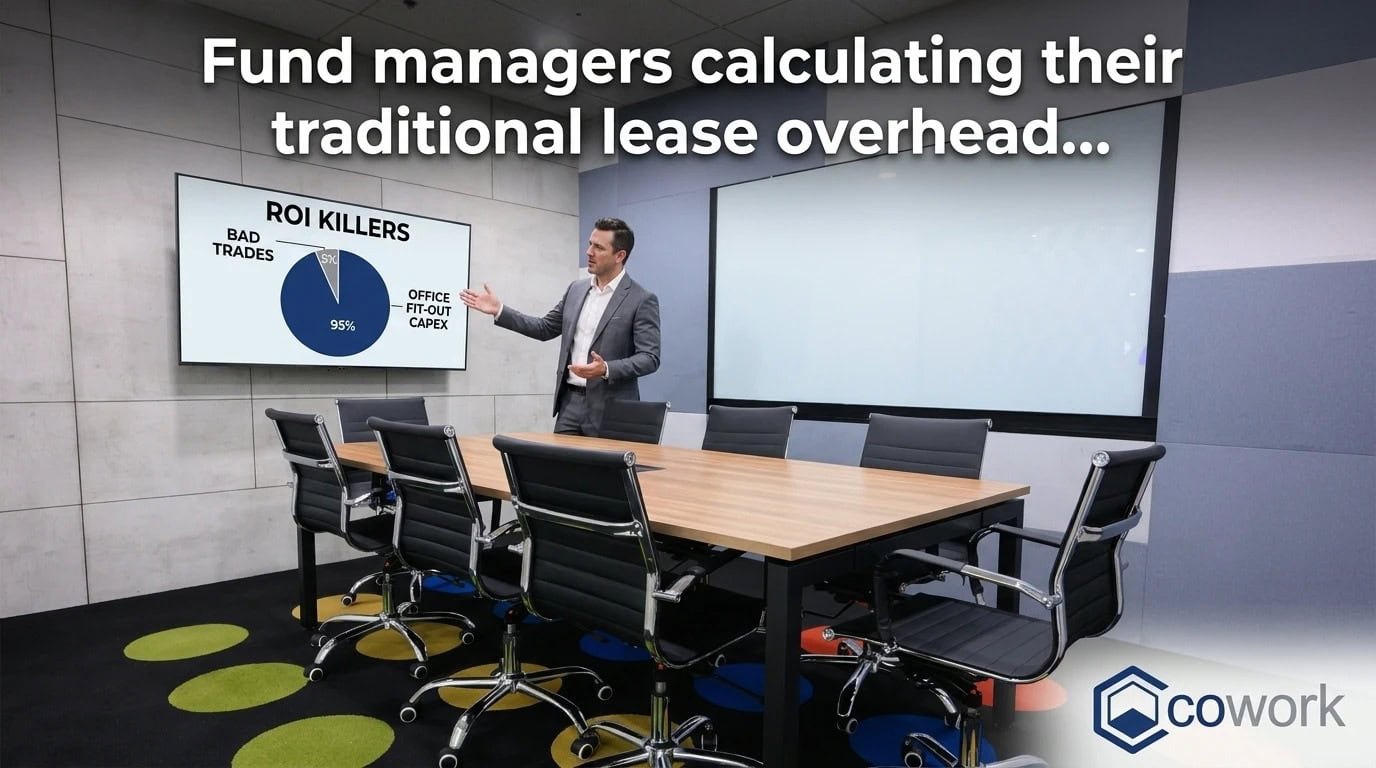
2. Plug-And-Play Move-In That Avoids The Capex And Fit-Out Risk
A conventional lease can turn into an unintended capital project. The costs rarely stop at furniture. Power, cabling, meeting rooms, acoustic treatment, access control, and the inevitable "small changes" can escalate faster than the original budget.
Our plug-and-play serviced office model is designed to keep your capital expenditure where it belongs: supporting product, compliance, and commercial growth rather than a fit-out that you may outgrow.
What this avoids in practical terms:
- Fit-out overrun risk when contractors, lead times, or landlord requirements shift
- Opportunity cost of leadership time spent approving drawings, chasing quotes, and resolving defects
- Delayed go-live while you wait for internet provisioning, security installation, or last-mile works
A ready-to-operate office is a form of downside protection. In volatile markets, the ability to set up quickly without committing to irreversible spend behaves less like "rent" and more like disciplined risk management.
3. Flexible Options That Protect You From Lease Rigidity
Fintech planning rarely follows a straight line. Hiring can accelerate after a funding milestone, then slow when regulation tightens. Market entry strategies evolve, and sometimes a new partnership changes your staffing mix in a single quarter.
Traditional leases tend to price in certainty you do not actually have. They can also penalise change, whether that is expansion, contraction, or reconfiguration.
Flexible options in a serviced office help you:
- Scale seats up or down without turning workplace strategy into a three-year bet
- Avoid sunk costs on space you no longer need when team structure changes
- Reduce exposure to long exit negotiations and lease assignment complexity
4. Private, Closed-Door Offices For Sensitive Conversations And Compliance-Heavy Work
Fintech teams do not only build features. They handle sensitive conversations: client onboarding issues, pricing discussions, partner negotiations, remediation planning, and internal reviews that require discretion.
Private, closed-door offices provide practical support for:
- Confidential meetings with clients, banks, and legal advisers
- Compliance-heavy work where concentration and controlled access matter
- Human moments that cannot occur in public areas: performance conversations, complex stakeholder alignment, and incident debriefs
Privacy is also a productivity lever. In open environments, important conversations become delayed conversations. When the business runs on time, a quiet room can be the difference between a decision made this afternoon and a decision deferred to next week.
5. Reliable Internet Built For Always-On Platforms And Real-Time Transactions
A fintech platform is judged on availability long before it is judged on elegance. When internet performance degrades, the impact is rarely limited to one call dropping. It shows up as missed follow-ups, slower incident response, and reduced confidence from stakeholders who expect systems to remain responsive.
Our priority is reliable internet that supports always-on operations, real-time transactions, and modern collaboration patterns without turning connectivity into an internal project.
Capacity Planning For Peak Loads And Video-Heavy Workdays
Bandwidth needs do not increase neatly. A standard day can become "peak day" when:
- multiple teams are on video calls with clients and partners
- engineers are pulling large artefacts or synchronising repositories
- compliance and operations are running monitoring dashboards continuously
Capacity planning is less about headline speed and more about avoiding contention under load. We focus on consistent performance during the moments you most need stability, particularly when demonstrations, onboarding sessions, or high-stakes meetings are scheduled back-to-back.
Resilience Basics: Redundancy, Monitoring, And Fast Escalation Paths
Reliable internet is also a process.
- Redundancy reduces single points of failure
- Monitoring provides early warning rather than late surprises
- Escalation paths shorten the distance between an issue and an accountable response
For fintech leadership, the value is simple: fewer avoidable incidents, fewer internal disruptions, and fewer explanations to stakeholders.
6. An Onsite IT Team That Reduces Downtime And Internal Admin Load
When a small team is performing at a high level, every hour of distraction carries an invisible price. "Someone will sort it out" often becomes the managing director, the finance lead, or an engineer who was meant to be shipping product.
An onsite IT team changes the rhythm. Instead of building a patchwork of vendors and responsibilities, you have a clear route to resolution, with less time spent coordinating.
Common Day-One Requests: Secure Wi-Fi, VPNs, Devices, And Access Control
Fintech move-ins typically involve more than plugging in laptops. Common day-one needs include:
- secure Wi-Fi configuration aligned with company policy
- virtual private networks and secure remote access
- device onboarding for company-managed endpoints
- access control for private offices and shared facilities
Having these handled quickly supports a clean start. It also prevents the gradual drift into ad-hoc workarounds that become difficult to unwind during an audit or vendor review.
7. Predictable, All-Inclusive Office Costs That Improve Cash-Flow Planning
One of the more exhausting aspects of a traditional lease is the way cost centres multiply. Rent becomes only the beginning, then utilities, cleaning, maintenance, internet, repairs, pantry supplies, security, and ad-hoc building charges arrive in a steady procession.
A serviced office simplifies that exposure. Predictable, all-inclusive office costs are not merely convenient, they support cleaner forecasting and tighter cash-flow planning. For established small and medium enterprises, that clarity affects decision-making: you can hire sooner, commit to marketing spend with more confidence, and plan runway without constantly re-baselining overheads.
What's Typically Included In A Serviced Office Package
In most premium serviced office arrangements, you can expect a single monthly fee to cover core operational requirements such as:
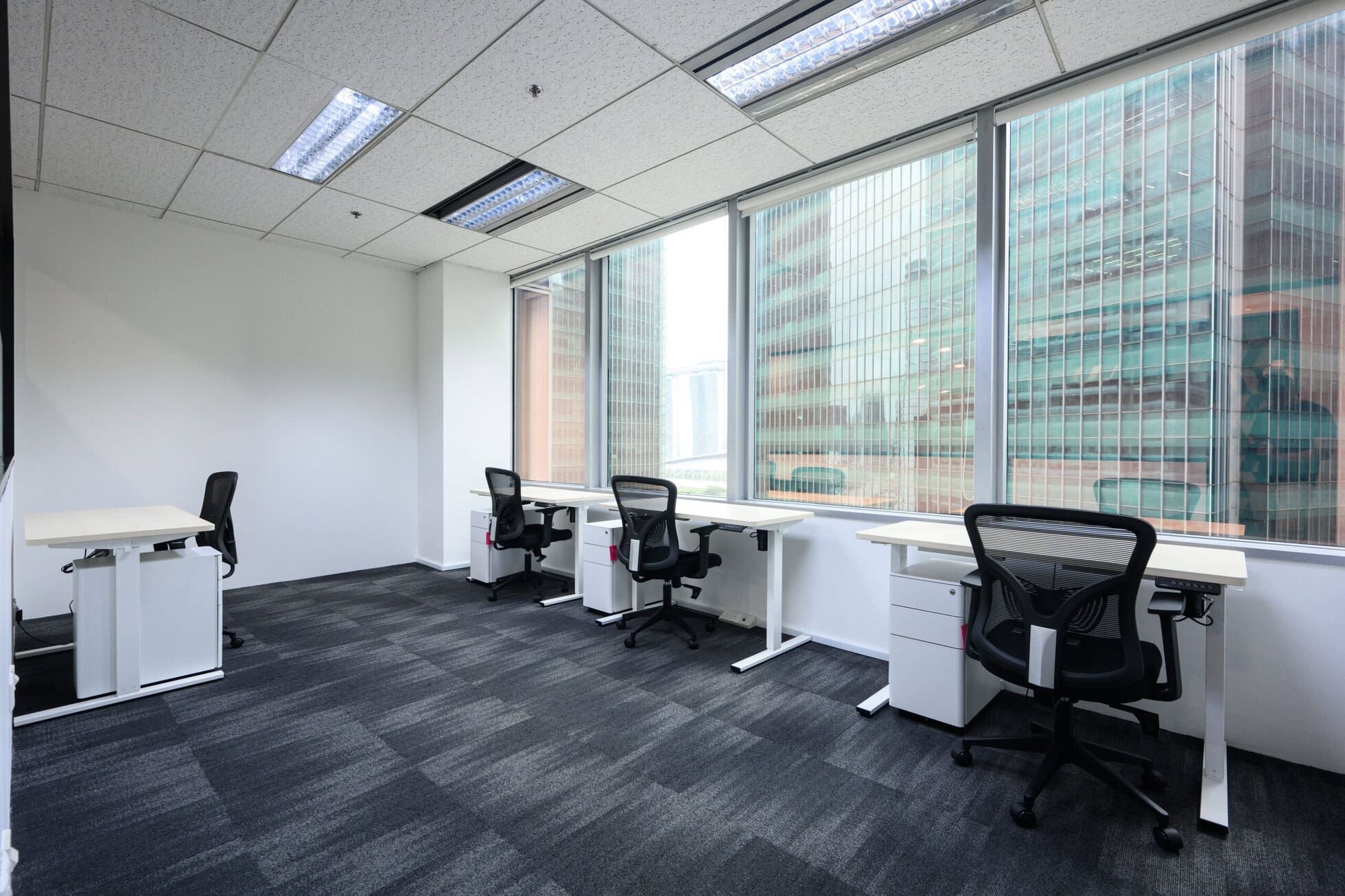
- fitted private office space and workstations
- utilities and building services
- cleaning and shared area upkeep
- internet connectivity and basic technology support
- reception and common facilities access
The commercial benefit is not only the headline number. It is the reduced variance. Predictable costs behave like a stabiliser in a quarter where revenue timing or hiring plans may shift.
8. Built-In Networking Opportunities In A Professional CBD Community
Not all networking opportunities are useful. The ones that matter to fintech are often quiet and specific: a recommendation to the right legal adviser, an introduction to a compliance consultant who has seen your regulator before, a conversation with a bank contact who knows which questions to expect.
A professional Central Business District community increases the probability of those encounters, particularly when you are operating among adjacent industries rather than purely social settings. It helps that Tanjong Pagar's startup and tech cluster is a short walk away. Founders who might otherwise look for a Tanjong Pagar serviced office get the same ecosystem access with a Raffles Place address on their pitch deck.
Who You're Likely To Meet And Why It Matters For Fintech
In a premium serviced office, you are more likely to cross paths with:
- professional services leaders who influence vendor selection
- regional teams building new market entry plans
- technology and consultancy firms that can become delivery partners
- decision-makers who understand procurement and governance
These are the people who shorten buying cycles when trust exists, and who can open doors that cold outreach rarely reaches.
How To Turn Chance Encounters Into Qualified Commercial Conversations
A practical approach tends to work best:
- Lead with a shared business problem, not a product description
- Ask one precise question that reveals intent, timing, and decision structure
- Offer a small, credible insight drawn from your experience, then stop talking
- Follow up with one useful asset (a checklist, a short note, or a relevant contact)
Done well, networking becomes less like "selling" and more like sensible market making, where both sides trade information before they trade contracts.
9. Meeting Rooms And Client-Ready Spaces That Support Faster Sales Cycles
Sales cycles tend to slow when you cannot host professionally, on demand. If every client meeting requires booking an external venue, arranging access, and hoping the audio works, momentum leaks away in small increments.
Client-ready meeting rooms and well-managed shared spaces support fintech teams by:
- enabling rapid scheduling when stakeholders finally align diaries
- providing a consistent, professional setting for sensitive discussions
- reducing the friction of demos, workshops, and onboarding sessions
There is also an understated reputational effect. When a prospect arrives and everything works, reception, room setup, connectivity, and privacy, your organisation feels dependable. In regulated sectors, that impression is part of the risk assessment your buyer is already performing.
10. Operations-Grade Stability So Your Team Stays Focused On ROI And Delivery
A premium office is not an indulgence when it prevents disruption. For fintech leaders, stability is a daily operational requirement: predictable access, consistent building management, dependable internet, and clear support processes.
Operations-grade stability protects your team's focus. Instead of spending energy on avoidable workplace issues, you can keep attention on delivery, customer outcomes, and return on investment.
The Data Points That Matter When Evaluating Workspace Risk
When evaluating a workspace for a fintech team, the data points worth checking tend to be practical rather than promotional:
- internet uptime expectations and how incidents are handled
- support response times and escalation accountability
- access control for offices, meeting rooms, and after-hours entry
- business continuity basics, including how building issues are communicated
- cost predictability, including what is included and what triggers additional charges
These are not abstract concerns. They influence your ability to meet client expectations, maintain internal pace, and avoid the slow drain of administrative interruptions.
Conclusion
For fintech companies, a serviced office in a prestigious Central Business District location is most valuable when it behaves like a stabilising asset: strengthening credibility, reducing capex exposure, simplifying administration, and protecting your organisation from the rigidity of traditional leasing. In our office at Raffles Quay, the advantage is not one feature in isolation, it is the combined effect of privacy, reliable internet, predictable costs, and operational support that keeps your team focused on delivery and return on investment.
If you are evaluating a headquarters-grade serviced office for an established small or medium enterprise or a regional branch, we recommend prioritising stability, flexibility, and the data points that reveal how the workspace performs under real working conditions.
Frequently Asked Questions
What advantages do fintech companies have in your office at Raffles Quay compared with a traditional lease?
Fintech companies gain a credible CBD address, plug-and-play move-in, flexible terms, private offices, reliable internet, onsite IT support, and predictable all-in costs. Compared with a traditional lease, this reduces fit-out risk, vendor admin, and disruption—helping leadership stay focused on delivery and ROI.
How does a CBD headquarters address help fintech companies win clients and banking partners?
In regulated fintech, a CBD headquarters address acts as an early trust signal during procurement and due diligence. It supports client confidence, partner comfort with sensitive workflows, and stronger hiring appeal. That credibility can shorten sales cycles because stakeholders take you seriously sooner, before deep technical reviews begin.
Why do fintech companies choose plug-and-play serviced offices to reduce capex and fit-out risk?
Plug-and-play offices remove the need for a costly fit-out and reduce delays from contractors, cabling, access control, and internet provisioning. For fintech companies, that protects cash and avoids leadership time being consumed by facilities projects. It’s a practical way to stay agile when headcount and plans change.
What should fintech companies look for in reliable internet and IT support in a serviced office?
Prioritise consistent performance under peak load, redundancy to reduce single points of failure, active monitoring, and clear escalation paths. For day-one readiness, check support for secure Wi‑Fi, VPNs, device onboarding, and access control, plus ticketing and change control to keep audit trails clean and reduce downtime.
Are serviced office costs predictable for fintech companies, and what’s typically included?
Yes—many serviced offices offer an all-in monthly fee, making cash-flow planning easier than fragmented lease bills. Typically included are fitted private offices, utilities, cleaning, internet connectivity, reception, and shared facilities. The key advantage for fintech companies is reduced cost variance when revenue timing fluctuates.
How can fintech companies use a CBD serviced office community to grow faster (networking and market context)?
A CBD community increases the chances of meeting legal, compliance, banking, and procurement contacts who can accelerate introductions and reduce vendor-risk friction. Lead with a shared problem, ask one precise qualifying question, and follow up with a useful asset.



Great insights here, Wilson! Having a CBD address definitely boosts credibility, especially in fintech. Clients want to know you’re reliable before diving into technical details.
Interesting points about flexible leasing options. With the way the market is shifting, startups need agility more than ever. Renting in CBD sounds like a smart move.
It’s refreshing to see a focus on the practical side of office setups. I’ve dealt with fit-out issues in the past. Avoiding those headaches sounds appealing.
The reliable internet section caught my eye. In fintech, downtime can be costly. Glad to see you addressed this. How common are outages in serviced offices?
Loved the idea of private offices for confidential discussions. Makes a big difference when negotiations are at stake. Open spaces can be chaotic.
I agree with the need for quick setups. Traditional leasing feels like a trap. Being able to scale up or down with ease is essential for startups.
The cost-efficiency angle is important. Many SMEs struggle with cash flow. Thanks for highlighting this, Wilson.