

Below are ten practical ways our Raffles Quay serviced office reduces costs for small and medium-sized enterprises, while preserving the kind of prestige that supports client confidence and talent decisions.
In this article, we cover how to cut costs with serviced offices.
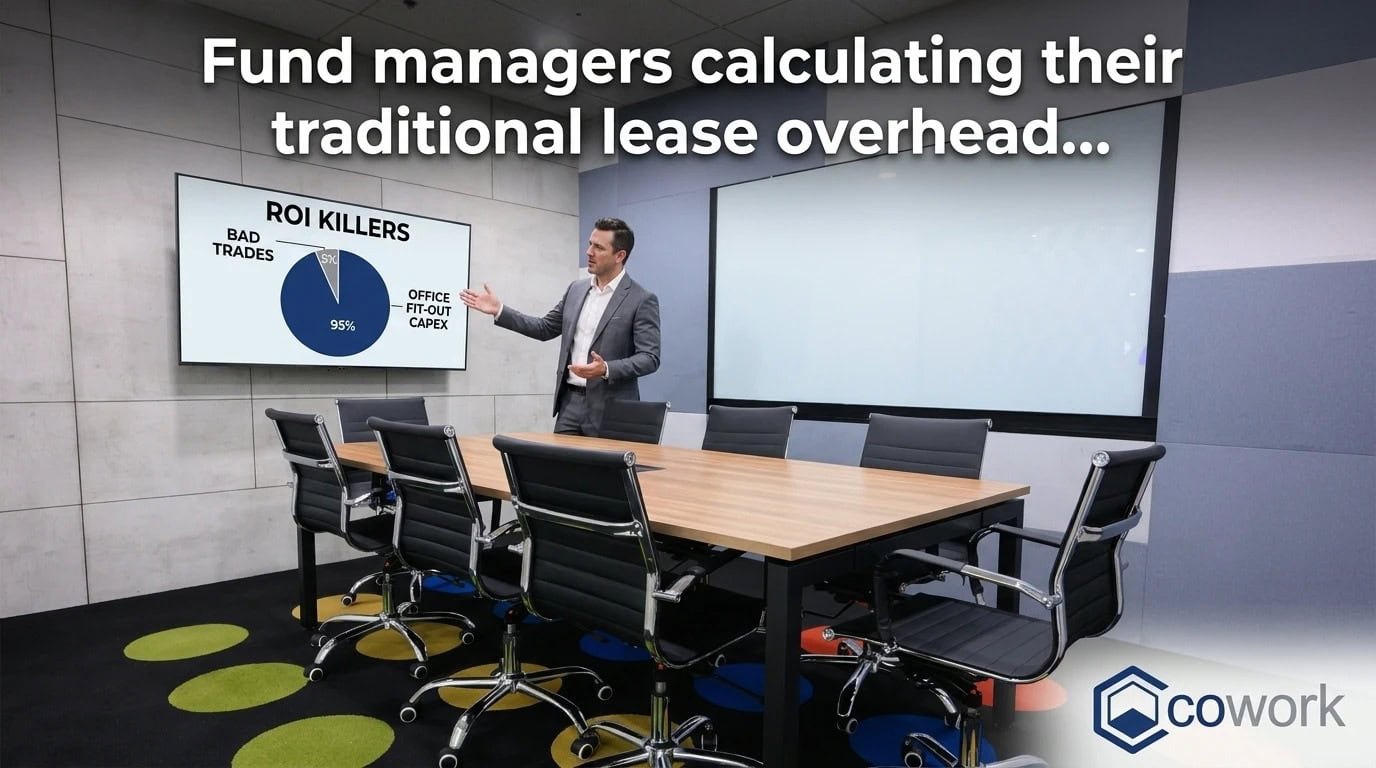
1. Replace Capex With Predictable Monthly Opex
A conventional lease often starts like an "asset" decision, then behaves like a volatile market position.
Capital expenditure lands early and hard, while benefits arrive slowly. With our serviced office model, the cost profile shifts into predictable operating expenditure, which is easier to forecast, justify, and govern.
For many small and medium-sized enterprises, that predictability is not a convenience. It is a risk-control mechanism. It protects working capital, keeps borrowing capacity available for growth, and reduces the pressure to "make the space work" simply because the sunk cost is already committed.
Fit-Out, Furniture, And Move-In Costs Removed
When you step into a serviced office, the fundamentals are already in place.
- No bare-shell conversion: partitions, lighting design, and general readiness are not your responsibility.
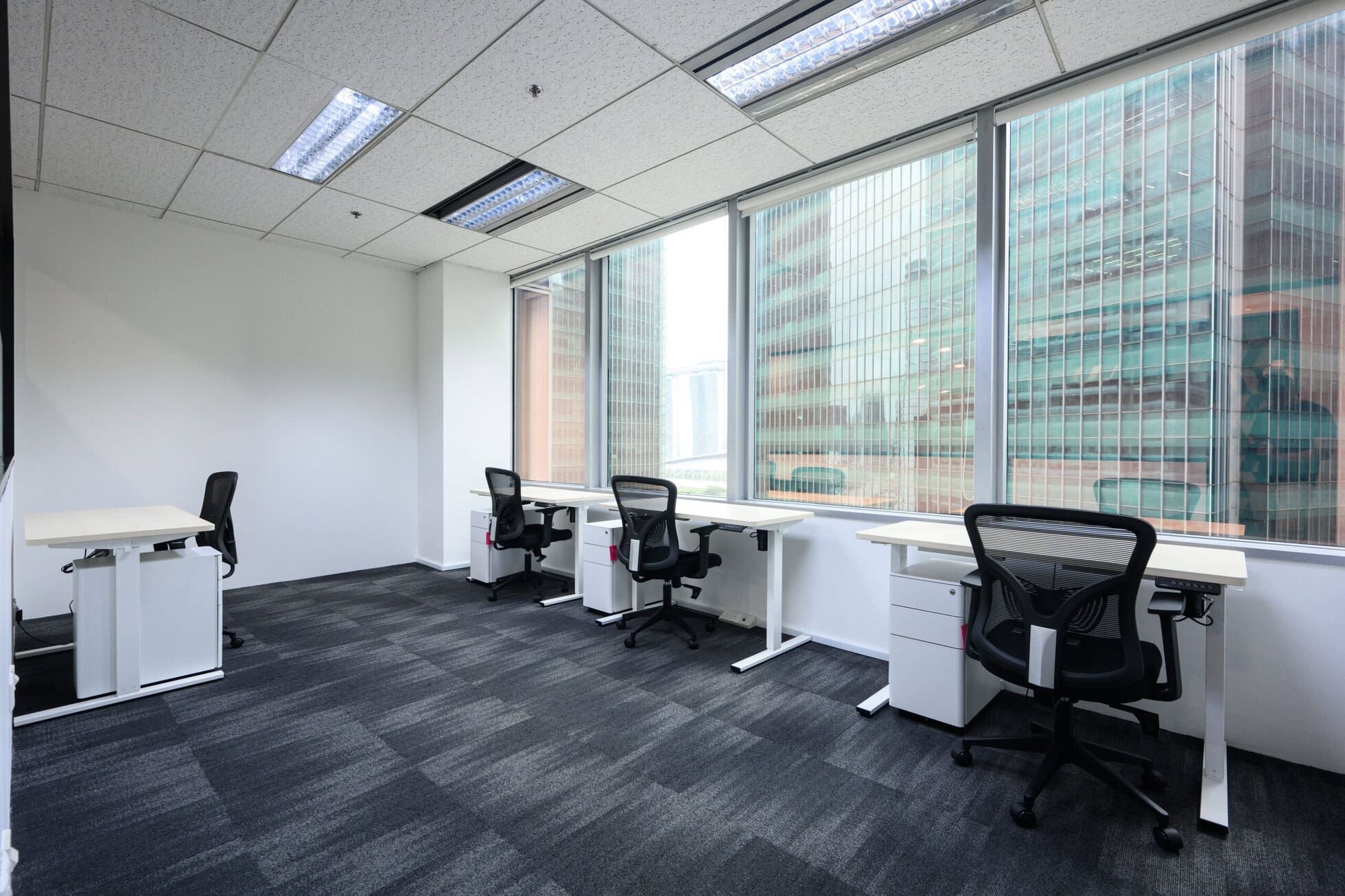
- No furniture procurement cycle: desks, chairs, storage, and meeting setup are already provisioned.
- No contractor management overhead: fewer vendors to appoint, supervise, and reconcile.
In other words, you avoid the familiar pattern of paying for the right to begin paying. Your office becomes an operational input, not a capital project.
2. Avoid Long Leases And Costly Break Clauses With Flexible Terms
Long leases can look stable on paper, yet they can behave like a constraint that widens over time. Three years is not a long horizon for a landlord, but it can be an eternity for an enterprise navigating client concentration, regulatory change, or shifting hiring plans.
A serviced office is engineered for flexibility without downgrading your professional image.
You retain the credibility of a private, closed-door environment, with terms that reflect modern operating realities.
If you want a broader view of why this matters locally, our perspective aligns with what many leaders recognise in Singapore: flexibility is not a startup preference, it is a governance preference. You can explore the common drivers in why Singapore businesses choose serviced offices over leases.
De-Risk Market Volatility With Scale-Up/Scale-Down Options
Flexible terms reduce the cost of various senarios:
- If a new project lands and headcount expands, you can scale without triggering a new fit-out.
- If demand softens, you can reduce space without paying for years of surplus.
- If you are testing a new market entry, you can establish a proper headquarters presence without committing to a long lease that assumes success.
This is how agility turns into stability. You are not improvising: you are simply not overcommitted.
3. Stop Overpaying For Empty Space - Match Desks To Headcount
In a traditional lease, efficiency is often treated as an afterthought. You sign for a floorplate, then spend months trying to make the utilisation look sensible. Hybrid work, client travel, project-based staffing, and seasonal peaks make that even harder.
With a serviced office, cost aligns more closely with actual usage. You are paying for the desks you need, in the moment you need them, not for a hypothetical future that may or may not arrive.
This is one reason decision-makers often revisit the economics after the first year: the "invisible tax" of empty space becomes impossible to ignore once it is measured alongside real headcount.
Add Or Remove Workstations Without Reconfiguring A Floorplate
The savings are not only in rent. They sit in the avoided disruption.
- No reconfiguration project: you avoid redesigning the space every time your organisational chart changes.
- No downtime from works: fewer interruptions to client work and internal delivery.
- No overbuying as a hedge: you do not need to lease "just in case" capacity.
If you have ever seen an unused corner office quietly become a storage room, you have already paid this cost once.
4. Consolidate Utilities Into One Bill To Reduce Admin Fatigue
Administrative burdens behave like small leaks in a balance sheet. None of them look catastrophic, yet together they consume hours, attention, and patience. Utility accounts, building invoices, service providers, escalation disputes, and meter reconciliations create work that does not improve your service line, your client outcomes, or your talent pipeline.
A serviced office consolidates that sprawl. Instead of managing a portfolio of micro-obligations, you manage one predictable relationship.
For leaders who value executive focus, this is not a "nice to have." It is an operating discipline. You can see how we approach the behind-the-scenes workload in our seamless office administration support.
Electricity, Water, And Building Charges Handled End-To-End
Bundling is only useful if it is genuinely end-to-end.
- Electricity and water are managed within the service model.
- Building charges and common area costs are not passed through as surprise line items.
- Vendor coordination sits with us, not your finance team.
The practical outcome is simpler month-end processing and fewer disputes. You keep the governance, without carrying the administrative load.
5. Lower Energy Exposure During An Energy Shortage With Shared Infrastructure
An energy shortage changes the risk profile of office operations. Energy stops being a background utility and becomes a variable cost that can move quickly, often for reasons outside your control.
Shared infrastructure in a serviced office reduces exposure by spreading demand across usage patterns and optimising building systems at scale. It is not a promise of immunity. It is a more resilient cost model.
Efficient HVAC, Lighting, And Occupancy Patterns Reduce Per-Employee Usage
Cost reduction here is less about dramatic cuts and more about structural efficiency.
- Heating, ventilation, and air conditioning efficiency improves when systems are maintained and optimised centrally.
- Lighting control across shared areas reduces waste that is common in single-tenant offices.
- Occupancy patterns in a multi-tenant environment often smooth peaks, reducing per-employee usage.
If energy is a variable you cannot forecast with confidence, the best move is reducing the surface area of your exposure.
6. Reduce Carbon Tax Risk With A More Sustainable Workspace Model
Sustainability used to be framed as reputation management. Increasingly, it is a financial variable. Carbon taxes and carbon-related reporting expectations are moving from abstract policy conversations into practical boardroom concerns.
A serviced office model can support sustainability targets through shared resources and centralised systems, which typically reduce duplication. You are not buying multiple sets of the same infrastructure, then paying to maintain them separately.
There is also an overlooked benefit: if sustainability reporting becomes more demanding, it helps when your workspace model already reflects operational efficiency rather than excess.
We support sustainability through our Corporate Social Initiatives.
Donate school supplies through our Pass It On program.
Shared Resources And Centralised Systems Support Sustainability Targets
This is how the model can reduce carbon tax risk over time.
- Shared equipment and amenities reduce the need for duplicated appliances and redundant consumption.
- Centralised maintenance supports consistent performance, which matters for energy efficiency.
- More efficient space utilisation can lower the emissions intensity per employee.
If carbon taxes become more pervasive, the most expensive approach will be the one built on waste you cannot easily prove you have eliminated.
7. Eliminate IT Setup And Downtime Costs With In-House Support
Technology costs are rarely limited to invoices. The larger cost is interruption: a video call that fails during a pitch, a network issue that stops a team mid-delivery, a security concern that forces you into reactive spending.
A serviced office with in-house support turns information technology from a do-it-yourself project into an operational service. That shift is especially relevant for professional services, recruitment, and consulting firms where responsiveness is part of the product.
Enterprise-Grade Internet, Secure Networks, And Fast Issue Resolution
The cost savings compound in three places.
- Setup avoidance: you do not need to design and install a complete network from scratch.
- Downtime reduction: issues are resolved quickly, reducing hours lost across the team.
- Security posture: secure networks reduce the likelihood of expensive incidents and last-minute "emergency upgrades."
When IT infrastructure is part of client confidence, reliable information technology is not overhead. It is part of your professional image.
8. Cut Facilities Management Spend (Cleaning, Maintenance, Pantry)
Facilities management is the classic example of non-revenue work that still demands executive escalation when it goes wrong. A cleaner does not arrive. The pantry supplies run out before a client meeting. A minor repair becomes a distraction that spreads.
In a serviced office, these functions sit inside a managed service. Costs are consolidated, quality is standardised, and your leadership team spends less time mediating operational noise.
Turn Non-Revenue Work Into A Managed Service
The reduction is both financial and managerial.
- Cleaning and upkeep are scheduled and governed as part of the service.
- Maintenance is handled without you sourcing vendors, approving call-out fees, and chasing timelines.
- Pantry management becomes predictable rather than a recurring scramble.
It is like moving a volatile line item into a diversified portfolio: fewer surprises, less time spent reacting.
9. Reduce Meeting And Client-Hosting Costs With On-Demand Rooms And Reception
Client hosting is where cost and reputation intersect. You can save money by meeting elsewhere, yet that often spends credibility instead. For deals, negotiations, and sensitive conversations, the setting shapes how your business is perceived.
A serviced office gives you on-demand access to meeting rooms and reception support without requiring you to carry permanent, underutilised space. It is the difference between owning capacity and accessing it precisely when it creates value.
For teams that regularly work with confidential documents, financial details, or high-stakes hiring decisions, this also reinforces privacy.
Privacy For Deals: Closed-Door Offices And Bookable Meeting Spaces
This is where the model supports both cost control and executive-grade standards.
- Bookable meeting rooms let you pay for usage rather than dedicate a fixed area that sits empty.
- Reception capability supports a polished client experience without hiring dedicated front-of-house staff.
- Private offices allow sensitive calls and discussions without competing noise.
If your office is part of your client promise, the meeting environment cannot be improvised. It must be available, controlled, and consistent.
10. Improve Recruitment And Retention With A CBD HQ That Signals Stability
Recruitment costs rarely appear in the same spreadsheet as office costs, yet they are related. The workplace sends a signal. It tells candidates whether your business is stable, serious, and ready for the next stage.
A Central Business District headquarters at Raffles Quay helps you compete for talent without taking on premium overheads that weaken your cash position. The cost is not only salary. It is time-to-hire, offer acceptance, and retention. Candidates who would happily commute to a serviced office at Tanjong Pagar for its food and after-work scene still get that here. 6 Raffles Quay is a short walk away, with a Raffles Place address.
Prestige Address And Professional Environment Without Premium Overheads
Prestige can be expensive when you buy it through a long lease and a bespoke fit-out. It is more efficient when it comes as part of a serviced model.
- A recognised address supports client confidence and candidate perception.
- A professional environment improves focus and reduces friction.
- A stable headquarters feel strengthens the story you tell the market, without anchoring you to a fixed footprint.
Recruitment is already competitive. Paying for an office model that makes hiring harder is a poor trade.
Conclusion
A serviced office is often described as a convenience. For a serious small and medium-sized enterprise, it is closer to a disciplined financial structure: less capital at risk, fewer operational distractions, and a workspace cost profile that remains predictable even when the market does not. If you are already a team of 2, transitioning to serviced office solutions can make sense. The additional space allows businesses to scale operations without the burden of long-term leases. Moreover, it fosters an environment that can adapt quickly to changing demands, providing a strategic advantage in today’s fast-paced market. To increase revenue with a serviced office, companies can utilise flexible floor plans and cutting-edge amenities that cater to their evolving needs. This not only enhances productivity but also attracts new clients who appreciate such modern workspaces. As a result, leveraging serviced offices can significantly contribute to a firm’s growth strategy in a competitive landscape.
When you combine flexible terms, bundled utilities, shared infrastructure during an energy shortage, and a model that supports sustainability and reduces carbon tax exposure, the savings become more than marginal. They translate into agility and stability, delivered through a prestigious Central Business District headquarters that protects your professional image. We compare the differences between our serviced office and office rental in our blog article.
If your next office decision must satisfy both finance and brand, our serviced office at Raffles Quay is designed to do exactly that. If you are weighing a serviced office at Cecil Street because your building is due for redevelopment, 6 Raffles Quay is minutes away and spares you a second move when the new towers complete.
Frequently Asked Questions
How does a serviced office reduce costs for SMEs compared with a traditional lease?
Our serviced office reduces costs for SMEs by converting big upfront fit-out and furniture spend into predictable monthly opex. You typically avoid contractor management, multiple vendor contracts, and surprise building charges—helping protect cash flow, simplify budgeting, and keep leadership focused on revenue.
Can a serviced office really help SMEs avoid long leases and break clause penalties?
Yes. Our serviced offices are designed around flexible terms, so SMEs can scale up or down without being locked into multi-year commitments or paying costly exit penalties. This flexibility reduces the financial impact of hiring changes, project-based demand, or uncertain market conditions.
Why do SMEs overpay for empty space, and how do serviced offices fix it?
SMEs often overpay when they lease for a “future” headcount that never fully materialises—especially with hybrid work and travel. Serviced offices let you align cost to actual desks needed, and add or remove workstations without reconfiguring a whole floorplate or disrupting operations.
What costs are usually included in a serviced office monthly fee for SMEs?
Our serviced office memberships include core operational essentials such as utilities (electricity and water), building and common-area charges, cleaning, and enterprise-grade internet. By consolidating these into one invoice, finance teams reduce admin time, reconciliation effort, and billing disputes.
How do serviced offices help SMEs manage energy-price volatility and shortages?
During energy volatility, SMEs benefit from shared infrastructure where HVAC, lighting, and occupancy patterns are optimised at scale, often lowering per-employee usage. This doesn’t remove energy risk entirely, but it can reduce exposure and smooth cost spikes that single-tenant offices feel more sharply.
How can a CBD serviced office support recruitment and retention for SMEs?
A CBD serviced office can strengthen your employer brand by signalling stability and professionalism without the premium overheads of a long lease and bespoke fit-out. For SMEs, that can improve candidate confidence, support client-facing credibility, and help retention by providing a higher-quality day-to-day workplace.



Interesting take, Wilson, on swapping capex for opex. How quickly do businesses typically see savings by making this switch?
If you are just starting out with your first office, the savings are immediate – i.e. you have no capital expenditure. When the existing capital expenditures have been depreciated, that is where you will see less expenses in your financial statements.
Finally, someone puts light on utility consolidation. Made my day way easier. Thanks, Wilson for highlighting!
A compelling argument for the efficacy of a flexible lease structure. I’d be interested in data comparing the cost-effectiveness of this approach versus traditional leases over a ten-year span.
Isn’t reducing carbon tax risk crucial nowadays? Good to see workspaces stepping up.
Exactly, Dorothy! It’s refreshing to see sustainability being considered in the business sector.
Right, Hugo? Hope more companies follow this lead.
How does the de-risking of market volatility factor into long-term business stability? I’d assume it offers a solid buffer?
The in-house IT support caught my eye. Having enterprise-grade internet without the hassle of setting it up sounds ideal.
Reducing admin fatigue by consolidating utilities into one bill is a game changer. Makes property management seem less daunting.
Loving the idea of a CBD HQ for better recruitment. Should really help with getting better candidates.
Does consolidating facilities management costs significantly impact the bottom line for SMEs?
Yes definitely. There’s less time spent finding cleaners, reviewing cleaners, negotiating contracts etc. It all adds up – even the FAST transfer fees of $0.50 that one may pay to each vendor.
Shared infrastructure for lower energy exposure is smart. Curious about the implementation process.
Can flexible lease terms create a more attractive proposition for potential investors in SMEs?
The part on cutting facilities management spend really resonates. Outsourcing non-revenue tasks is key to efficiency.
CBD HQ without the premium cost? Sign me up. This could really boost our startup’s image.
The move towards more sustainable workspace models is commendable. I’m interested in the specifics of shared resources.
Enterprise-grade internet with fast issue resolution is exactly what new businesses need. Impressed by the in-house IT support focus.
On-demand meeting rooms are a lifesaver for someone always on the move. Makes client meetings so much easier.
Regarding the scale-up/scale-down options, how responsive is this model in practice? Have businesses found it easy to adjust?
Curious about the overall financial implications of moving to a serviced office. It seems advantageous, but what about hidden costs?