
In this guide, we compare serviced office vs office rental in practical terms: total cost, time commitment, operational burden, and what clients quietly infer when they step into your space. The outcome is simple: choose the option that protects flexibility and reputation without quietly draining management attention.
What Each Option Really Means
Serviced Offices Defined
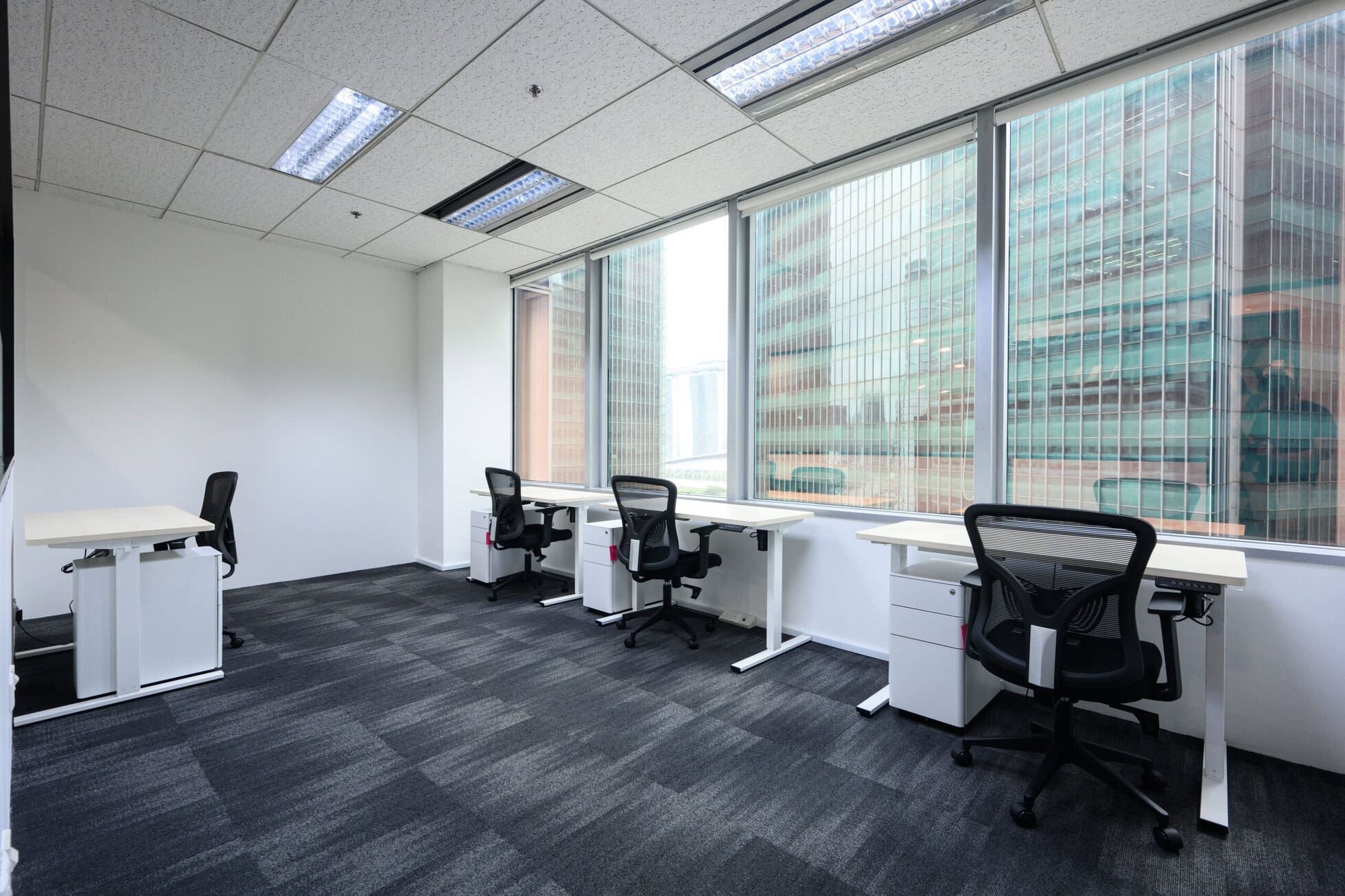
Our serviced offices at 6 Raffles Quay are fully managed workspaces where the essentials arrive bundled: furniture, utilities, cleaning, internet, reception support, and shared amenities. The agreement is a licence rather than a long commercial lease, often ranging from 1 year to two years.
The strategic office benefits at Raffles Quay enhance productivity and foster collaboration among teams. With flexible layouts and modern technology, these workspaces are designed to adapt to your business needs. Additionally, the prime location in the heart of Singapore ensures easy access to key amenities and transport links.
In practice, this means an executive can tour our private suite on Tuesday and have a team working by the following week. The conversation tends to sound familiar.
The value is not only speed. It is the removal of fragmented vendors and the steady drip of administrative tasks that never appear in the rent figure.
At CoWorkSpace at Raffles Quay, the proposition is intentionally corporate: premium Central Business District positioning, transparent all-inclusive pricing, and an in-house information technology team that can support business-grade requirements without turning your office manager into a reluctant systems integrator.
Traditional Office Rental Defined
Traditional office rental in Singapore usually means leasing a bare or partially fitted unit under a multi-year commercial lease.
Three-year terms are common, with longer commitments not unusual in prime buildings.
The tenant typically funds the fit-out, selects contractors, arranges telecommunications, manages compliance requirements, and maintains the space. Utilities and service charges are separate.
This model can be the right tool for firms that want a highly customised environment and expect stable headcount for years.
But it also assumes the business is willing to hold risk: market shifts, growth surprises, and renewal pricing can all arrive at inconvenient moments.
Total Cost Comparison: Beyond The Monthly Rent
A traditional lease can appear cheaper per square foot, and sometimes it is, over a long enough timeline.
The difficulty is that businesses do not experience cost per square foot. They experience cash flow, management time, and surprise invoices.
Upfront Costs And Deposits
With our serviced office, upfront costs are usually limited to a deposit and the first billing cycle. For one year of membership, we collect 1 month of deposit.
Traditional office rental tends to ask for more patience and more capital.
Deposits may stretch further, professional fees can accumulate, and the business may carry dual costs during a transition: rent on the new space while the old space winds down, plus storage or temporary working arrangements.
There is also the quiet cost of delayed occupancy. When the lease begins but the office is still a construction site, the organisation is paying for potential rather than productivity.
Fit-Out, Furniture, And Equipment
Fit-out is where traditional rental becomes an investment decision, with all the emotional weight that word implies.
A well-designed office can support culture and client confidence. A poorly managed fit-out becomes a slow-motion budget overrun.
We have seen the pattern: a contractor changes the timeline, the building requires additional documentation, the fire safety requirements trigger redesign, and the leadership team is pulled into weekly calls that were never part of the strategic plan.
Serviced offices, by contrast, are designed to be operational from day one.
Furniture, meeting rooms, pantry facilities, and reception standards are already in place. You may trade away some design freedom, but you often gain something more valuable: a predictable start date.
Ongoing Bills, Maintenance, And Hidden Charges
This is where the comparison becomes most meaningful.
A serviced office typically wraps ongoing costs into a single, understandable number: electricity, air conditioning, cleaning, repairs, shared amenity access, and often reception and mail handling. In Singapore, where rental, building service charges and utilities can fluctuate due to the tighter office supply, the predictability is not cosmetic.
Traditional office rental places these items on separate tracks.
Bills arrive on different schedules, maintenance issues demand coordination, and the internal team becomes the clearinghouse for decisions that do not directly generate revenue.
If the business values management attention as a scarce asset, the cost comparison must include time and distraction, not only rent.
Flexibility And Time Commitment
Singapore is efficient, but commercial real estate is still governed by commitments. Flexibility is not a buzzword here: it is a risk-control mechanism.
Lease Length, Break Clauses, And Renewal Risk
Serviced office agreements are designed for shorter horizons. That can mean a one-year commitment with options to extend, or even shorter terms for project teams. The ability to exit without punitive reinstatement obligations changes the decision from a long gamble to a series of controlled moves.
Traditional leases can include break clauses, but they are negotiated, and the leverage is not always with the tenant, especially in prime Central Business District assets. Renewal risk is also real. A business that has invested heavily in fit-out becomes anchored. The landlord knows it.
Scaling Up Or Down With Headcount Changes
Headcount rarely follows a straight line. A new client win brings a hiring sprint. A market pause brings caution. A regional project requires a temporary team.
In our serviced office environment, scaling is often handled as an operational adjustment: a neighbouring suite, additional desks, more access cards, another meeting room allocation. It feels closer to portfolio management than property management.
With traditional office rental, resizing is harder.
If the company outgrows the space, it faces a new lease, a new fit-out, and often a period of disruption. If it downsizes, it may carry empty space as a sunk cost, or attempt subleasing with all the administrative effort that comes with it.
Speed To Move In And Operational Readiness
Speed matters when opportunity arrives.
Our serviced offices are built for rapid deployment: internet is live, meeting rooms are bookable, reception is staffed, and the workspace is already aligned with common corporate expectations.
For firms opening a Singapore branch or upgrading their client-facing address quickly, this is often decisive. It is also why firms eyeing new-build leases around Guoco Tower often reconsider. If you have been searching for a serviced office in Tanjong Pagar, 6 Raffles Quay is a short walk away and ready to move into.
The considerations that singapore teams have when choosing our serviced offices can greatly influence their overall operational efficiency. Factors such as location, accessibility, and the amenities offered play pivotal roles in their decision-making process. By understanding these needs, we can better tailor our services to support their growth and success in the region.
Traditional office rental can take months from signing to operational readiness once design, approvals, construction, and snagging are complete. Even when everything goes well, the leadership team must hold the timeline in mind, like a market position that needs constant monitoring.
If time to revenue matters, a slower move-in is not merely inconvenient. It is costly.
Operations, Support, And Day-To-Day Experience
The office is not only a place. It is a system. When that system works, nobody notices. When it fails, it becomes the only thing anyone talks about.
Information Technology, Internet, And Security Requirements
For many established small to medium enterprises, information technology requirements have matured. Video calls need stability, client data needs sensible controls, and internal teams need reliable connectivity without improvisation.
Our serviced offices include business-grade internet, managed networks, and building security measures such as closed-circuit television in common areas. The stronger operators also provide on-site support.
At CoWorkSpace, the in-house information technology team is a practical advantage: issues can be handled by people who already understand the office infrastructure, rather than third parties negotiating access.
Traditional office rental allows full control of the network and security stack, which matters for firms with strict internal policies. But it also means responsibility. If a firewall configuration fails before a board call, the tenant owns that failure.
Reception, Mail Handling, And Visitor Management
Guest experience is where brand and operations meet.
In a serviced office, reception, mail handling, and visitor management are typically part of the experience. A client arrives, is greeted professionally, offered a waiting area, and directed without confusion. The business looks established even if the team is lean.
Traditional offices can replicate this, but it requires hiring or outsourcing, setting up processes, and managing cover during leave periods.
For some organisations, that investment is justified. For many, it becomes a distraction that quietly expands.
Meeting Rooms, Shared Amenities, And Compliance Needs
Meeting rooms are often the true bottleneck in an office. A team can work around desk shortages for a week. It cannot work around a lack of confidential meeting space when client negotiations begin.
Our serviced office environments provides meeting rooms, pantry areas, and printing facilities. The economics work because these amenities are shared, yet the experience can still feel premium when managed correctly.
Compliance expectations vary by industry. A traditional lease may provide more control for specialised requirements. A high-quality serviced office, but, can meet most mainstream corporate needs with less setup time and less ongoing coordination.
Brand, Privacy, And Client Perception
A Singapore office address can act like a signal in the market. It influences hiring, partnership confidence, and how clients interpret your pricing power.
Signage, Fit-Out Control, And Customisation
Traditional office rental is the clear winner for deep customisation. If the business wants a bespoke layout, dedicated signage, specialised rooms, and a distinctive client journey from lift lobby to boardroom, the lease model supports that.
Serviced offices can still deliver strong brand presence, particularly through a private suite, consistent client hosting, and a prestigious location such as Raffles Quay.
As companies adapt to the evolving business landscape, shifting office trends in prime locations like Robinson Road highlight the growing demand for flexibility and collaboration.
Many organizations are now prioritizing hybrid work models, which require versatile spaces that can support both in-office and remote teams. This shift not only enhances productivity but also allows brands to attract top talent in a competitive market.
Customisation is typically lighter: branding within the suite, choice of configurations, and controlled modifications rather than full architectural freedom.
The trade-off resembles capital expenditure versus operational expenditure. One is an owned asset on the balance sheet of effort and cash. The other is a premium subscription to readiness.
Acoustic Privacy, Data Sensitivity, And Access Control
Privacy is not only about closed doors. It is also about acoustics, access permissions, and how predictable the environment feels.
Traditional offices can be designed for maximum confidentiality, with layered access control and purpose-built secure zones.
Serviced offices can provide strong privacy in private suites, but common areas are shared, and some organisations will prefer the absolute separation of a standalone floor. The key is to assess real workflows: where sensitive conversations happen, how documents are handled, and whether visitor flows can be managed cleanly.
If the team regularly discusses pricing, acquisitions, or regulated client data, it is worth viewing spaces with those moments in mind, not only with a headcount spreadsheet.
Team Culture, Collaboration, And Wellbeing
Culture forms in the small routines: how people arrive, where they talk, whether meeting spaces are available, and whether the office feels energising or draining.
Serviced office environments often support wellbeing through better-managed common areas, natural collaboration points, and a professional rhythm that is already established. For new teams, it can reduce friction. For satellite offices, it can help people feel connected to a wider business community without forcing social interaction.
Traditional offices can build a strong sense of ownership and permanence. For stable organisations, that permanence can become part of identity. But it also raises the stakes of every change. When the market shifts, a fixed environment can feel less like a home and more like an obligation.
How To Choose: A Practical Decision Framework
We find the best decisions are not made by choosing a category. They are made by matching a workspace model to business volatility, brand needs, and the true cost of leadership attention.
Best Fit Scenarios For Serviced Offices
A serviced office tends to be the better choice when:
- The business is growing, hiring, or testing new revenue lines in Singapore.
- Leadership prefers predictable operating costs and minimal administrative burden.
- Speed matters: a new branch, a project team, or an urgent upgrade to a Central Business District address.
- The organisation values a premium client experience without building an internal facilities function.
In these scenarios, the serviced office behaves like a hedged position. You pay a premium for flexibility, and that premium can be rational when uncertainty is high.
We cover a growing list of businesses to run in our serviced office for your consideration to see if your operational requirements align.
Best Fit Scenarios For Traditional Office Rental
Traditional office rental tends to fit when:
- The organisation is willing to invest capital upfront for potential long-term savings.
- Editor's note: We have an article on how to save on costs with our serviced offices.
- An internal team is available to manage vendors, compliance documentation, and ongoing maintenance.
Here, the office becomes a longer-term asset, and the organisation is betting that the future will resemble the present closely enough to justify the commitment.
A Simple Checklist To Decide Before You View Spaces
Before viewing spaces, we recommend aligning internally on a few practical questions:
- What is the realistic headcount range for the next twelve to twenty-four months, not the optimistic one.
- How many client meetings happen per week, and how many require genuine privacy.
- What is the cost of a delayed move-in in terms of lost time, missed hires, or slowed revenue.
- Who will own information technology, reception, mail, maintenance, and vendor coordination day to day.
- How important is a Central Business District location such as Raffles Quay to client perception and talent attraction.
- What is the true budget, including fit-out, professional fees, utilities, service charges, cleaning, and reinstatement.
If answers feel fluid, a serviced office is often the safer first move. If answers are stable and highly specific, traditional rental may justify the effort.
Conclusion
There is no universal winner between a serviced office and a traditional office rental in Singapore.
There is only the model that best matches your risk profile, cash flow preferences, and tolerance for operational distraction.
When flexibility, speed, and a prestigious Central Business District address are central to the business case, our serviced office can deliver a clean return on investment: fewer upfront commitments, fewer moving parts, and an environment that supports client confidence from the first meeting. When control and long-term customisation matter more than agility, traditional office rental can be the more strategic play, provided the organisation is prepared for the hidden work that accompanies it.
If we want one guiding principle, it is this: treat the office like any other investment. Price is only the entry point.
The real decision is the cost of commitment, and what that commitment allows your leadership team to focus on next week, and next quarter.
Frequently Asked Questions: Serviced Office vs Office Rental
Serviced office and office rental: which is better for a growing business in Singapore?
For growing or uncertain headcount, our serviced office is often better because it’s move-in ready, runs on short licences (roughly 1 - 2 years), and bundles bills, IT, cleaning, reception and amenities. Traditional office rental can suit stable teams, but typically adds fit-out, vendor management and longer commitments.
What are the hidden costs of a traditional office rental compared with a serviced office?
Traditional office rental can look cheaper per square foot, but extra costs often surface: fit-out and furniture, professional fees, reinstatement, utilities, service charges and ongoing maintenance coordination. Our serviced office wraps these into one price, reducing surprise invoices and the management time spent on contractors and building admin.
How quickly can I move into a serviced office versus a traditional leased office?
Our serviced office can usually be operational within days or a couple of weeks because furniture, internet, meeting rooms and reception are already set up. Traditional office rental often takes months after signing due to design, approvals, construction and snagging—meaning you may pay rent before the space is productive.
Is a serviced office more expensive than office rental over the long term?
It depends on timeline and requirements. Serviced offices may carry a premium for flexibility and inclusions, but can be cheaper overall for shorter horizons when you factor fit-out, IT, utilities and admin time. Traditional office rental may win on long-term cost per square foot if headcount is stable and you amortise fit-out.
What’s the difference between a serviced office, coworking, and a flexible office?
Coworking at our office consists of dedicated desks in a private suite that is shared with multiple companies. Flexible offices often mean private suites within a managed environment, with options to expand. Our serviced office is the most “fully managed” version: furnished private space plus bundled services like utilities, cleaning, reception, IT and meeting room access.
Which option is best for client perception and privacy: serviced office or office rental?
Traditional office rental gives the most control for bespoke branding, dedicated signage and purpose-built privacy zones. Our serviced office can still feel corporate—especially in a premium CBD location—with staffed reception and private suites, but shared common areas may not suit teams handling highly sensitive conversations or regulated data.



Is there a significant difference in the time it takes to become operational between serviced offices and traditional rentals? My tech startup is in a rapid growth phase, and downtime represents a significant cost to us.
Yes – our IT infrastructure such as internet is already up and running, with enterprise firewalls and network switches in place for any tech requirements. See our article on IT Infrastructure at 6 Raffles Quay
We moved into a serviced office last year, and I’ve got to say the simplicity of having everything set up was a life saver. Didn’t have to worry about furnitures, bills or maintenance. it’s all just done for you.
Wilson, I particularly appreciated your comparison of operational readiness between serviced and traditional offices. It put into perspective the tangible benefits of serviced offices, especially for someone like myself who values efficiency and minimal downtime.
Bravo. Always happy to help !
The detail on IT, internet, and security requirements in both office types was quite helpful. However, I’m curious if there’s more detailed information on the quality of IT infrastructure in serviced offices as this is critical for my client consultations.
Hey Damian, I think you can check out our page at https://www.coworkspace.com.sg/it-infrastructure-raffles-quay/
It’s interesting to see how lease lengths and break clauses are discussed. In my experience, flexibility is key for growing teams, and long-term commitments can be quite restrictive.
Wilson, great overview on the cost comparison. It really highlights the need to look beyond the surface level of monthly rents. Makes me rethink my initial preference for a traditional office space.
Chloe, I had similar thoughts. It seems like what initially appears cost-effective can quickly become expensive when you factor in all the additional expenses.
does anyone kno if serviced offices have good enough internet for heavy online work? my team needs strong, stable connection for our projects.
What work will you be doing ? Our network is pretty stable – we use it ourselves so we are aware of any performance issues.
Loved the part about meeting rooms and shared amenities. For me, the ability to host clients in a professional setting without the hassle of managing the space is crucial.
The checklist provided is a solid tool for decision making. It succinctly encapsulates the primary considerations spanning logistical to financial aspects. However, assessing the intangible benefits each option offers would add another layer of depth.
From a corporate perspective, the analysis on brand, privacy, and client perception is invaluable. It’s essential for us to maintain a level of professionalism and control over our brand image, which traditional offices seem to offer more of.
reading about the fit-out control and customization got me thinking. being able to brand your own space is super important for creatives like me. seems like traditional rentals are the way?
Considering the needs of a non-profit, which option—serviced offices or traditional office rentals—offers more flexibility for sudden scaling up or down due to funding changes?
The straightforward breakdown of upfront costs and ongoing bills provides a clear financial picture for anyone in the process of choosing an office space. This section is particularly useful for budget planning.
Operational readiness resonates with me. The ability to hit the ground running without worrying about setup and utilities in a serviced office is appealing, yet the long-term costs and lack of customisation is a notable drawback.
How does the acoustic privacy in serviced offices compare with traditional offices? In the hospitality industry, protecting client information is paramount.
As someone involved in the property market, it’s fascinating to see the evolving demands of business spaces. This comparison sheds light on how different businesses value flexibility over stability, and vice versa.
finding a space that can adapt to the changing size of my team is huge. This article made it clear serviced offices could be the answer I’ve been searching for. Thanks for the insights!