

Why coworking spaces are here to stay is a question that has moved, in the space of only a few years, from idle speculation to settled commercial fact. For the director of an established firm in Singapore, the matter is no longer whether the flexible workspace model will endure, but how to use it intelligently to protect capital, project authority, and keep a team agile in a market that rarely sits still.
The traditional commercial lease, with its lengthy commitment and its heavy fit-out bill, was designed for a slower era. The pace of professional services today rewards the business that can grow, contract, and relocate without surrendering either its dignity or its balance sheet.
This article sets out the structural reasons behind the staying power of the coworking model, written for the founder, managing director or country manager who needs a genuine headquarters rather than a temporary perch. Along the way it addresses the three anxieties that keep prudent leaders awake, namely the prospect of sinking a small fortune into renovating premises one may outgrow within eighteen months, the slow drain of administrative work that produces no revenue, and the rigidity of a multi-year lease signed in conditions that may not survive the next quarter.
Why Coworking Spaces Are Here to Stay: From Fixed Cost to Flexible Capacity
The deepest reason for the model's permanence is a shift in how serious businesses now think about premises. An office was once treated as a fixed asset to be acquired and depreciated over years. It is increasingly understood as a service to be consumed in proportion to need, much as a firm scales its cloud computing or its professional advisers. When premises become a variable rather than a fixed cost, the entire risk profile of running a business changes for the better, and that change does not reverse once a leadership team has experienced it.
Consider the alternative that flexible workspace replaces. A bare-shell unit demands design, contractors, furniture, cabling, and a period of disruption before a single member of staff sits down to productive work. The outlay frequently runs past fifty thousand dollars, and every cent of it is committed before the team has even tested whether the space fits the way the business actually operates. Should the firm win a large mandate and need to double in size, or lose one and need to consolidate, that investment becomes a constraint rather than a comfort. The coworking model removes the constraint, and a structural advantage of that magnitude does not fall out of fashion.
Agility and Flexibility for Modern Businesses
Agility is the quality that established firms most often discover they were missing. A recruitment practice that wins a sudden retained search, a consultancy that lands a six-month engagement requiring three additional analysts, or a technology branch tasked with standing up a regional presence quickly, all share the same need to add seats without negotiating a fresh lease or commissioning a builder. Flexible membership arrangements answer that need directly, allowing a team to expand into more space when work demands it and to release space when the cycle turns.
What matters here is not novelty but control. The business that can adjust its footprint in step with its revenue keeps its costs aligned with its income, which is the quiet foundation of stability. Far from being the preserve of early-stage ventures, this flexibility has become a deliberate strategy among mature small and medium-sized enterprises and the regional branches of larger groups, precisely because it converts an unpredictable obligation into a manageable one.
Premium Central Business District Locations Without the Premium Price
Address still carries weight in professional services, where a client's first impression is often formed before a word is spoken. Singapore's central business district remains one of the most respected commercial settings in Asia, and a presence there signals to clients and recruits alike that a firm is established and intends to stay. The difficulty, historically, was that such an address came bundled with the full burden of a corporate lease.
Our coworking spaces at 6 Raffles Quay resolve that tension. A growing business gains a prestigious, well-connected location beside Raffles Place, the shared use of meeting rooms and business lounges, and the credibility that a prime postcode confers, all without carrying the overheads of an entire floor. The result is a return on investment that a traditional lease struggles to match, because the firm pays for the standing it needs and not for square footage it cannot yet fill.
A Private Suite Rather Than an Open-Plan Floor
One persistent misconception deserves correcting, because it shapes how directors weigh the model. The image many carry of coworking is a sea of strangers competing for sockets at long communal benches. That is not what we offer. Our coworking space is a private, shared suite containing a small number of dedicated desks, up to three in total, rather than open-plan seating. Each desk is a permanent place that belongs to your team for the duration of the membership.
The distinction matters to anyone whose work touches confidential matters. A solicitor reviewing a sensitive file, a recruiter discussing a candidate's salary, or a consultant handling a client's accounts cannot conduct that work in earshot of the general public. By keeping the desks within an enclosed suite, our coworking space preserves the focus and discretion that serious work requires, while retaining the cost discipline and the flexibility that make the model attractive in the first place.
Fostering Professional Community and Collaboration
Working in isolation exacts a cost that rarely appears on a profit-and-loss statement, yet is felt keenly by anyone who has tried to sustain momentum alone. Coworking environments place a firm among other professionals from a range of industries, and the proximity tends to generate introductions, referrals and the occasional partnership that would never have arisen behind a closed corporate door.
The benefit is not limited to networking. A considered choice of workspace can lift the quality of a team's thinking, because exposure to other disciplines and a steady undercurrent of activity sharpen attention in a way that an empty office cannot. There is also a human dimension that founders should not dismiss. A sense of belonging supports morale and mental wellbeing, and in Singapore's demanding professional landscape, those connections often prove more valuable than any single amenity.
Supporting Hybrid and Remote Workforces
Hybrid working has settled into a permanent pattern rather than fading as a pandemic-era expedient, and the coworking model is unusually well suited to accommodate it. A firm whose staff divide their week between home and office needs a base that flexes accordingly, providing a professional setting for the days that matter without paying for desks that sit empty on the days that do not.
Beyond the desks themselves, the practical requirements of hybrid work are met without the business having to assemble them. Private meeting rooms give a team a proper venue for client catch-ups and confidential discussion, while the underlying Information Technology Infrastructure, including high-speed connectivity, in-house support, video conferencing and secure printing, allows distributed colleagues to collaborate as though they shared a floor. Employees gain the freedom to work where they perform best, and the firm retains the professionalism and continuity that clients expect.
Enhancing Productivity and Wellbeing
A well-designed workspace is not an indulgence; it is an instrument of performance. Coworking environments are built with concentration and comfort in mind, from ergonomic furniture and generous natural light to quiet zones and call booths that allow focused work and private conversations to coexist. Onsite refreshment and considered communal areas remove the small frictions that erode a working day.
The effect of these arrangements is measurable in the only terms that matter to a director, which are reduced stress and improved output. A team that is comfortable, undistracted and properly equipped does better work, and the business that provides such conditions without the capital outlay of building them itself enjoys the advantage at a fraction of the usual cost.
Sustainability and the Efficient Use of Resources
Shared infrastructure is inherently more efficient than duplicated infrastructure, and that efficiency has become a genuine business expectation rather than a courtesy. When utilities, communal areas and services are shared across several businesses, the environmental footprint per firm falls considerably, and access to green-certified buildings and sustainability initiatives becomes available to companies that could never have pursued such standards alone.
This alignment with Singapore's ambition for a greener, smarter city is not merely a matter of conscience. Clients, partners and prospective staff increasingly weigh a firm's environmental conduct when deciding whether to engage with it, and a workspace that embeds responsible practice helps a business meet that scrutiny without diverting resources from its core work.
From a Free Library Seat to a Permanent Headquarters
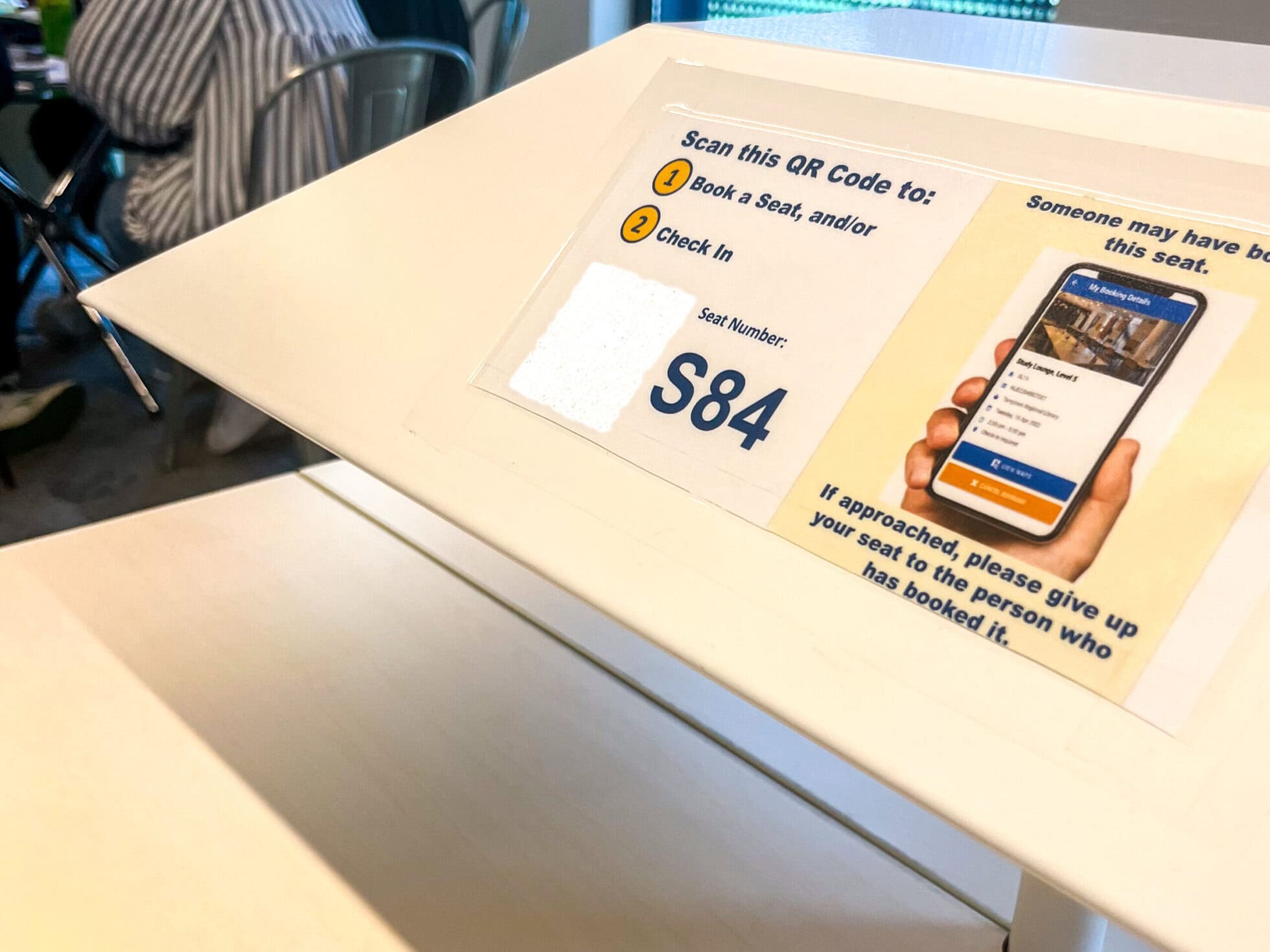
It is worth acknowledging that not every professional begins with a private suite. Many sample flexible working through the city's public infrastructure first, and our guide to coworking at Singapore's National Library sets out honestly what that free option offers and where it falls short. A library seat is admirable for solitary, silent work that fits inside a few hours, yet it forbids calls and meetings at the desk, provides no security for belongings, caps the hours one may book, and offers no professional address to put before a client.
Those limitations are not failings of the library; they are simply the boundaries of a space designed for reading rather than commerce. The reason they matter is that they map almost exactly onto the threshold at which a free arrangement stops being a saving and starts being a brake on growth. The moment a missed call or a meeting with nowhere to happen begins to shape a director's decisions, the time has come for a workspace built for business.
When a Serviced Office Becomes the Right Headquarters
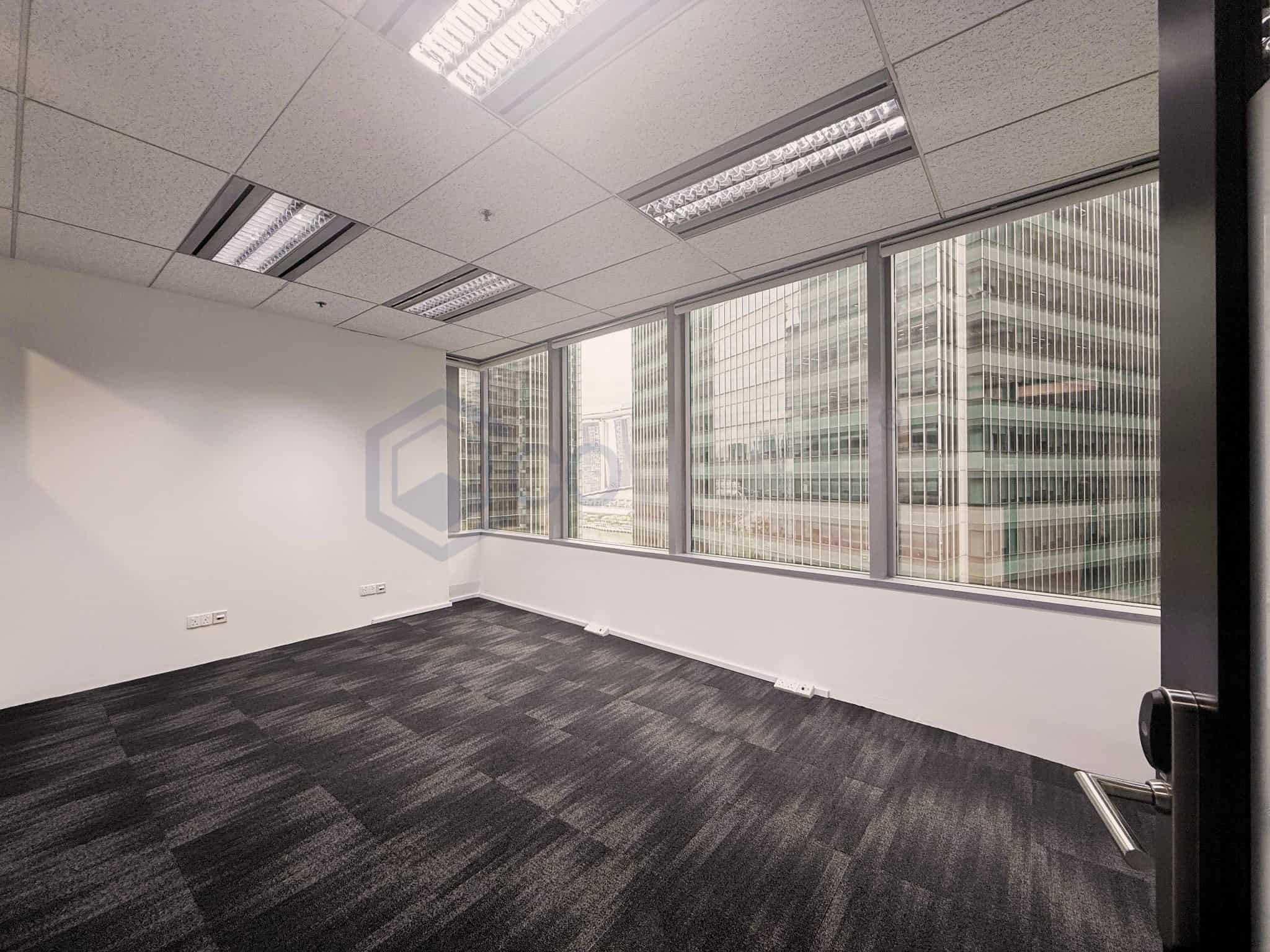
For an established firm that requires a true headquarters rather than a borrowed seat, our serviced offices answer the deeper need. A growing practice in law, recruitment, technology or consultancy depends on closed doors for sensitive conversations, on a respected city-centre address that reassures clients of its permanence, and on a space that is ready to occupy on the day the team walks in.
Our serviced offices were conceived to remove the two costs that trouble a careful director most. The first is the capital burden of fitting out a bare-shell unit that the firm may outgrow within a year and a half; we provide a fully furnished, fully serviced office so that capital remains in the business, earning its keep, rather than disappearing into carpentry and cabling. The second is the steady erosion of attention that comes from managing utility bills, cleaners and internet service providers, none of which generates a cent of revenue; we fold all of it into a single arrangement so that leadership can return to the work that pays. We achieve both without binding a firm to a rigid multi-year lease, which preserves the agility to scale a team upward or downward as conditions change rather than being held to terms agreed in a different climate.
Why Coworking Spaces Are Here to Stay for the Long Term
Gather the threads together and the conclusion is difficult to resist. Flexible terms protect a firm from overcommitment, a prestigious address sustains its standing, a private community supports its people, and a fully serviced arrangement returns its capital and its attention to productive use. These are not passing fashions. They are durable answers to durable problems, which is the truest test of whether a model will last.
As Singapore continues to refine itself as a business hub, the demand for workspace that combines stability with flexibility will only deepen.
For many growing firms, our coworking spaces will remain the choice for some Singapore teams, while those ready for a permanent base will find a headquarters in our serviced offices. Either way, the direction of travel is settled, and the businesses that recognise it early will be the ones best placed to grow on their own terms.
Frequently Asked Questions
Why are coworking spaces here to stay in Singapore?
Coworking spaces are here to stay because they convert office premises from a fixed cost into a flexible service. That single change protects capital, aligns expenditure with revenue, and gives a firm the agility to grow or contract without a long lease, which is a structural advantage rather than a passing trend.
Are coworking spaces a sensible long-term solution for established firms?
Yes. Established practices increasingly use flexible workspace — coworking near Tanjong Pagar among them — as a deliberate strategy, not a stopgap. The model supplies a prestigious address, ready facilities and the freedom to scale, which suits a mature business that values stability and a measurable return on investment.
Do coworking spaces offer enough privacy for confidential work?
They can, provided the arrangement is private rather than open-plan. Our coworking space is an enclosed shared suite with dedicated desks, and our serviced offices provide closed doors, so confidential conversations and sensitive files remain properly protected.
How does coworking help with lease flexibility?
A flexible membership replaces a rigid multi-year commitment, allowing a firm to add or release space as its workload changes. This removes the risk of being locked into terms that no longer fit the market or the size of the team.
Is a coworking space cheaper than a traditional office lease?
For most growing firms, yes, once the full picture is considered. A traditional lease carries a heavy fit-out bill, ongoing administration and a long commitment, whereas a serviced arrangement bundles furniture, utilities and services into a single predictable cost.
Can a coworking space support a hybrid team?
It is well suited to hybrid working. A team gains a professional base for the days that require it, supported by private meeting rooms and robust information technology, without paying for desks that sit empty on remote days.
Is your coworking space open-plan?
No. Our coworking space is a private, shared suite with a small number of dedicated desks, up to three in total. We do not offer open-plan or communal hot-desk seating, so each desk remains your team's own.
What is the difference between your coworking space and a serviced office?
Our coworking space provides dedicated desks within a shared private suite, ideal for a small team that wants flexibility and a professional setting. Our serviced offices add fully enclosed, private premises with a dedicated address, suited to a firm that needs a complete headquarters.
Will demand for coworking continue to grow in Singapore?
The evidence points to continued growth. Hybrid working has become permanent, businesses increasingly favour managed and fully serviced premises, and the appetite for flexible options like coworking near Cecil Street shows no sign of fading.
How quickly can a business move in?
Almost immediately. Because our serviced offices and our coworking space are furnished, connected and fully serviced, a business can begin productive work on the day it arrives, with no renovation, no contractors and no waiting.


I appreciate how coworking spaces offer flexibility. It’s crucial for startups like mine to remain agile.
I wonder if coworking spaces really can build a strong community. Has anyone had a good experience?
The idea of premium locations without high costs is appealing. It can make a big difference!
I still prefer a quiet home office. Coworking spaces can be too distracting sometimes.
Well-designed coworking spaces can enhance productivity. I support this shift in work culture.
Not everyone can adapt to hybrid work. Some still need a traditional office environment.
The sustainability aspect is crucial too. It aligns with Singapore’s green initiatives.
I like the idea of knowledge sharing in these spaces. It can lead to exciting collaborations!
I’ve heard mixed reviews about coworking spaces. Some love them but others find them impersonal.
As a freelancer, I think these spaces are a lifesaver. It’s nice to get out of the home office.