
Coworking at Singapore's National Library has quietly become one of the most sensible ways for a professional to escape an unproductive home office without committing a single dollar. It is one of the more thoughtful uses of public infrastructure available to anyone in the city. A public institution built for reading and study now doubles as a free, plug-and-play workspace, complete with a desk, a power point and a wireless connection. For founders and managers weighing every line of expenditure, that proposition deserves a closer look, because the value is real and so are the constraints.
What follows is a first-hand account of using the library as a working space, written for the professional who wants the practical details laid out plainly. I will walk through how the booking works, what the experience is genuinely like, and where it reaches its natural limits for anyone running a business rather than revising for an examination.
At the end, I will explain how our coworking space at raffles quay and our serviced offices address the precise limitations that eventually send most professionals looking for something more permanent.
What Coworking at Singapore's National Library Actually Means
The arrangement is admirably straightforward, and that simplicity is exactly what makes it so useful. Coworking at Singapore's National Library refers to the seat booking arrangement offered across the public library network, where a member of the public reserves a study seat in advance, arrives, and checks in by scanning a code at the table. The seat comes with the essentials a knowledge worker needs for a focused session: a flat surface, a chair, and in most cases a socket to keep a laptop alive.
It is, in spirit, very close to a hot desk in a commercial coworking venue. You do not own the seat. You borrow it for a window of time, you share the floor with strangers, and you pack up when your slot ends. The difference, of course, is the price. The library asks nothing, and that single fact reframes the entire calculation for a small business owner who is testing whether working outside the home or the company office is even worth the effort.
It is worth being clear about who the seats are really for. The spaces were designed with readers and students in mind, and students remain the people you will most often see filling them. The booking system, however, is open to any member of the public, which is what makes it relevant here. A solopreneur, a freelancer or a remote worker may reserve a seat just as readily as a student revising for an examination, and many quietly do exactly that. The library does not market itself as a workspace; it simply does not stand in the way of one.
Why a Solo Professional Might Turn to the Library
My own reason for trying it, during my previous place of employment, was not financial. It was the slow erosion of momentum that comes from working alone. The home office had become quiet in the worst sense, and the company premises offered no colleagues to bounce ideas against on a given day. Productivity does not simply fall in those conditions; it dissolves, often without the person noticing until a deadline arrives unmet.
The library solved that problem in a way I did not anticipate. Surrounded by people who were themselves concentrating, I found my own attention sharpening. There is a gentle social pressure in a room full of focused strangers, and it works. I even began to look forward to small human moments outside the building, such as the familiar exchange with the lady who served my morning drink at the nearby coffee shop. None of this appears in a spreadsheet, yet the lift in output was unmistakable, and the cost of obtaining it was nothing more than the time it took to reserve a seat.
For an established business, this is the part worth dwelling on. Environment shapes performance, and a flat investment of zero that produces a measurable rise in focus is the rarest kind of return. The trouble is that the library was designed for readers, not for commerce, and the seams begin to show the moment your work involves anyone other than yourself.
How to Book a Seat for Coworking at Singapore's National Library
The process is refreshingly direct and rewards a little forethought. You begin in the National Library Board's seat booking portal, where the seat booking feature lets you choose a specific branch, a date, a time, and frequently the precise seat or zone within the floor. Reserving the exact spot in advance removes the indignity of wandering between levels hoping to find somewhere unclaimed.
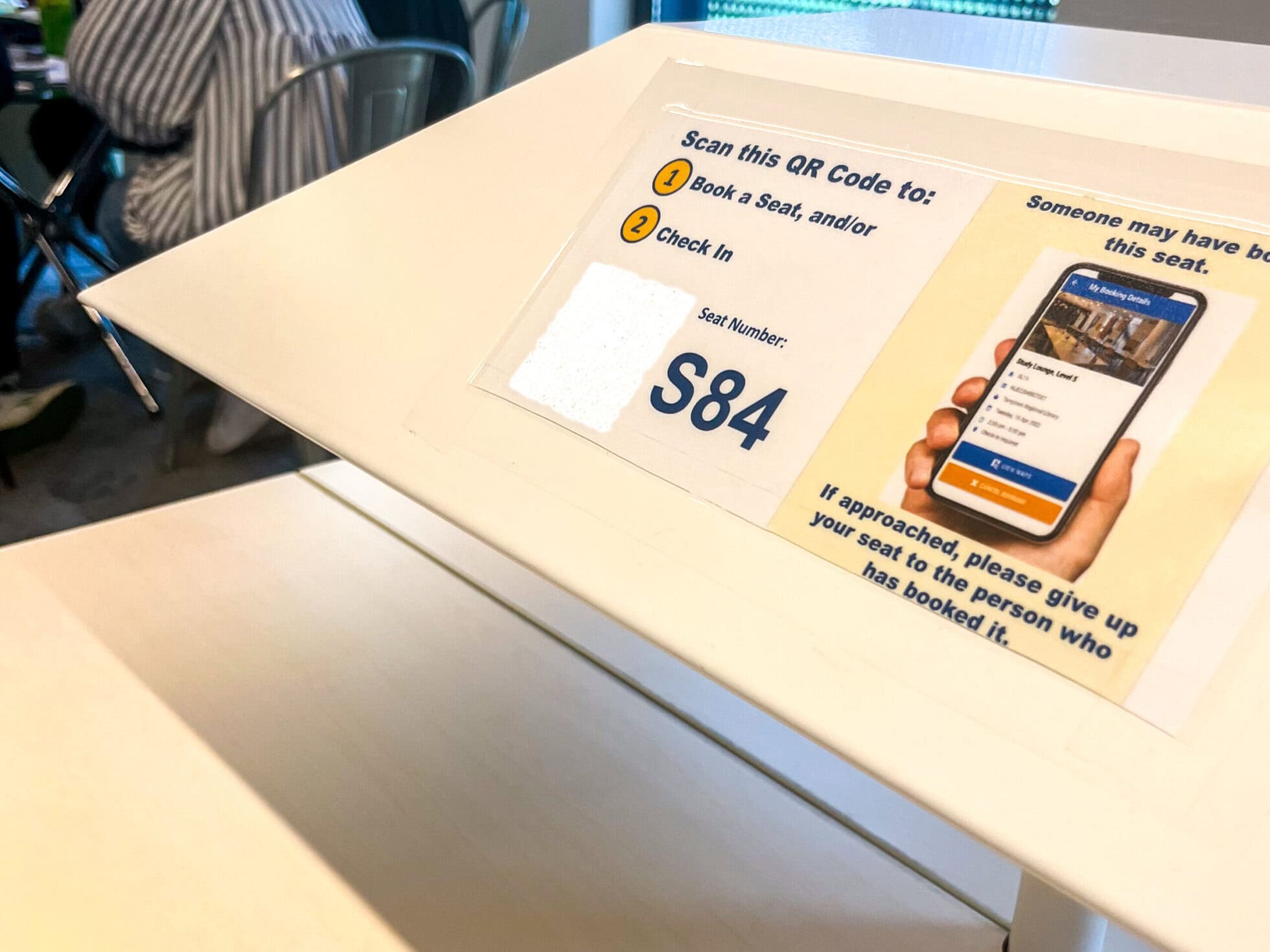
On arrival, you locate your seat and scan the code fixed to the table. That single action checks you in and confirms that the seat is yours for the booked period. The signage at the desk also carries a quiet instruction that tells you a great deal about the system: if someone approaches because the seat has been reserved in their name, you are expected to give it up. The arrangement is communal and courteous, and it depends on everyone honouring the same rules.
A word of caution on timing. Reservation systems of this kind generally release a seat after a short grace period if the person fails to check in, commonly around fifteen minutes, after which the seat returns to the pool for someone else. Arriving promptly is therefore not merely polite; it protects the booking you took the trouble to make. Because the precise rules can change, it is wise to confirm the current terms in the application before you rely on them.
Setting Up Wireless@SG and Your Equipment
Connectivity is where a smooth morning can stumble. On my first visit I had not configured Wireless@SG, and I fell back on my mobile hotspot to get online. That worked, but only just, and it is not the experience you want when a client is waiting on a document.
The reliable approach is to setup Wireless@SG beforehand and set your laptop up for the connection in advance. Reception improves considerably once the device is properly configured, and you remove a recurring source of friction from every future visit. The lesson generalises beyond the library: anything that can be prepared the night before is one less thing to negotiate when you would rather be working. A short packing checklist, kept somewhere obvious, spares you the most demoralising scenario of all, which I will come to shortly.
The Kind of Work That Suits a Quiet Library Setting
Before turning to the limitations, it is worth naming the work the library does extremely well, because matching the task to the environment is what separates a productive morning from a wasted one. The defining feature of the space is silence, and silence is an asset for any work that is solitary, deep and self-contained.
Focused, single-handed tasks are where the library excels. Drafting a report, writing a proposal, reviewing a contract, preparing a presentation, reading through research, working through a spreadsheet model, clearing a backlog of correspondence, or studying for a professional qualification all sit comfortably within its rules. These are the activities that benefit from an absence of interruption, and the quiet that prevents you from making a call is the very same quiet that lets you think clearly for two or three uninterrupted hours.
My own days there proved the point. I carried out software development, configured networks remotely over a virtual private network, and kept up with a handful of company chat threads, and all of it fitted the setting comfortably. The common thread is that every one of those tasks was conducted through a screen and a keyboard rather than through my voice. Text-based exchanges, including instant messages with colleagues, sit perfectly within a silent room; it is the spoken word, not communication itself, that the environment cannot accommodate.
The test is simple. If a task requires only you, your laptop and your concentration, the library is well suited to it. If it requires your voice, another person in the room, a confidential conversation or a piece of equipment beyond the basics, the setting begins to work against you. Knowing which side of that line your day falls on, before you reserve a seat, is the most useful planning you can do.
For anyone who needs more than a quiet desk for the afternoon, a coworking space near Cecil Street sits just a few minutes away in the CBD and offers the same focus with a proper professional setup.
The Limits to Expect From Coworking at Singapore's National Library
Here is where candour serves you better than enthusiasm. The library is an excellent free resource for focused, solitary work, and a poor substitute for a business headquarters, and understanding the difference will save you a great deal of frustration. The constraints below are not faults in the system. They are simply the natural consequences of working inside an institution built for silent study.
No Phone Calls or Meetings at Your Desk
This was the limitation that mattered most to me, and it is the one most professionals underestimate. You cannot take a call at the desk, and you certainly cannot hold a meeting. The room is a library, and conversation, even at a considerate volume, is out of place. For anyone whose day is punctuated by client calls, supplier negotiations or a quick discussion with a colleague, this single restriction can render the space unworkable. A deal that hinges on a private conversation has nowhere to happen.
If your day involves calls or client meetings, the library will hold you back — a private serviced office at Raffles Quay gives you a lockable room where you can take calls and meet clients without disturbing anyone.
Enforced Silence and a Studious Atmosphere
The same quiet that lifted my concentration also drew a hard boundary around what I could do. Everyone present is reading or studying, and there is a shared, unspoken expectation that you will keep noise to the absolute minimum. That suits deep, solitary work. It does not suit a working day that needs to breathe, switch registers, or accommodate the occasional spontaneous exchange.
No Food, and Refreshment Kept at Arm's Length
Food is not permitted in the study areas, so the rhythm of a long working session has to bend around the library's rules rather than your own. A working lunch at the desk is impossible, and any sustained stretch of work means planning your breaks around exits and nearby cafes. The greater inconvenience is the one that follows from the rule. If I grew hungry, I could not simply step out for a proper lunch, because leaving meant packing up my belongings and surrendering the seat to whoever came next, with no guarantee that it would still be free on my return. The choice, in practice, was between an uninterrupted morning and a meal, and rarely both. Taken alone it is a small thing, yet it compounds with everything else.
Security When You Step Away
There is no one watching your belongings. Every time I left for the washroom, I felt the small, nagging worry that comes with abandoning a laptop among strangers. To be fair, the atmosphere in the libraries I used was considerate, and there is a quiet sense that people look out for one another. Even so, goodwill is not a security policy. The prudent move is to take valuables with you, which is awkward and breaks your concentration each time.
No Printing, and No Safety Net for Forgotten Items
The study spaces offer no printing facilities. I happened not to need them, but a business that relies on a signed page or a physical document will find the gap conspicuous. The deeper problem is the absence of any safety net. If you forget a charger, a notebook or a particular file, there is no office store cupboard to raid and no colleague to ask. On more than one occasion the only remedy was to travel all the way home to retrieve what I had left behind, and an hour lost that way is an hour that never returns.
Caps on Booking Hours
Finally, the library limits how long you may book a seat. The cap exists to share a scarce public resource fairly, which is entirely reasonable, but it is at odds with a full working day. You cannot treat the seat as a fixed base from which to operate; you treat it as a borrowed slot that ends whether or not your work does. Scalability, in any business sense, is simply not on offer.
When Free Coworking Stops Serving Your Business
Step back and a pattern emerges. The library is superb for a solitary, quiet, self-contained task that fits inside a few hours and requires nothing but a laptop and an internet connection. It is a genuinely smart way to sample the coworking experience at no cost, and Singapore's network of branches means there is almost always a location within easy reach of where you live or work.
The moment your work involves other people, however, the model strains. Calls, meetings, confidential conversations, a permanent place to leave your equipment, a printer, a professional address, an absence of booking caps; none of these belong in a library, and all of them belong in a business. This is precisely the threshold at which a free arrangement stops being a saving and starts being a constraint on growth. Agility has a ceiling when the venue itself dictates how, when and even whether you may speak.
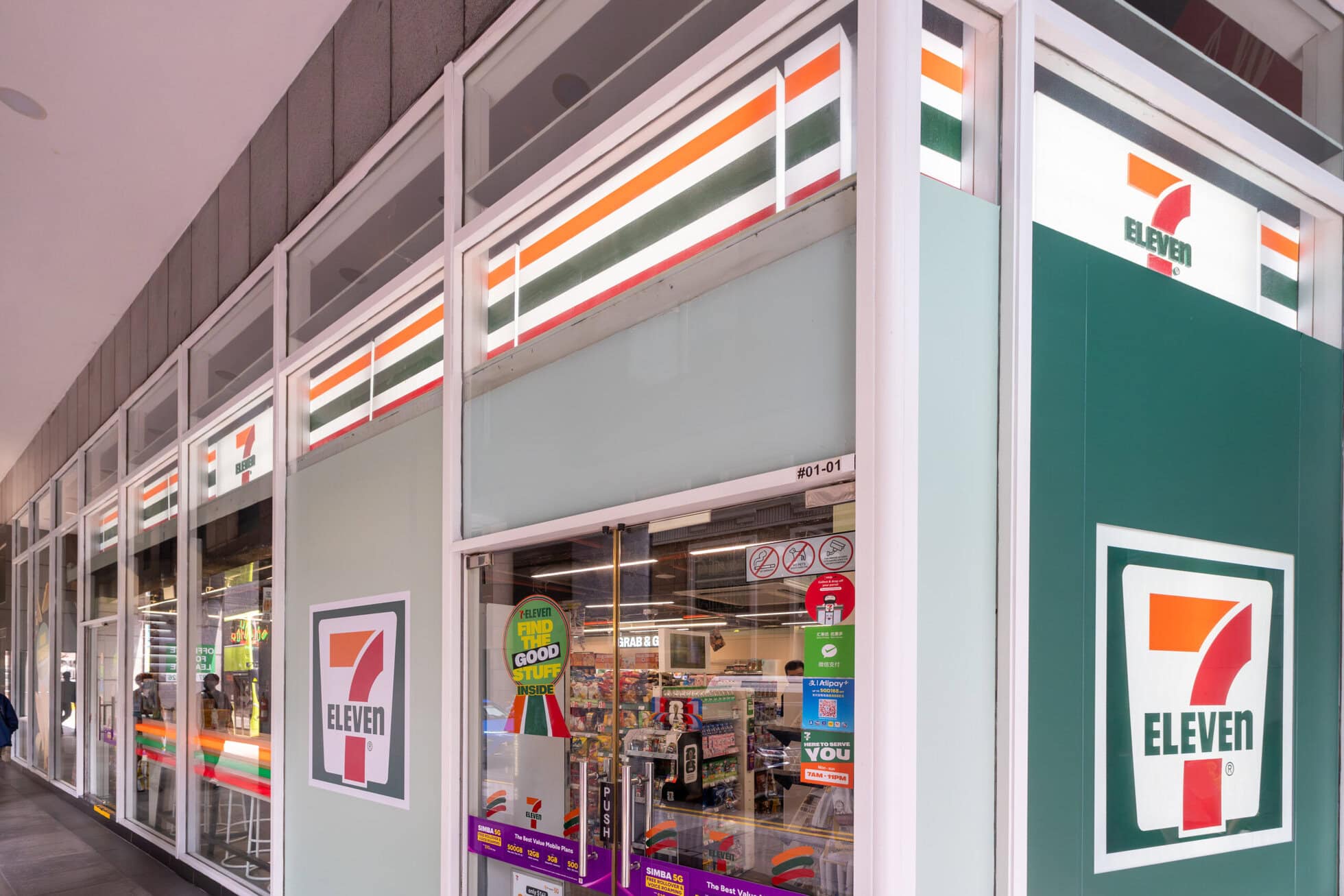
The library is not the only free spot a professional falls back on, either. A quiet convenience store table can serve the same purpose in a pinch, and I have written separately about coworking at a 7-Eleven in Raffles Place, where the trade-offs run in almost the opposite direction: you may eat and stay cool, but you lose the silence and the privacy the library protects.
Professionals coming in from the south of the city often prefer a coworking space near Tanjong Pagar, which is equally close to the main MRT interchanges.
A Private Alternative: Our Coworking Space and Our Serviced Offices
When the library's limits begin to cost you more than the rent you were avoiding, a professional workspace becomes the rational next step. The aim is to keep the things that worked, namely the focus that comes from a purpose-built environment and the flexibility of not signing your life away on a long lease, while removing every constraint that held you back.
Our coworking space is built for exactly this transition. It is not an open-plan floor of strangers competing for sockets. It is a private, shared suite containing a small number of dedicated desks, up to three in total, so you keep a permanent place of your own within a calm, professional setting. You may take a call without apology, hold a discussion with a colleague, leave your equipment securely, and work for as long as the day requires. The atmosphere supports concentration in the way the library did, but the rules are yours rather than a reading room's.
When a Serviced Office Becomes the Right Headquarters
For an established small or medium business that needs a true headquarters rather than a borrowed seat, our serviced offices answer the deeper need. A growing professional services firm, whether in law, recruitment, technology or consultancy, requires closed doors for sensitive conversations, a prestigious city-centre address that signals stability to clients, and a space that is ready to occupy on the day you walk in.
Our serviced offices remove the two costs that most worry a prudent director. The first is the capital nightmare of pouring a large sum into fitting out a bare-shell unit you may outgrow within eighteen months; we provide a fully furnished, fully serviced office so that capital stays in the business where it earns a return. The second is the quiet drain of administrative fatigue, the endless management of utility bills, cleaners and internet providers that generates no revenue whatsoever; we fold all of that into a single arrangement so your attention returns to the work that pays. Crucially, we do this without the rigidity of a traditional multi-year lease, giving you the agility to scale your team up or down as the market turns rather than being held hostage by a contract signed in a different climate.
Comparing Free Library Coworking With a Professional Workspace
Set the two side by side and the decision becomes a question of stage rather than of better or worse. Coworking at Singapore's National Library is the right tool when the cost must be nil, the task is solitary, and a few quiet hours will do. A professional workspace is the right tool when your work involves clients, colleagues, confidentiality and continuity, and when the image your business projects has begun to matter to the deals you are trying to close.
Both have their place in the life of a business. Many founders begin with the library and graduate, as I did in spirit, the moment a missed call at a silent desk or a meeting with nowhere to happen makes the true cost of free unmistakably clear. The sensible path is to use the free resource for what it does well, and to move to a private space the instant the limitations start to shape your decisions rather than merely inconvenience your afternoons.
Frequently Asked Questions
How do I book a seat for coworking at Singapore's National Library?
Use the National Library Board mobile application. Choose a branch, date, time and seat, then scan the code at the table on arrival to check in and confirm the seat is yours.
Is coworking at the National Library free?
Yes. Reserving and using a study seat carries no charge, which is the main reason professionals use it to sample coworking before paying for a commercial space.
How long can I book a seat at the library?
There is a cap on the number of hours per booking, and it can vary by branch and change over time. Confirm the current limit in the application, and plan a full day around several slots if necessary.
Do library seats have power points and an internet connection?
Many seats include a power socket, and you can connect through Wireless@SG. Downloading the Wireless@SG application in advance and configuring your laptop beforehand gives a noticeably steadier connection.
What happens if I do not check in on time?
Bookings are released after a short grace period, commonly around fifteen minutes, so that the seat returns to the pool for another member of the public. Arriving promptly protects your reservation.
Can I make phone calls or hold meetings at a library desk?
No. The study areas expect silence, so calls and meetings are not appropriate. This is the limitation most professionals find decisive, and it is where a private coworking space or serviced office becomes necessary.
Can I eat or drink at the desk?
No. Food and drink are not permitted in the study areas under the library's code of conduct, so breaks have to be planned around exits and nearby cafes. Stepping out for a proper lunch is also awkward, since leaving means packing up your belongings and giving up the seat, with no guarantee it will be free on your return.
Is it safe to leave my belongings when I step away?
There is no security for personal items, and seats are shared. Take valuables with you whenever you leave, as the courtesy of fellow users is not a substitute for a secure space of your own.
Which libraries offer seat booking?
Seat booking is available across much of the public library network throughout Singapore, including the National Library and regional branches. Live availability is shown in the application.
What is the difference between library coworking and a paid coworking space?
Library coworking is free but silent, time-limited and without privacy or facilities for calls. Our coworking space offers a dedicated desk within a private shared suite, while our serviced offices add closed doors, a city-centre address and the stability of a proper business headquarters, all without a long lease or a large upfront fit-out.




I didn’t know the library had such a good setup for working. This is perfect for freelancers like me who want to save costs.
This sounds interesting. Is it crowded during weekdays, or is it more manageable?
Hi Syafiq, it can get busy during peak hours, especially in the afternoon. Booking in advance is a good strategy.
I never thought about the library as a working space. It’s a great way to save money while staying productive.
This article really highlights how underutilised our public resources are. I might just try it out this weekend.
Do you think it’s too noisy for serious work? I’ve always viewed libraries as quiet places, but I’m curious about the coworking aspect.
It’s generally quiet, but the atmosphere of focused people can actually help with concentration. Give it a shot!
I appreciate your advice on setting up Wireless@SG. That’s been a hassle for me in public spaces.
Same here! I hope they improve the connection reliability soon.
I wonder if the library has enough outlets for everyone. That could be a problem for those of us with multiple devices.
Nice to see creative uses of public spaces! I’ll definitely check this out.
I love the idea of working among other focused individuals. It might actually help my productivity.
I find it hard to believe that students would give up their spots for professionals. How does that actually work?
It’s all about mutual respect. If someone reserved the seat, you have to leave. It’s a fair system!
As a freelancer, I often struggle with focus at home. This sounds like a perfect solution!
The whole system sounds well thought out. I hope it stays that way, even as more people find out about it.
I usually go to cafes, but they can get expensive. The library could be a game changer. Thanks for sharing!
I used to study there all the time but never thought to work there. Might give it a try for my upcoming projects.
Is there a time limit for how long I can book a seat? That might affect my plans.
Yes, typically it’s for a few hours. It’s best to check the booking portal for specifics.
I’m amazed you can just scan a code and get access! It sounds so simple.
Can I book a seat for a group? I’d love to have a brainstorming session at the library.
I struggle with distractions at home too. This library could provide the environment I need!
Absolutely! Just keep in mind the seating rules to ensure everyone can enjoy the space. Happy working!
I wonder how well the Wi-Fi actually works. I need to be connected all the time for my business.
This is such a great resource for our community. More government initiatives like this would be welcome.
What happens if I need to leave my seat for a moment? Is it safe to leave my things?
I think the atmosphere would really help with motivation. I might try it next week.