

By shifting fit-out, facilities, and support into a single, professional offering, our serviced offices at 6 Raffles Quay helps teams start faster, stay focused, and sustain performance.
In this guide, we explain how serviced offices improve productivity through turnkey delivery, lower total cost of ownership, better employee wellbeing, and the kind of prestige that supports employee retention and client confidence.
If you are currently using a coworking space, growing your business from coworking spaces to serviced offices allows for greater flexibility in managing your workspace needs. As your company scales, transitioning to a serviced office can provide the necessary infrastructure without the burden of long-term leases. This evolution not only enhances your operational efficiency but also presents a professional image to clients and partners alike.
Key Takeaways
- Our serviced offices improve employee productivity by enabling day-one operations with a turnkey fit-out, so teams avoid renovation delays and start delivering value immediately.
- Bundled, predictable monthly costs lower total cost of ownership and free budget for high-impact work such as hiring, tools, and training rather than fit-out and dilapidation risk.
- A serviced office offloads day-to-day administration support (utilities, cleaning, reception and repairs) into one operator and one invoice, reducing interruptions and keeping leaders focused on revenue work.
- Business-grade IT, secure networks, and in-house support cut workflow friction by resolving connectivity and tech issues faster, protecting client delivery and meeting momentum.
- Private offices and strong acoustics increase focus and confidentiality, helping teams move faster on negotiations and sensitive work without noise-driven delays.
- A central CBD location and well-designed workspace (ergonomics, lighting, breakout areas) support wellbeing, attendance, and retention, which sustains productivity over time.
1. Turnkey Fit-Out Cuts Downtime And Accelerates Time-To-Productivity
Time-to-productivity is one of the most underestimated business metrics. When a team is waiting for desks, meeting rooms, internet installation, or basic access control, the organisation is effectively paying salaries into a holding pattern. A serviced office compresses that ramp-up period.
Move-In Readiness: Furniture, Meeting Rooms, And Shared Facilities
A well-run serviced office is built for day-one operations. Furniture is already specified, meeting rooms (see why meeting rooms are important for serviced offices) are functional, and shared facilities are maintained as part of the offering.
That matters because early weeks in a new office tend to be decision-heavy. When your team is meant to be selling, advising, negotiating, or delivering client work, every hour spent choosing chairs or chasing contractors comes at an opportunity cost.
Faster Market Entry Without Renovation Lead Times And Contractor Risk
Renovation timelines are rarely linear. A single delayed permit, a materials shortage, or a contractor scheduling issue can push handover by weeks. The hidden cost is not only the rent you might already be paying, but the operational limbo: staff working remotely without the right environment, client meetings moved offsite, onboarding stretched thin.
A serviced office behaves more like a ready asset than a construction project. You are not managing contractor risk: you are deploying a workspace that is already producing value. For leadership teams who treat time like capital, this shift is significant.
2. Lower Total Cost Of Ownership (TCO) Frees Budget For High-Value Work
Productivity is also a financial architecture. When cash is tied up in fit-out and unexpected premises costs, the budget for high-value work narrows: better talent, better tools, better training, stronger client delivery.
Capex Avoidance Vs Bare-Shell Renovation And Dilapidation Exposure
A bare-shell unit can lure decision-makers with a lower headline rent. Then the numbers compound: design fees, contractor margins, project management time, equipment purchases, and finally dilapidation exposure when you exit.
Serviced offices reduce this capital expenditure burden. Instead of investing heavily into fixed improvements that may not match your headcount a year from now, you preserve capital for activities with clearer returns.
Predictable Monthly Opex For Cleaner ROI And Cashflow Planning
Predictable operating expenditure makes it easier to plan hiring, set delivery targets, and maintain service quality during uncertain periods. With a serviced office, the monthly cost is typically bundled: rent, utilities, cleaning, shared amenities, and support.
That bundling reduces the number of variables that can destabilise a quarter. When the board asks for a productivity plan, it is easier to defend investment in revenue-generating work when premises costs are steady and transparent.
In other words, lower total cost of ownership supports optimising productivity through better allocation.
3. Admin Offload Removes Non-Revenue Work From Leaders And Teams
Single Invoice Convenience: Utilities, Cleaning, And Reception
Traditional offices tend to splinter responsibility. Utilities, cleaners, pantry supplies, building access cards, internet service providers, ad hoc repairs, reception coverage. Each has its own vendor and its own escalation path.
A serviced office consolidates these obligations. One invoice, one operator, one set of standards.
Onsite Operations Standards That Prevent "Small Issues" Becoming Big Disruptions
Many productivity losses begin as minor irritations: a meeting room that is not reset, a printer that fails at the wrong moment, a cleanliness issue that distracts the team, an access control problem that delays a client.
The behavioural impact is real. People start to anticipate friction, so they build workarounds. Workarounds then become habit, and habits become culture. Strong onsite operations prevent that drift.
Industry research frequently notes how distractions consume working hours at scale. We see the same pattern in professional services settings: the more predictable the environment, the more cognitive bandwidth is reserved for client outcomes.
4. Reliable IT And Support Reduce Friction In Daily Workflows
In client-facing businesses, poor connectivity is an execution risk. It delays decisions, disrupts presentations, and quietly undermines confidence.
Business-Grade Connectivity And Secure Networks For Client-Facing Teams
A serviced office that caters to professional teams typically provides business-grade connectivity, structured network options, and a security posture aligned with client expectations.
This matters for legal, recruitment, consultancy, and technology teams where confidentiality and reliability sit close to the brand promise. A dropped call during a negotiation or a lagging video conference during a pitch is more than awkward: it changes the rhythm of the conversation.
When evaluating providers, we suggest treating network resilience as a core productivity lever
In-house IT team For Faster Resolution And Less Lost Time
Even with strong infrastructure, issues happen. The difference is resolution speed. In-house support reduces the time spent diagnosing, escalating, and waiting.
The productivity benefit is straightforward:
- fewer staff-hours spent troubleshooting
- fewer meetings delayed due to technical problems
- less after-hours catch-up because the workday was interrupted
For teams optimising productivity, this is an unglamorous advantage that often delivers more value than another square metre of space.
5. Private Offices Improve Focus, Confidentiality, And Deal Velocity
Closed-Door Spaces For Calls, Negotiations, And Sensitive Work
Private serviced office space supports the realities of professional services: confidential calls, negotiations, candidate discussions, fee agreements, dispute matters, and client situations that require discretion.
When the environment protects privacy, the team moves faster. There is less hesitation, fewer awkward relocations to find a quiet corner, and fewer delays caused by trying to schedule around noises. One such example is how our serviced office may complement a healthcare clinic where space may be prioritised for patients.
Acoustic Control And Distraction Reduction Compared With Open-Plan Setups
Open-plan layouts can be collaborative, but they also increase interruption frequency. Studies often report that a significant portion of employees feel less productive in noisy, exposed environments.
Acoustic control is hence not a luxury detail. It is a design choice that protects deep work, reduces error rates, and improves the pace of execution.
In a private office setting, confidentiality and focus reinforce each other.
The result is improved deal velocity: quicker drafting, quicker review cycles, fewer fractured conversations, and fewer follow-up meetings required simply because people could not hear clearly the first time.
6. Professional Meeting Infrastructure Lifts Client Outcomes And Team Execution
Meetings are where decisions are priced, tested, and agreed. When meeting infrastructure is weak, the organisation pays twice: once in lost time, then again in compromised outcomes.
Bookable Rooms, AV, And Reception Support For Seamless Delivery
Professional meeting rooms with reliable audio-visual systems, tidy presentation surfaces, and reception support change the quality of delivery.
Consider a routine scenario: a client arrives early, a confidential document needs printing, and a remote participant joins by video. In a serviced office with mature operations, these are standard needs, not exceptions. The team stays focused on the agenda rather than the logistics.
Fewer Last-Minute Workarounds That Erode Productivity And Morale
Workarounds carry a hidden morale cost. When teams repeatedly improvise meeting space, borrow equipment, or apologise for technical failures, they begin to expect that client work will be harder than it needs to be.
A strong meeting setup reduces:
- preparation time per meeting
- risk of delayed starts
- rework caused by misunderstandings
Over a quarter, these savings compound. The organisation becomes calmer, more responsive, and easier to manage.
7. CBD Location Advantages At 6 Raffles Quay Improve Attendance And Responsiveness
Location is often framed as prestige alone, yet it is also a daily operational variable. In a central business district setting, time behaves differently. Travel becomes more predictable, client access improves, and the day contains fewer small delays.
Commute Predictability And Amenity Access As A Driver Of Employee Wellbeing
Employee wellbeing is not an abstract initiative; it is the accumulation of daily conditions.
Commute stress, access to meals, the ability to reset between meetings, and the sense that both work and the journey home are manageable all contribute to a healthy work-life balance.
A serviced office in the central business district tends to improve commute predictability for teams coming from multiple parts of Singapore, especially when public transport options are concentrated. Staff on the East–West Line can alight at either Raffles Place or Tanjong Pagar, which makes our serviced office a short walk from Tanjong Pagar an easy daily commute rather than a transfer-heavy one.
Proximity To Clients, Courts, Banks, And Partners For Faster Turnarounds
At 6 Raffles Quay, proximity to key institutions and business partners can shorten turnaround times in ways that are easy to overlook:
- faster in-person client meetings when sensitive topics require it
- easier access to banks and counterparties for time-sensitive matters
- smoother coordination with professional partners nearby
In high-trust industries, speed is often interpreted as competence. A central location can hence improve responsiveness and reinforce professional image at the same time. For firms leaving older Cecil Street buildings, our serviced suites near Cecil Street keep client meetings just as walkable while taking facilities issues off the team's plate.
8. Workspace Design Supports Employee Wellbeing And Sustained Performance
We tend to talk about productivity as output per hour. In practice, sustained performance is more revealing: how well a team performs at three in the afternoon, not only at nine in the morning.
Ergonomics, Lighting, And Cleanliness As Everyday Productivity Multipliers
Ergonomics reduces fatigue. Lighting affects alertness. Cleanliness influences comfort and attention. None of these are dramatic, yet they are persistent. Their effect is similar to compound interest: modest daily improvements that accumulate into visible outcomes.
Natural light and a considered environment also support mood and focus. In private serviced offices, these factors are easier to control because you are not negotiating them with dozens of unrelated tenants.
Breakout Areas That Enable Recovery Without Leaving The Building
Breakout areas are not indulgent spaces. They allow short recovery periods between demanding tasks. Teams in professional services frequently move between intense concentration and interpersonal interaction. Without a suitable place to reset, the mind carries the previous meeting into the next.
A serviced office that includes thoughtful breakout zones supports healthier pacing:
- brief decompression after client calls
- informal internal check-ins without booking a formal room
- quiet moments that prevent decision fatigue
This is a direct input into employee wellbeing and, over time, into employee retention.
9. Flexibility And Scalability Reduce Disruption During Growth Or Volatility
Traditional leases reward certainty. Many businesses do not have the luxury of certainty, even when they are stable. Headcount changes, project pipelines fluctuate, and new markets open faster than forecast.
Right-Sizing Headcount Without Lease Rigidity And Space Waste
When space is oversized, the business pays for emptiness and tries to justify it. When space is undersized, the business pays in friction: noise, lack of meeting capacity, and awkward seating arrangements.
A serviced office model supports right-sizing with less disruption. That protects productivity because the team is not repeatedly reorganising itself around real estate constraints.
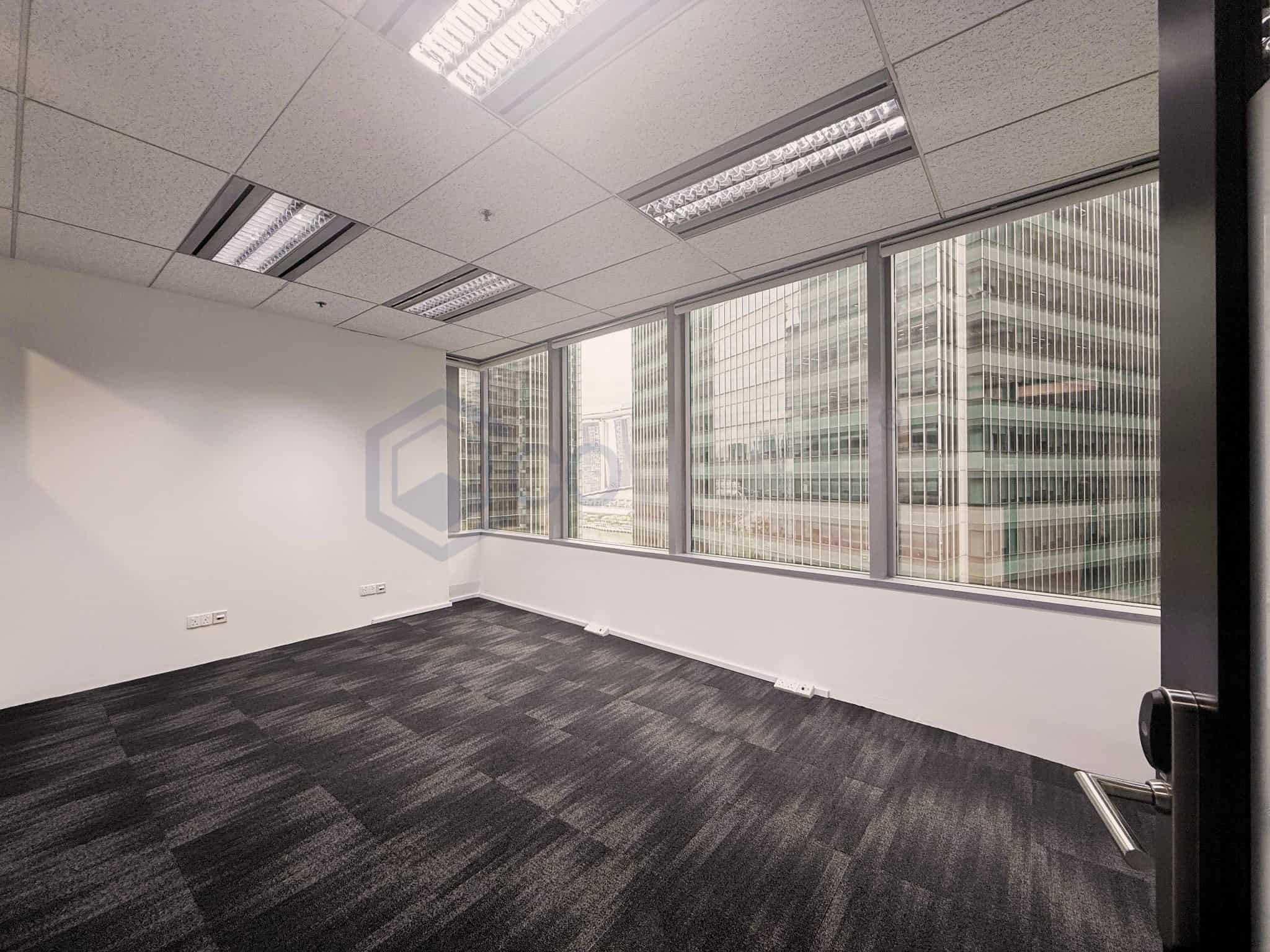
Bare serviced office units are available for customising from scratch. This flexibility allows teams to tailor their workspaces to fit specific needs, fostering creativity and collaboration. Furthermore, the adaptability of these spaces means businesses can scale quickly in response to changing demands.
Shorter Commitments That Protect Stability While Preserving Agility
Shorter commitments are sometimes portrayed as a trade-off against stability. In practice, they can protect stability by reducing the financial shock of being wrong.
If market conditions shift, agility becomes a form of risk management. The business maintains a professional base while preserving the ability to adjust terms, footprint, and fit without writing off a large fit-out investment.
This is where flexibility supports optimising productivity: fewer relocations, fewer rushed decisions, fewer transitions that drain leadership time.
10. Stronger Employer Brand Improves Employee Retention And Hiring Efficiency
Employees notice the signals a workplace send in stability, standards, and ambition.
Prestige Address And Experience As A Signal Of Business Stability
A serviced office in a recognised central business district building supports a professional image. For clients, it signals credibility. For employees, it suggests that the business is established and serious about quality.
In hiring conversations, this often reduces friction. Candidates can picture themselves working there. They can bring clients there. The business appears prepared.
Retention Link: Better Workplace Experience Lowers Attrition And Knowledge Loss
Employee retention is directly related to attrition. Attrition has a direct productivity cost: onboarding time, lost client context, reduced continuity, and the subtle fatigue that follows repeated handovers.
A better workplace experience supports retention by reducing daily irritants and by improving the environment in which people spend a large portion of their week.
11. Onsite Community And Services Enable Smarter Ways Of Working
There is a common concern among executive teams: community sounds like noise. In a premium serviced office, the value is more controlled. It is optional access to people and services that make work smoother.
Lightweight Networking Without Sacrificing Privacy
A professional community can be useful when it remains lightweight. A brief introduction to a potential partner. A recommendation for a specialist. A sense of being in a serious business environment without needing to participate in it.
The benefit is an optional proximity to opportunity.
Shared Services That Support Optimising Productivity (Printing, Pantry, Mail Handling)
Shared services remove small operational tasks that otherwise fragment the day. Printing, pantry management, and mail handling are simple functions, yet they frequently interrupt staff at the worst possible moments.
When these services are standardised, teams gain:
- fewer task switches
- smoother client document workflows
- less time spent tracking deliveries
This is the practical side of optimising productivity: reducing friction where it quietly accumulates.
12. A Practical Checklist For Choosing A Serviced Office That Maximises Productivity
Not every serviced office is equal. Fit and finish can look similar in photos, while the operational substance differs materially. When we evaluate options, we suggest using a checklist that focuses on reliability, privacy, and the realities of client work.
What To Validate: IT Resilience, Security, Privacy, And Meeting Capacity
Key validations that tend to predict productivity outcomes:
- Internet resilience: dual lines or clear redundancy options, plus transparent service-level support
- Network security: secure configurations suitable for confidential client work
- Privacy controls: solid doors, acoustic performance, and sensible visitor management
- Meeting capacity: enough rooms for peak periods, not only average days
- Support responsiveness: clear escalation paths when something fails
Commercial Terms To Compare: Inclusions, Expansion Options, And Exit Clauses
Commercial clarity protects execution. We recommend comparing:
- Inclusions: what is truly bundled versus billed separately
- Expansion options: ability to add offices or desks without relocating
- Exit clauses: how risk is managed if headcount or strategy changes
- Deposit and reinstatement expectations: avoiding surprise end-of-term costs
A serviced office should feel like a well-priced instrument: transparent, stable, and designed to perform under different market conditions.
Conclusion
Serviced office space improves employee productivity when it reduces the unseen costs of traditional leasing: downtime during fit-out, leadership attention diverted into administration, and the daily friction that erodes focus. In a premium, well-operated environment, teams gain move-in readiness, reliable technology, private offices for confidential work, and meeting infrastructure that supports decisive client delivery.
For established businesses seeking a headquarters that signals stability, a serviced office also strengthens employee wellbeing and employee retention through a better day-to-day experience, especially in a central business district location such as 6 Raffles Quay. The outcome is not only a nicer office. It is a more reliable operating platform for growth, responsiveness, and consistent performance.
Frequently Asked Questions
How do serviced offices improve employee productivity compared with a traditional lease?
Serviced offices improve employee productivity by cutting downtime and friction: you move into a ready-to-use workspace with furniture, meeting rooms, utilities and support already in place. That reduces renovation delays, admin burden and day-to-day disruptions, helping teams start faster and stay focused on revenue-generating work.
How does a turnkey serviced office reduce time-to-productivity for new teams?
With a turnkey serviced office, day-one essentials—desks, internet, access control, meeting rooms and shared facilities—are operational immediately. This shortens the “holding pattern” where salaries are paid but output is limited, and it prevents leadership time being consumed by contractor management and fit-out decisions.
Why does lower total cost of ownership (TCO) in a serviced office boost productivity?
Lower TCO improves productivity by freeing budget and attention for higher-value work. Serviced offices avoid CapEx-heavy fit-outs and dilapidation risk, while predictable monthly OpEx (often one invoice covering rent, utilities and cleaning) stabilises cashflow and supports better hiring, tools and training decisions.
Do private serviced offices really improve focus and confidentiality?
Yes. Private serviced offices reduce interruptions, improve acoustic control and support confidential calls, negotiations and sensitive client work. Open-plan noise can erode deep work, whereas closed-door space helps teams move faster with fewer repeated conversations, fewer errors and less time wasted searching for quiet areas.
What should I check when choosing a serviced office to maximise employee productivity?
Prioritise reliability over aesthetics. Validate IT resilience (redundancy and clear support), network security, privacy standards (doors, acoustics, visitor management) and peak-time meeting capacity. Then compare commercial terms—what’s truly included, how easy it is to expand, and what exit clauses protect you if headcount changes.
How can a CBD location like 6 Raffles Quay improve employee productivity and attendance?
A central location can improve productivity by making commutes more predictable, reducing daily stress and improving punctuality. Proximity to clients, banks, courts and partners also speeds up time-sensitive work and in-person meetings.



I love the idea of serviced offices! It really does make sense for companies wanting to hit the ground running without the headache of renovations.
This article highlights a key issue. The downtime from waiting for traditional offices to be ready is costly. Serviced offices are definitely a smarter choice.
I’ve been working from home for too long. Moving to a serviced office seems like a good compromise between home and traditional office settings.
Are there any service offices that cater specifically to small startups? I’m looking for something budget-friendly.
This makes me wonder how much more productive teams could be if they didn’t have the typical office distractions. Serviced offices sound promising.