

For businesses that need stability, agility, and a professional image, relationships at work matter just as much as square footage.
In CoWorkSpace Office Space at Raffles Quay, we demonstrate how to build relationships in office space through thoughtful daily contact, structured collaboration, and a private office environment designed to support trust, discretion, and long-term return on investment.
1. Informal Lunches And Tea Breaks That Turn Daily Contact Into Trust
Informal Lunches and regular breaks are often underestimated because they look ordinary on the surface. Yet in our professional office, trust accumulates in small, repeated moments. A shared table, a short pause between meetings, a familiar exchange over Tea and Bubble Tea, these become the quiet market signals of reliability.
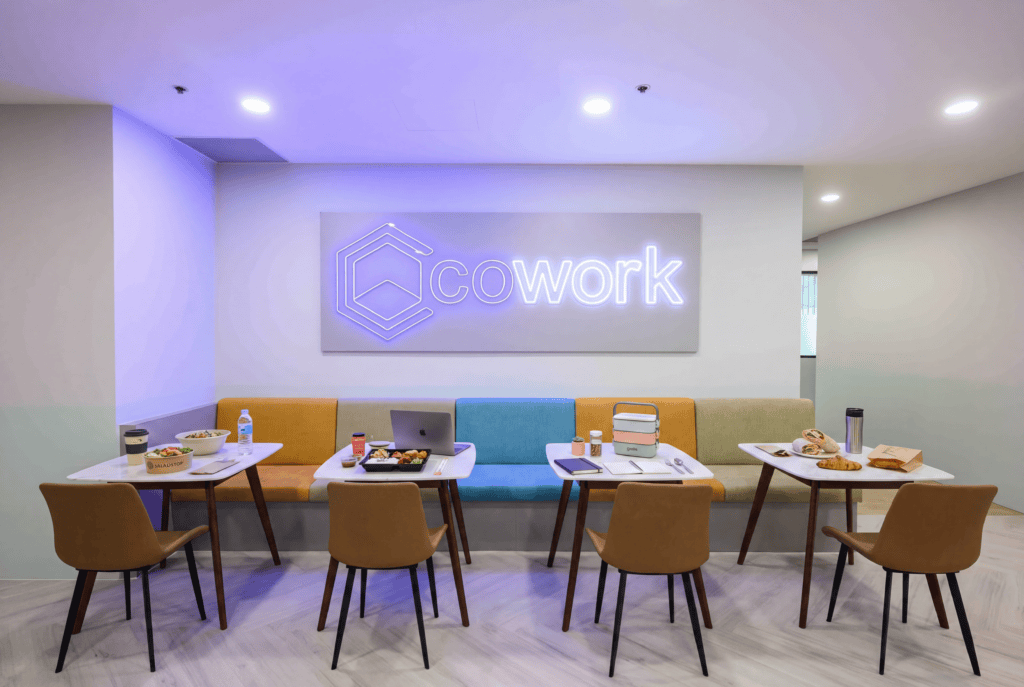
In our workspace, we see these moments as part of the infrastructure that supports productivity. A legal consultant may meet a recruitment director while waiting for tea. A branch manager may mention a staffing challenge over lunch and receive a practical introduction to someone who has solved it before.
Shared meals have long been associated with stronger morale, easier communication, and better energy through the day. That matters in environments where decisions carry financial consequences. When people know one another beyond formal meetings, they tend to ask sharper questions, raise concerns earlier, and collaborate with less friction.
We shape these moments with intention:
- comfortable breakout areas that encourage short but natural conversations
- nearby dining options around Raffles Quay that make lunch meetings easy to arrange
- pantry spaces suited to quick tea breaks without disturbing private work
- an atmosphere professional enough for clients, yet relaxed enough for genuine human exchange
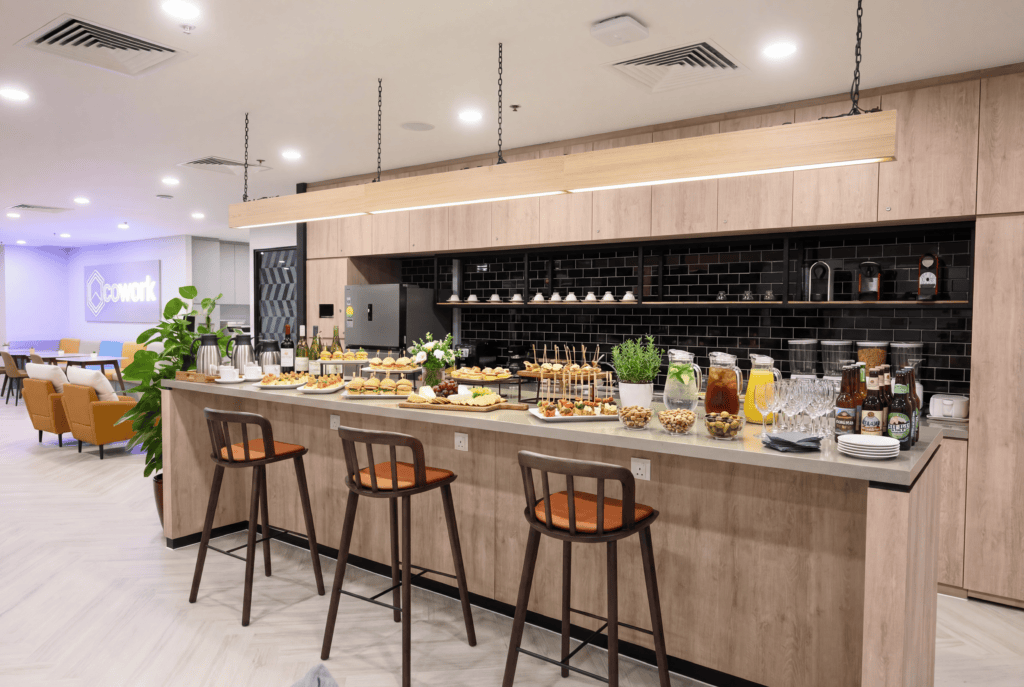
The result is simple but commercially meaningful. Daily contact becomes trust. Trust becomes faster cooperation. And that improves stability without adding administrative burden or reducing privacy.
2. Workshops That Create Practical Knowledge Sharing And Cross-Industry Collaboration
Workshops take relationship-building a step further. If lunches and tea breaks open the door, workshops give people a reason to stay in the room and contribute something useful. In a premium serviced office, that matters because executives do not need more networking for its own sake. They need exchanges that produce insight, referrals, and better decisions.
We have found that well-designed sessions create a more durable form of connection than casual introductions alone. A founder in technology may explain a shift in procurement cycles. A consultant may share how clients are evaluating risk in a volatile market. A recruitment specialist may outline hiring patterns that affect everyone in the room. This is Cross-Industry Collaboration at its best: not abstract inspiration, but practical intelligence moving across sectors.
That is why Workshops work particularly well in office environments built for established businesses. Participants arrive with real operating experience, clear commercial pressures, and a stronger filter for what is worth their time. The discussion tends to be grounded. Advice is tested against budgets, headcount plans, client expectations, and return on investment.
We favour formats that respect executive calendars while still creating value:
Short, focused sessions
Forty-five minutes is often enough when the topic is precise. Regulatory updates, hiring trends, client acquisition, cybersecurity, and market entry strategy all lend themselves to concise discussion.
Peer-led knowledge sharing
When members speak from direct experience, credibility rises. The room becomes more than office space. It becomes a source of working intelligence.
Small-group problem solving
A compact session often produces better results than a large presentation. People contribute more freely when the setting feels professional, structured, and confidential.
In that sense, workshops operate like compound interest. One useful session may lead to a referral, a partnership, or a smarter operational decision months later. The return is not always immediate, but it is often substantial.
3. A Professional Office Environment That Makes Relationship-Building Consistent, Private, And Scalable
Relationship-building only works when the environment supports it. Without the right setting, even the best intentions begin to fray. Noise compromises concentration. Poor layout discourages conversation. A lack of privacy makes serious discussion impossible. For firms managing client matters, commercial negotiations, or regional operations, that is not a minor inconvenience. It is a reputational risk.
We believe the strongest business relationships are built in an office space that balances openness with discretion. That is one reason a serviced office model is so effective for growing firms. It offers room for connection without exposing every conversation to the floor.
At CoWorkSpace, our serviced office Singapore environment is shaped around three realities executives care about.
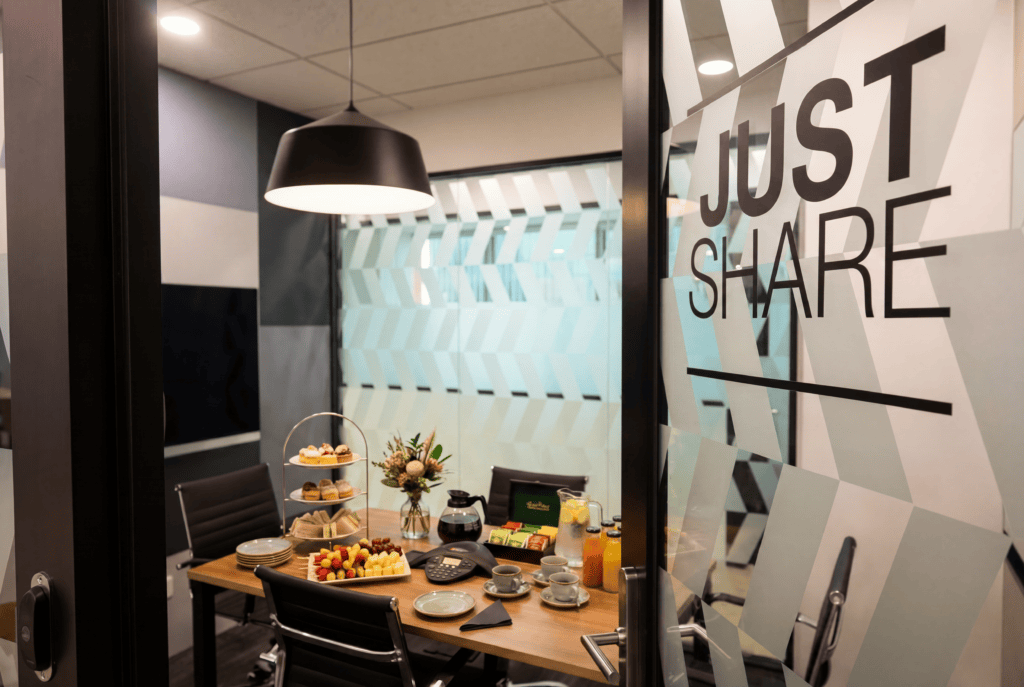
Consistency
Trust grows through repeated exposure. A stable workspace in the Central Business District gives teams and clients a reliable place to meet, return, and continue conversations. A prestigious address at Raffles Quay also reinforces professional image. It signals permanence, not improvisation.
Privacy
Closed-door meetings still matter. Deals, hiring decisions, legal reviews, and financial discussions cannot happen in a setting that feels public. Private office Singapore CBD solutions allow businesses to maintain confidentiality while still benefiting from a broader professional community outside the door.
Scalability
A company may need space for six today and ten in nine months. In a traditional lease, that shift can trigger costly renovation, negotiation, or relocation. In flexible office solutions Singapore businesses can adjust more carefully, preserving cash flow and reducing exposure. That agility supports relationship continuity because teams are not repeatedly disrupted by office upheaval.
The operational layer matters too. In-house information technology support, meeting rooms Singapore businesses can book quickly, transparent pricing, reception support, and all-inclusive services remove administrative drag. Leaders are not pulled into cleaning contracts or internet outages when they should be focused on clients and staff.
That is where productivity and relationships stop competing with each other. In the right environment, they reinforce one another. People connect more naturally because the office works as it should. Quiet when discretion is needed. Welcoming when collaboration is useful. Ready from day one, without the capital expenditure that so often shadows conventional office rental decisions.
Conclusion
We build stronger business relationships by treating them as part of how a professional office should function, not as an afterthought. Informal Lunches, practical Workshops, and a private, scalable serviced office environment together create trust without sacrificing focus. For businesses seeking prestige, stability, and agility in Singapore, that balance can be more valuable than extra square metres. It can shape how growth actually happens.
Frequently Asked Questions about Building Relationships in Office Spaces
How do informal lunches and tea breaks help build trust in the office?
Informal lunches and tea breaks create comfortable settings for casual conversations, which over time build trust and improve communication. Sharing these moments regularly encourages team bonding and enhances morale, making collaboration smoother and more effective.
What role do workshops play in fostering cross-industry collaboration in office environments?
Workshops provide a structured platform for executives to share practical knowledge and solve problems together. They encourage focused, peer-led discussions that generate actionable insights, leading to stronger professional connections and smarter business decisions across industries.
Why is privacy important in a professional office environment for relationship-building?
Privacy allows confidential conversations such as client meetings, negotiations, and sensitive discussions to occur without exposure. A private office setup supports trust and discretion, which are essential for maintaining strong business relationships and protecting reputations.
How does a serviced office contribute to stable and scalable relationship-building in the workplace?
Serviced offices offer flexible space arrangements that adapt to business growth without disruption. As companies explore innovative strategies for a modern workforce, understanding hybrid work models in office space is crucial for fostering productivity and employee satisfaction. By leveraging flexible workspaces and accommodating diverse work preferences, businesses can create an environment that attracts top talent. This approach not only enhances collaboration but also supports a balanced work-life dynamic that is increasingly sought after in today’s job market.
They provide a consistent, professional environment with essential support services, enabling teams to focus on collaboration and maintain ongoing relationships without administrative distractions.
What makes daily contact in an office more effective than formal meetings alone?
Daily contact through informal interactions like short breaks or casual chats fosters genuine familiarity and trust. Unlike formal meetings, these moments reduce friction, encourage honest communication, and create a foundation for faster cooperation among colleagues.
Can building relationships in office spaces improve overall business growth?
Yes, cultivating strong workplace relationships enhances communication, trust, and collaboration, which contribute to better decision-making and operational efficiency. A thoughtfully designed office environment that supports these connections can accelerate growth by aligning people and processes effectively.


I completely agree with the idea that informal lunches can build trust. I’ve seen how simple interactions can make a difference in my office.
These workshops sound like a great way to connect. I think it’s important that they focus on practical knowledge rather than just networking.
The concept of balancing privacy and openness is crucial. A noisy office can ruin productivity. I like how this approach favours both aspects.
It’s refreshing to see an emphasis on collaboration in office design. So often, spaces focus on aesthetics but forget about functionality.
I wonder how these setups impact employee morale in the long run? It’d be interesting to see some statistics on that.
Workshops really can spark collaboration. It’s all about creating an environment where people feel comfortable sharing.
I’ve always thought that casual environments foster better relationships. It’s about more than just work, after all.
The focus on smaller sessions is smart. It allows for more interaction and less of that awkward silence you find in big groups.
Shared meals definitely help in building rapport. It’s those little moments that lead to bigger conversations later.
I really appreciate the emphasis on creating a private space for serious discussions. It’s vital in maintaining professional integrity.
This article is spot on! Trust and cooperation can really streamline operations. It’s good for business overall.