

I'm Wilson, office manager at CoWorkSpace's office space at 6 Raffles Quay. Its my second year now, and I thought I would like to update about my work here at CoWorkSpace.
My work with my colleagues Nat (see: Nat's perspective of CoWorkSpace) and Cindy is a steady kind of work, the sort that keeps doors opening on time, meetings starting without friction, and teams settling into their day without having to think about what is happening behind the scenes.
That, to me, is the real shape of office space management.
In a serviced office, stability matters as much as style. Companies come here because they want a headquarters that feels ready from day one, without the drag of admin fatigue, lease rigidity, or heavy upfront spend.
My role of manager in office space sits quietly in the middle of that promise.
I Oversee The Day-To-Day Engine Of CoWorkSpace Operation Management
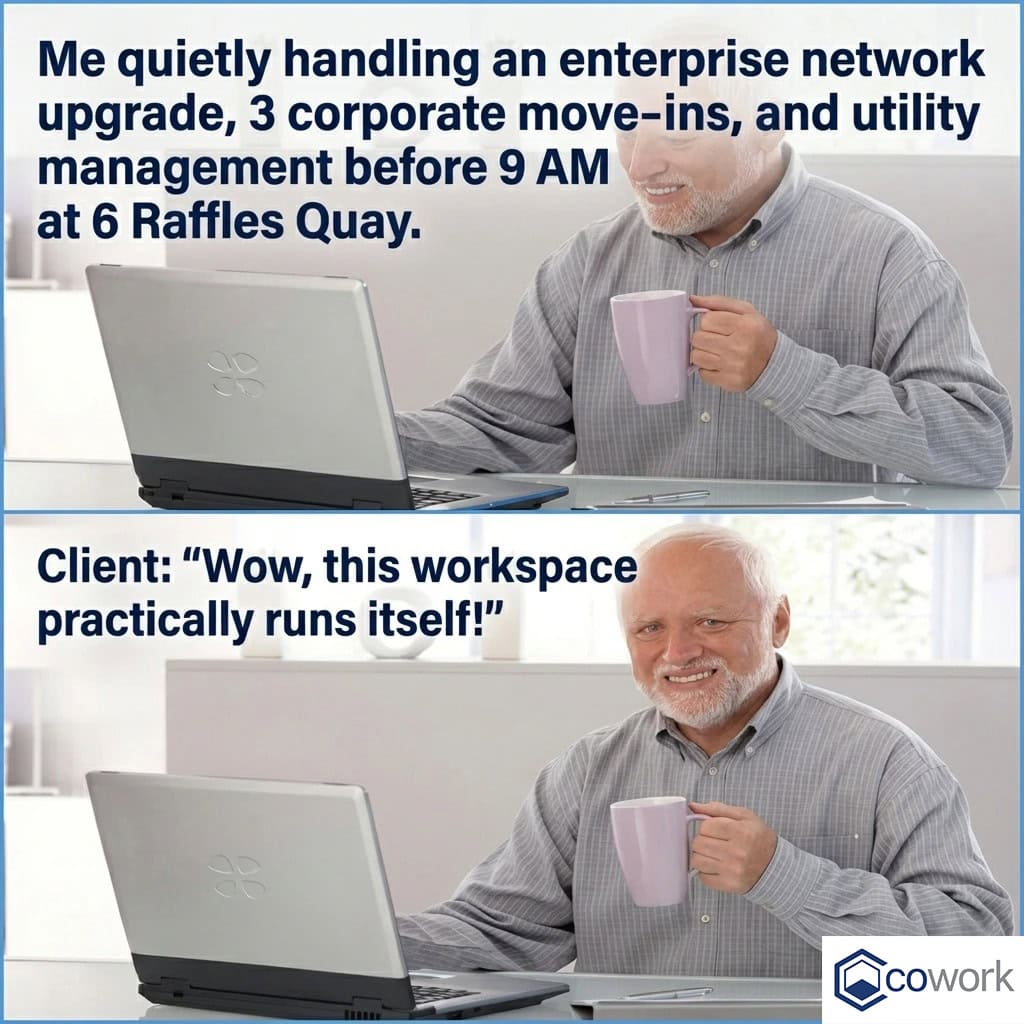
Most mornings begin like this: - I arrive, walk the space, and notice the small things first. Lights. Temperature. Meeting rooms. Pantry stock. The condition of shared areas.
A large part of managing our office space at 6 Raffles Quay is really about preventing interruption before anyone experiences it.
That includes coordinating cleaning, checking with building teams, following up on repairs, keeping an eye on utilities, and making sure the space stays safe, orderly, and presentable.
In a place like CoWorkSpace at Raffles Quay, companies are want consistency. A private office should open as expected. The internet should hold steady. Air-conditioning should be comfortable. Access should be simple. Shared areas should feel looked after.
I spend a fair bit of time moving between details that most people only notice when they fail. A chair that needs replacing. A printer that starts jamming. A pantry consumable running low earlier than usual. A meeting room booking that needs to be adjusted because a client call has overrun. One issue on its own is small.
Several together can affect productivity more than people realise.
There is also the matter of space planning. Teams grow, contract, reshuffle. Sometimes a company needs one more room for a new hire. Sometimes they need to scale quietly without the disruption of moving everything at once. That is where agility becomes practical.
I help keep that transition smooth, so businesses can stay focused on revenue-generating work instead of office logistics.
The aim is simple: a workspace that feels steady, efficient, and ready.
I Manage Client Journeys From Prospects, Office Tours And Quotations To Long-Term Customer Relationship Management
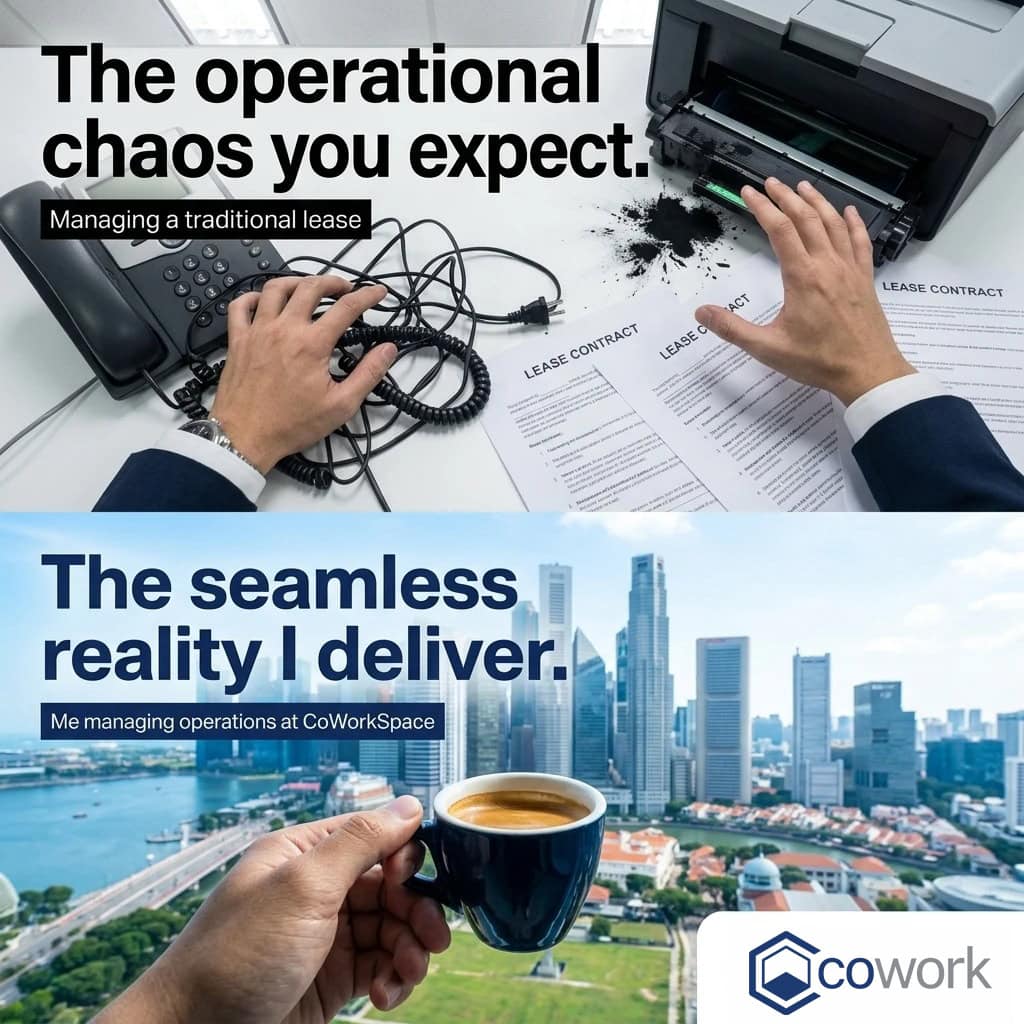
One part of my work begins before a client has even moved in.
Prospects arrive with a certain look about them, often thoughtful, sometimes pressed for time, usually trying to weigh risk against opportunity.
They are not just comparing desks or square footage.
They are assessing whether a space can support their business with enough privacy, prestige, and operational stability.
So when I handle prospects - office tours and quotations, I try to keep the process clear and grounded.
I walk them through the space, yes, but I also listen carefully to what sits behind the enquiry.
A legal team may need closed-door confidentiality. A consultancy may want a CBD address that reflects its standing with clients.
A regional branch may need quick setup without capex exposure or a rigid traditional lease.
Those conversations shape the quotation. It is not only about what is available: it is about fit, scalability, and timing.
If a team expects to add staff within six months, that matters.
If they need meeting room access for frequent client presentations, that matters too. If they want transparent pricing because they are tired of hidden add-ons for internet, cleaning, or support, that usually matters a great deal.
Once a client comes on board, the relationship does not stop at handover.
Good customer relationship management in a workspace is ongoing and quite practical. I check in, help with onboarding details, coordinate requests, and keep communication open when needs change.
Over time, this builds confidence. Clients know who to speak to. They know issues will be handled. They know the office is not just occupied, but properly supported.
That continuity has value. For many SMEs and branch offices, stability is part of ROI.
When a workspace provider removes friction from the day, teams can direct more attention to clients, hiring, and growth. My part in that is fairly quiet, but it stays close to the centre of how trust is built.
I Protect Business Continuity Through Billing And Invoicing, Procurement And Maintenance Of Office Supplies, And Fast Issue Resolution
There is another side of the role that is less visible, though it often decides whether operations remain calm or start to fray.
I mean the administrative backbone: billing and invoicing, procurement and maintenance of office supplies, vendor follow-up, and quick issue resolution when something suddenly stops working.
Billing and invoicing need to be accurate, timely, and easy to understand.
That sounds basic, but it matters. Businesses want predictability. Finance teams do not want to chase unclear charges or reconcile avoidable discrepancies. In an all-inclusive serviced office model, clean billing supports trust because clients can see what they are paying for and plan accordingly.
Then there is procurement. Coffee, paper, pantry items, stationery, cleaning supplies, replacement equipment, small things, until they are missing.
The procurement and maintenance of office supplies is part of keeping the workplace usable without interruption. I monitor usage patterns, reorder before shortages bite, and coordinate with vendors so standards stay consistent.
Issue resolution is where the pace can change. A faulty access card. Internet instability just before a presentation. An air-conditioning concern in the middle of the afternoon. A room setup that is not right for a client meeting. I try to respond quickly, coordinate the right support, and keep people informed while things are being fixed.
At CoWorkSpace, that often means working across teams rather than in isolation. Building management, cleaners, suppliers, internal support, in-house IT team, each has a role. My job is to connect those moving parts so the solution reaches the client cleanly.
This is the part many decision-makers are happy not to think about. And I understand that. Founders and country managers should not have to spend time on utility bills, consumables, maintenance calls, or preventable office disruptions. If I am doing my work well, they are left with something more valuable than convenience. They get continuity, scalability, and room to focus on the business itself.
Conclusion
When I think about what I do as a manager in our office space, it comes back to steadiness.
I keep operations moving, building client relationships within our office space from first tour to long stay, and handle the practical details that protect business continuity.
It is quiet work, mostly. But in the right office, quiet work is what gives a company the confidence to carry on at its own pace.
Frequently Asked Questions About Office Space Management
What does an office space manager do on a daily basis?
An office space manager oversees daily operations such as facility maintenance, coordinating cleaning, managing utilities, and ensuring shared areas are safe and orderly to maintain a smooth working environment.
How does an office space manager support client relationships in a coworking environment?
They manage client journeys from initial tours and quotations to ongoing support, addressing specific business needs, onboarding, and maintaining open communication to build long-term trust and satisfaction.
Why is billing and invoicing management important in office space management?
Accurate and timely billing provides financial predictability and fosters trust, ensuring clients understand charges and can budget without surprises, which is essential for stable, ongoing business continuity.
How does space planning help businesses in coworking offices?
Space planning allows companies to scale or reorganise smoothly as teams grow or change, helping them avoid disruptive moves and focus on their core business activities without office logistics distractions.
What are common challenges an office space manager must resolve quickly?
Issues like internet instability, faulty access cards, air-conditioning problems, or meeting room setup errors need fast, calm resolution to minimise disruption and maintain productivity in the workspace.
How does an office space manager ensure the workspace stays presentable and functional?
By regularly checking lighting, temperature, stock levels, repairs, and vendor coordination, the manager prevents interruptions and keeps the office environment efficient, comfortable, and ready to use.


I really appreciate the focus on the little details in office management. It’s surprising how much of an impact they have.
As someone who works in a shared space, I definitely feel the difference when things are well-managed. It makes a huge difference in productivity!
You mentioned a lot about ensuring clients feel supported. Do you think that’s becoming a standard expectation in coworking spaces?
The way you handle client journeys seems really effective. It must be challenging to balance prospect needs with operational efficiency.
It’s interesting to read about the behind-the-scenes work in office management. I never considered how much effort goes into maintaining a productive workplace. Kudos to you, Wilson!
I love the emphasis on agility in your role, especially with how teams evolve. It’s crucial in a fast-paced environment like ours.
It’s refreshing to see someone in management who really cares about the day-to-day operations. Those small annoyances can really add up!
Billing and invoicing can be such a headache. Having it clear and straightforward must really help maintain client trust.
Managing the little things like pantry stock and temperature really does make a difference. I think many of us take these for granted until something goes wrong. Thanks for sharing this insight!
I think the part about space planning is spot on. Changes can happen so quickly in teams, and being prepared is key.
Your approach to client management seems very pragmatic. It’s not just about the space but about how it fits their needs.
It’s interesting how you prevent interruptions before they happen. That must require a lot of foresight.
I’ve always thought that behind-the-scenes work is undervalued. What you do really helps everyone stay focused.