

The strain on healthcare businesses arrives quietly through overheads: fit-out bills that balloon, leases that trap cash for years, and the steady drip of administrative distractions that pull leaders away from operations.
A traditional office lease looks sensible on paper, until hidden costs begin stacking up: reinstatement clauses, cabling and internet lead times, maintenance surprises, and the internal time spent coordinating cleaners, access cards, printers, and repairs.
Meanwhile, patient volumes shift, partnerships form, teams expand, and sometimes a new service line needs a quiet launch.
Our premium serviced offices in 6 Raffles Quay can solve these pointers: predictable Total Cost of Ownership, faster go-lives, privacy for sensitive work, and the prestige that strengthens trust.
In this guide, we explain how serviced offices can help healthcare businesses protect agility while still projecting the stability of a true headquarters.
Why Healthcare Operators Are Rethinking Traditional Leases
Traditional leasing has always carried a certain gravity: long terms, substantial deposits, and the assumption that stability comes from permanence. For healthcare businesses, that assumption can be costly. Clinical operations are already capital-intensive, and property decisions can either support growth or quietly erode it.
Market uncertainty has also become less theoretical in recent years. Shifts in interest rates, staffing costs, and patient behaviour have forced many operators to revisit fixed overheads.
When revenue is variable but the lease is not, risk concentrates in the wrong place.
Reducing Capex Exposure And Improving Total Cost Of Ownership (TCO)
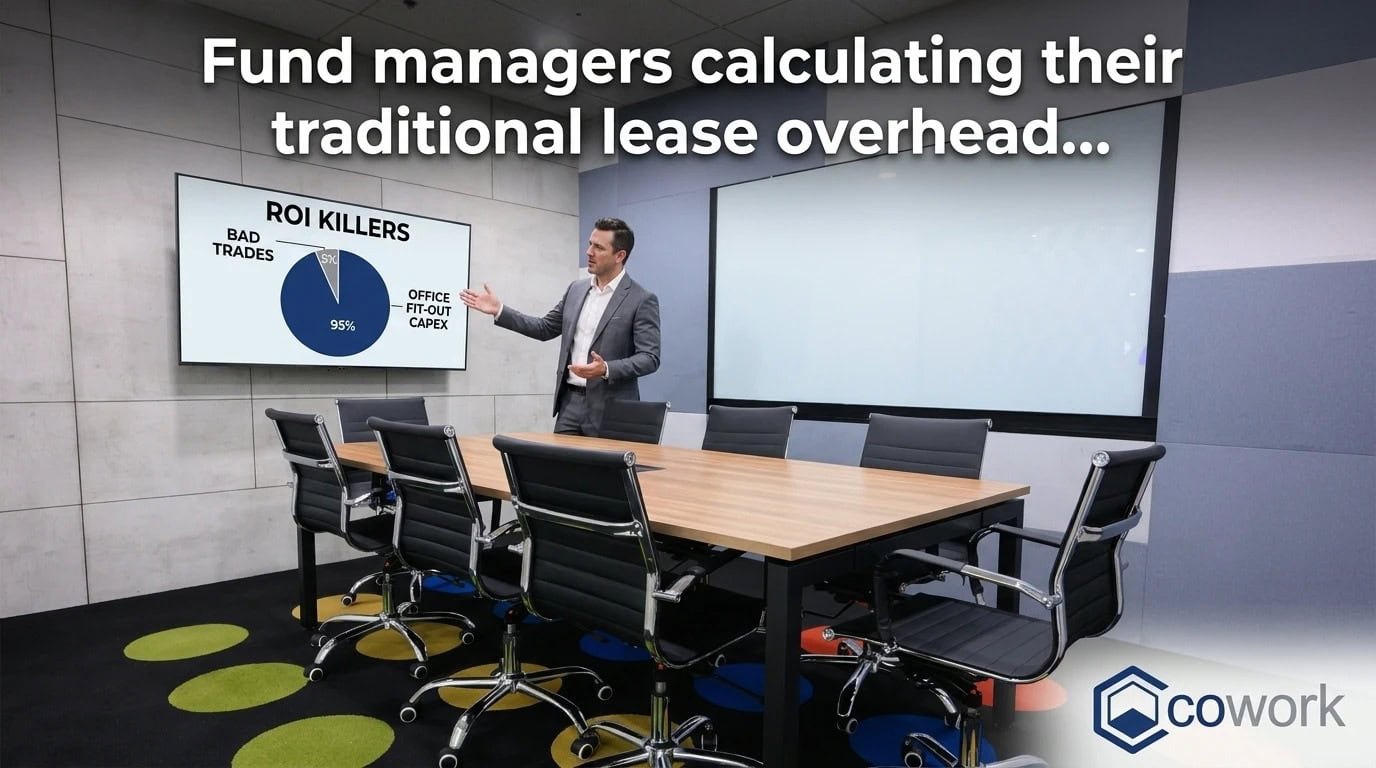
A bare-shell unit is an invitation to spend before you earn. Fit-out, partitions, air-conditioning works, compliance-related upgrades, furniture, network cabling, security access, signage, and professional fees can quickly resemble a small equipment purchase, except it depreciates faster and is harder to repurpose.
A serviced office model shifts that profile. Instead of treating the workplace as a construction project, we treat it as an operational line item with a clearer Total Cost of Ownership. The monthly fee typically bundles what traditional tenants discover one invoice at a time. There are also quieter savings: fewer vendor negotiations, fewer emergency call-outs, fewer hours lost chasing handovers.
Avoiding Lease Rigidity While Keeping A Stable Headquarters Presence
Healthcare work values continuity. Patients, partners, insurers, and referral networks respond to signals of permanence. At the same time, signing a multi-year lease can feel like purchasing downside risk.
Serviced office agreements, when structured properly, create a middle position: a stable headquarters presence with the option to adjust as your operating reality changes. That matters when a new programme requires hiring six people quickly, or when a consolidation plan means the team becomes leaner for a period.
We often describe this as a portfolio mindset. The core headquarters remains credible and client-ready, while the commitment stays proportionate to what you can forecast with confidence.
What A Serviced Office Delivers For Healthcare Teams Day To Day
A healthcare business can survive an expensive decision. It struggles with friction that repeats every day.
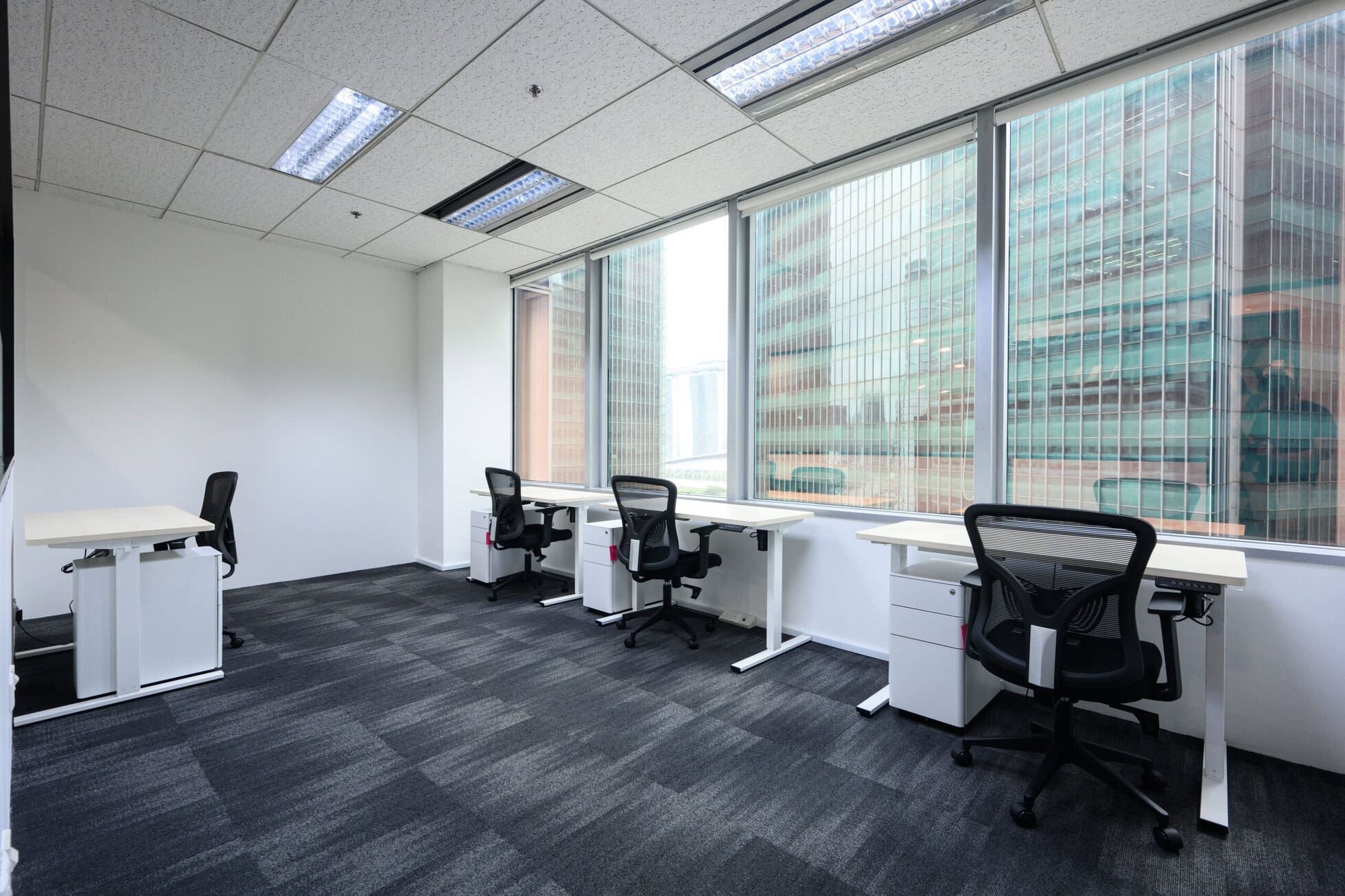
The day-to-day value of a serviced office is not only the furniture and address, but the reliability of the operating environment: the way the office opens on time, the meeting room works when it must, and the internet holds steady when a senior clinician is reviewing sensitive documents with a partner. Another significant factor in choosing a workspace is the ambiance it provides. Serviced offices with stunning views can enhance productivity and creativity, offering an inspiring backdrop for collaboration and innovation. The right environment can motivate teams and attract clients, setting the stage for successful business interactions.
Turnkey Set-Up For Fast Go-Lives And Business Continuity
Speed is not always about growth. Sometimes it is about protecting momentum.
When a team is launching a new service line, opening a Singapore presence, or relocating under time pressure, a turnkey serviced office reduces the gap between decision and operation. Desks, connectivity, meeting rooms, and front-of-house processes are already designed to function. That compresses lead times and lowers the probability of a delayed start.
This is also business continuity in practice. If a previous space becomes unsuitable, or if an organisation needs a satellite location quickly, the ability to mobilise within days rather than months can prevent operational disruption.
Administrative Offload: Facilities, Utilities, Cleaning, And IT Support
In healthcare leadership meetings, administrative fatigue rarely appears as a line item. Yet it steals attention in the most inconvenient way: one utility issue becomes five emails: one internet outage becomes a reputational moment.
A serviced office transfers a large portion of that non-revenue generating activity to a provider that is structured to handle it. Cleaning schedules, utilities, maintenance, mail handling, printer support, and day-to-day troubleshooting move out of your internal workload.
In addition to these services, being able to setup your phone systems in serviced offices is another critical aspect that allows you to make followup calls for appointments, or helping out with administrative work for revenue generating activities.
For teams that value uptime, the difference is especially visible in technology support. Having responsive onsite help changes the tone of the week. Instead of spending hours coordinating external vendors, problems are diagnosed and resolved within the building. For a closer look at what that support can cover, see how we provide support for office administration at our serviced office.
Privacy, Professionalism, And Patient Trust In A CBD Setting
Healthcare businesses trade in trust. Even when you are not running a clinic, you are handling sensitive information, clinician workflows, partner negotiations, and occasionally difficult conversations.
A Central Business District setting can reinforce professionalism, but only if the workspace matches the expectations that come with the postcode.
Closed-Door Spaces For Sensitive Conversations And Clinical Administration
Healthcare administration is often confidential by default: patient-related documentation, clinical governance notes, supplier pricing, insurer discussions, staffing matters. Open-plan environments create risk through proximity rather than intention.
Private serviced offices, with proper sound separation and access control, offer closed-door space where sensitive work is not performed in a semi-public setting.
There is also a human factor. When teams work in an environment designed for concentration, retention improves and day-to-day friction falls. This link between private space and stability is explored in how serviced offices improve productivity, wellbeing and retention, an area of great interest for healthcare operators competing for experienced administrative and managerial talent.
Meeting Rooms That Support Consults, Case Reviews, And Partner Discussions
Not every healthcare business needs to conduct clinical consultations in-office. Many still require a setting that can host structured, confidential meetings: case reviews, partner discussions, vendor negotiations, and stakeholder briefings.
Well-run serviced offices provide meeting rooms that are predictable in the ways that matter: comfortable seating, controlled acoustics, reliable screens and connectivity, and front-of-house support that preserves professionalism. A client should not be greeted by uncertainty at reception, nor should a senior clinician be troubleshooting a cable while colleagues wait.
At their best, these rooms function like an extension of your governance process: formal enough to support serious decisions, calm enough to keep discussions measured.
Using A Satellite Office To Extend Reach Without Overcommitting
Healthcare demand does not distribute evenly across a city. Referral patterns, corporate client concentrations, and transport convenience all shape where work happens.
A satellite office strategy lets healthcare businesses respond to that geography without turning each experiment into a multi-year lease.
Coverage, Convenience, And Staff Deployment Across Locations
A satellite office can support several practical goals at once: shortening travel for staff, creating a neutral meeting location for partners, or placing your team closer to a particular cluster of clients.
For healthcare operators that coordinate across clinics, laboratories, corporate accounts, or specialist networks, the ability to place a small team in a second location can remove meaningful inefficiency. Over time, that convenience often translates into better scheduling discipline and fewer operational compromises.
Scaling Up Or Down As Demand Changes Across Clinics And Teams
A satellite office is also an instrument for scaling without overcommitting. It lets you test demand and refine staffing levels while keeping fixed costs proportionate.
This matters when demand is seasonal, when a contract may renew but is not yet confirmed, or when a new service is promising but still in discovery. The workspace becomes adjustable capacity. In the same way that a prudent investor avoids locking all capital into one illiquid position, a growing healthcare business benefits from keeping overheads responsive.
Compliance, Security, And Risk Management Considerations
Healthcare is not only service delivery. It is also governance.
A serviced office can support compliance and security, but it does not eliminate your responsibility. The right question is not whether the provider is responsible for everything: it is whether the environment makes good governance easier to maintain.
Data Security, Access Control, And Confidential Document Handling
Healthcare businesses handle information that can carry regulatory and reputational consequences if exposed. Even when patient data is not stored onsite, sensitive commercial information still requires protection.
In a quality serviced office environment, we look for practical safeguards: controlled access to floors and suites, visitor management, clear protocols for keys and cards, and a culture that treats confidentiality as normal rather than exceptional.
Digital security deserves equal attention. Reliable network design, sensible segmentation options, and predictable support reduce the temptation for teams to create workarounds.
Practical Due Diligence Checklist Before Signing A Serviced Office Agreement
Before signing, it is worth running a short, disciplined checklist. The aim is not to over-lawyer the decision, but to avoid the predictable regrets.
- Confirm what is truly included in the monthly fee: utilities, cleaning, meeting room allowances, after-hours access, and support scope.
- Review term flexibility: notice periods, expansion options, and the practical process for changing office size.
- Inspect privacy fundamentals: sound separation, lockable storage, and the way reception manages visitor access.
- Assess information technology resilience: provider support hours, escalation paths, and backup connectivity options.
- Understand document handling: mail processes, parcel security, and any available secure disposal procedures.
It can also be helpful to sense-check your decision against market context. Ongoing reporting on business conditions from sources such as Reuters often highlights the same principle that applies here: flexibility carries value when uncertainty is real.
Serviced Office Vs Coworking: Choosing The Right Fit For Healthcare Work
The conversation is often framed as serviced office versus coworking, as if one is serious and the other is not. In reality, both can serve a purpose. The decision depends on what kind of healthcare work you are doing, and what you must protect.
When Coworking Works And When Private Offices Are Non-Negotiable
Coworking can suit healthcare-adjacent teams when work is primarily collaborative and low-risk: project-based health technology teams, market development staff, or training functions that value access to shared spaces.
Private offices become non-negotiable when confidentiality is integral to the job. If your team regularly handles sensitive documents, discusses patient-related matters, or manages regulated workflows, open seating introduces friction and risk.
This distinction also relates to staffing stability. Teams asked to do complex work in a noisy environment often compensate with longer hours and higher stress. Over time, that cost is paid through morale and turnover.
Balancing Collaboration With Confidentiality And Governance
A practical model for many healthcare businesses is blended: a private serviced office as the operational base, supplemented by shared meeting rooms and communal areas for networking when appropriate.
We also recommend clarifying governance early. Decide what work can occur in shared spaces, what must remain behind closed doors, and how documents are stored and disposed of. Those decisions sound procedural, yet they shape culture.
When the balance is correct, the office supports both sides of the healthcare equation: the human need for collaboration and the professional duty of confidentiality.
Evaluating A Provider In Singapore’s CBD: What To Look For
Not all serviced offices in the Central Business District are designed for the same kind of business. Some optimise for density. Others prioritise privacy, support, and a more measured client experience. Healthcare businesses considering us as a satellite office often have in common the reasons fund management firms like our serviced offices.
The flexible terms and professional environment foster a culture of productivity, allowing clients to focus on their core business. Additionally, the strategic location enhances their visibility and accessibility within the financial hub of the city.
For healthcare businesses, the provider decision is less about trends and more about operational risk.
Location, Brand Impact, And Client Access At Raffles Quay
In Singapore, a Central Business District address can function like a quiet credential. It signals stability to partners and reassures clients that they are dealing with an established operator.
Raffles Quay is particularly strong for access and brand impact: well-connected, recognisable, and practical for meetings that involve senior stakeholders. A location like this reduces the friction of in-person engagement, which still matters when discussions are sensitive or high-stakes.
If you are weighing premium options, our overview of why Singapore organisations choose serviced offices provides additional context on how location and flexibility combine into a stronger business case.
Service Levels That Protect Uptime: Internet Redundancy And Onsite Support
A premium address is not sufficient if operations are brittle.
For healthcare teams, uptime is not a slogan. We recommend asking direct questions about internet redundancy, router and firewall support options, and how quickly onsite teams respond when something fails. The difference between a fifteen-minute fix and a half-day outage is not only productivity: it is confidence.
Administrative support matters as well: reception protocols, mail and courier handling, meeting room preparation, and after-hours access. These details influence how your organisation feels to clients and staff.
Where providers can demonstrate mature support processes, the space begins to resemble an operational partner rather than a landlord. That is the standard we associate with premium serviced office solutions at CoWorkSpace in Raffles Quay, and it is worth insisting on wherever you choose.
Conclusion
Healthcare businesses succeed when they protect focus: capital goes into clinical capability, leaders spend time on service quality and growth, and the organisation presents itself with calm authority.
A serviced office can help by turning workspace from a high-risk fixed commitment into a controlled operating decision. The result is not only cost efficiency and a clearer Total Cost of Ownership, but also faster mobilisation, better privacy, and a professional setting that supports trust.
Smaller setups may require just a single desk - when considering the comparison between our serviced office and our coworking space, it's essential to evaluate the specific needs of your business. While a serviced office offers privacy and a tailored experience, coworking spaces tend to foster collaboration and networking opportunities. Ultimately, the choice depends on the company culture you wish to cultivate and the level of flexibility you require.
If we approach the workplace the way we approach any critical asset, with due diligence and a preference for resilience, the best outcome is simple. We gain a headquarters that feels established, with the agility to adapt as demand changes and the market shifts.
Frequently Asked Questions
How can a serviced office help healthcare businesses reduce overheads and improve Total Cost of Ownership (TCO)?
A serviced office helps healthcare businesses control costs by bundling utilities, cleaning, maintenance, and core admin support into a predictable monthly fee. This reduces Capex-heavy fit-outs and surprise invoices common with traditional leases, freeing budget and leadership time for clinical operations and service quality.
Why are healthcare operators in Singapore moving from traditional leases to a serviced office?
Traditional leases can lock healthcare operators into long terms, large deposits, and hidden costs (reinstatement, cabling delays, repairs). A serviced office reduces lease rigidity while keeping a credible HQ presence, so teams can expand, consolidate, or launch new services without taking on unnecessary downside risk.
How quickly can a serviced office be set up for a healthcare business in Singapore’s CBD?
A serviced office is designed for fast go-lives: furnished private offices, ready broadband, meeting rooms, and front-of-house processes are typically available immediately or within days. This speed supports business continuity when relocating or opening a satellite presence under time pressure, without months of fit-out work.
Is a serviced office or coworking better for healthcare work that involves confidential information?
For healthcare work involving sensitive documents, regulated workflows, or patient-related discussions, a private serviced office is usually the safer choice than open coworking. Closed-door rooms, access control, and quieter environments help protect confidentiality and governance, while still offering shared facilities when appropriate.
What should healthcare teams check before signing a serviced office agreement?
Run due diligence on what’s included (utilities, cleaning, meeting room allowances, after-hours access), term flexibility (notice periods and expansion options), privacy basics (sound separation and lockable storage), and IT resilience (support hours and backup connectivity). Also confirm visitor management and secure document handling practices.
Why does a Singapore CBD address matter for patient trust and partner credibility in healthcare businesses?
A CBD location can act as a credibility signal, reinforcing professionalism for partners, insurers, and referral networks. In healthcare, trust is operational: reliable reception, predictable meeting rooms, and a stable headquarters presence reduce friction during sensitive discussions—helping organisations project calm authority while staying agile.



0 Comments