

Across Singapore, we are seeing more established small and medium-sized enterprises question whether the prestige of a long lease still delivers the best return on investment.
The shift is operational. When headcount moves with project cycles, and hybrid working becomes part of the talent conversation, the office can start to behave less like an asset and more like a slow-moving liability. These are the reasons why singapore teams choose our coworking space in 6 Raffles Quay and a coworking space at Tanjong Pagar.
For the established small and medium-sized enterprise director who needs a credible Central Business District presence without inheriting the administrative burden, a coworking space at Cecil Street can be the more rational play.
Why Singapore Teams Reconsider Traditional Offices
Some teams do not set out to abandon conventional leases.
They simply reach a point where the office stops matching the way the business actually behaves.
In Singapore, where the market moves quickly and expectations have sharpened, that mismatch is showing up earlier.
Unpredictable Headcount And Project Cycles
A common moment: finance asks for a three-year projection, operations offers a range, and commercial leadership quietly admits that two upcoming bids could change everything.
For project-led teams, product launches, regional pilots, and seasonal demand, space is not a stable requirement. It is a variable that is the reason why coworking spaces are here to stay in Singapore.
Cost Pressure In Central Business District Locations
In the Central Business District, the headline rent is rarely the full story.
A premium address can be a strategic advantage, but it can also become expensive form if the space is underused for revenue generating activities. For example, it may be more helpful to use our raffles quay coworking space to drive sales for a door access company in CBD, and keep hardware and equipment inside a warehouse in Sin Ming.
Beyond rent, there is the capital outlay that tends to be described as "one-off" until it happens again: furniture, wiring, meeting room build-outs, pantry equipment, signage, access cards, the steady drip of repairs, and the occasional "urgent" replacement.
Even when these costs are reasonable, they are distracting, and distraction is costly.
Business coverage frequently returns to these pressures, particularly as companies reassess real estate commitments in a higher-cost environment.
Hybrid Working Expectations And Talent Retention
Hybrid working is no longer a perk that can be quietly removed without consequence.
For many professionals, it signals trust and modern management. For employers, it has become part of the retention toolkit.
In practical terms, hybrid working changes utilisation.
A full-time office designed for full-time attendance can become a half-empty cost centre three days a week, then feel cramped on the day everyone decides to come in.
The conversation often sounds like this:
"Do we really want to mandate five days?"
"And if we do, what happens to attrition?"
There is no universal answer, but there is a consistent implication: flexibility in work patterns favours flexibility in workspace.
For many organisations, coworking is not a cultural statement.
It is a pragmatic way to maintain standards and presence, while matching space to attendance rather than assumption.
The Practical Benefits Coworking Offers Day To Day
The case for coworking becomes clearer when we leave strategy decks behind and look at a normal Tuesday: what it costs, how it runs, and how quickly the team can focus on work that actually moves revenue.
Predictable Monthly Costs And Fewer Hidden Overheads
Executives rarely object to spending. They object to surprises.
A premium coworking space or serviced office typically converts a basket of operating costs into a single monthly figure: utilities, cleaning, reception, basic maintenance, connectivity, and often a baseline level of meeting room access. This protects time and cashflow.
When teams want to compare models, it helps to look at how serviced offices are structured for small and medium-sized enterprises that need predictability without sacrificing image.
Our perspective aligns closely with what we have outlined in our guide on why Singapore startups and small and medium-sized enterprises choose serviced office options, especially when leadership wants an address that looks deliberate.
Faster Move In With Less Operational Admin
The hidden drag of a traditional lease is the period between signing and functioning.
There is a particular kind of frustration in paying rent while waiting for contractors. A week becomes a month.
Meanwhile, the team improvises from home, cafés, and borrowed rooms, and someone senior ends up resolving matters that should never have reached their calendar.
Coworking spaces compress that timeline. The office is already built. The basics are already solved.
The business gets to behave like a business immediately.
Access To Meeting Rooms, Call Spaces, And Shared Facilities
Most traditional offices pay dearly for rooms that sit empty until they are suddenly not available.
In well-run coworking environments, meeting rooms, call spaces, and breakout areas are provisioned as shared infrastructure. The difference is not only cost efficiency: it is design.
Quiet zones tend to be genuinely quiet because the operator has a direct incentive to preserve the experience.
We have explored this in detail in our discussion of why meeting rooms and quiet zones make a measurable difference, because many teams only discover the gap after they have committed.
How Coworking Supports Different Types Of Teams
Not every team needs the same kind of space.
What coworking offers, at its best, is a set of options that align to different operating models without forcing an organisation into a single real estate bet.
Start Ups And Small Teams Seeking Credibility And Focus
For a small team, the first office is often a statement to the market. Clients notice the address. Candidates notice the meeting room. Partners notice how smoothly a visit runs.
A coworking space in Singapore can deliver that credibility without asking founders or directors to spend the first quarter managing furniture deliveries and printer leases.
The result is subtle but important: the team can focus on delivery, while the environment projects maturity.
Growing Teams That Need Space To Scale Up Or Down
Growth rarely arrives in neat increments. It comes in bursts: new hires after funding, a new function built quickly, a project team that peaks then tapers.
In a flexible workspace, scaling becomes a conversation about seats, not construction. This changes the emotional temperature of growth planning. Instead of "Are we sure we can commit?", the question becomes "How quickly do we need to add capacity?"
Global business reporting increasingly frames flexible workspace as part of that wider corporate agility story.
Distributed And Remote First Teams Needing A Shared Base
Distributed teams have a different problem: they do not need a daily office, but they do need a base that feels credible and consistent.
A shared workspace can become the place for monthly planning, quarterly reviews, or client workshops. It gives remote-first teams a physical anchor without turning real estate into a fixed cost that sits idle.
In practice, this supports culture. The team can gather with purpose, rather than drifting into occasional meetings in unsuitable venues.
Client Facing Teams That Benefit From A Central Location
When clients are involved, location and presentation are not vanity. They are part of the commercial proposition.
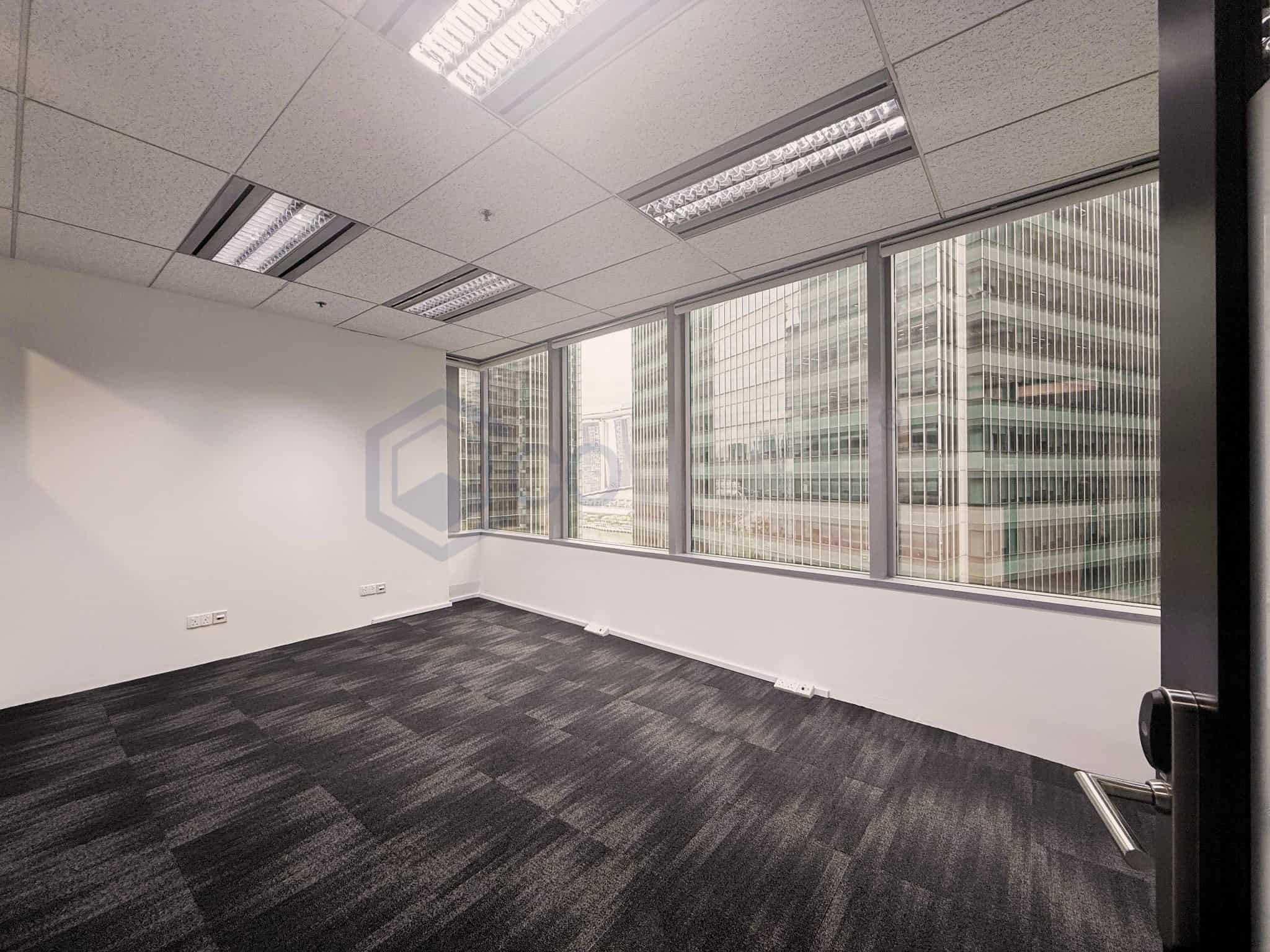
A Central Business District address can reduce friction in scheduling, signal stability, and create a better experience for visitors. In Singapore, areas around Raffles Quay and the broader Marina Bay and Raffles Place zone have a particular weight for finance, professional services, and regional leadership teams.
This is where the coworking versus serviced office distinction can blur. Many organisations use coworking for day-to-day agility, while also valuing a more premium serviced office feel for client confidence. What matters is that the space supports the tone of your work, not just the mechanics of it.
Collaboration, Culture, And Productivity In A Shared Workspace
There is a common fear that shared workspaces are either too social to be productive, or too transactional to support culture. In reality, the outcome depends on design choices and operating discipline.
Design Features That Improve Focus And Reduce Friction
Focus is not a personality trait. It is often a function of environment.
Good coworking spaces use layout, acoustics, lighting, and zoning to reduce the small frictions that erode concentration. Quiet areas exist for deep work. Phone booths absorb the conversations that would otherwise spill into open desks. Meeting rooms are bookable without turning into an internal negotiation.
When we say a space "works", we often mean that it removes unnecessary decisions. Where do we take this call. Where do we meet. Where can we sit without interruption. The answers are built into the floor plan.
Creating Team Rituals Without Managing An Entire Office
Culture is built in repeated behaviours: Monday planning, end-of-week reviews, informal coaching, a quick celebration when a milestone lands.
In a coworking environment, teams can still create those rituals, but they do so without owning every operational detail of the building. There is a subtle relief in that. Leadership can invest attention in people, not printers.
We have found that teams benefit when they treat the workspace as a platform: a reliable setting for routines, with the option to dial privacy up or down. For a fuller view of how shared environments can still feel purposeful, our article on rethinking coworking as more than shared office space explores the human side without romanticising it.
Networking Effects Without Disrupting Deep Work
Networking is often presented as the headline benefit of coworking, but executives tend to be sceptical. Understandably so. Random conversation is not a strategy.
The more realistic advantage is optional proximity. You may meet a potential partner in the pantry, or you may simply absorb market signals through small interactions. It is like being in a well-located financial district: you do not attend every event, but you value the environment's density.
The key is that networking should not become noise. Spaces that are run with maturity make it possible to participate when it is useful and withdraw when work requires silence.
If this element matters to your team, we have set out practical examples in our piece on building meaningful professional connections through coworking. The emphasis is not on forced socialising, but on the quiet compounding of relationships over time.
And there is another cultural layer that is easy to overlook: wellbeing. Long commutes, isolation, and unsuitable home setups carry a cost that shows up as fatigue. Coworking can be a pressure valve, particularly in hybrid models.
We have addressed this angle in our exploration of how coworking can support mental wellbeing, because productivity is rarely just about discipline. It is also about sustainability.
What To Check Before Choosing A Coworking Space In Singapore
Choosing a coworking space is closer to choosing an operating partner than choosing a landlord. The details matter, and they matter early.
Privacy, Security, And Noise Management
Privacy is layered.
Ask what is truly private: are there enclosed rooms for sensitive calls, and are they available when needed. How are access permissions handled. Are there visitor controls. How does the operator manage noise in shared areas.
For many small and medium-sized enterprises, the goal is appropriate discretion.
Contract Terms, Scaling Options, And Transparent Pricing
Flexible workspace should feel flexible.
Review notice periods, upgrade paths, downgrade options, and how pricing changes as headcount changes. A coworking space that looks cost-efficient at ten seats can become less so at twenty if meeting rooms, printing, or storage are priced in ways that surprise you later.
We prefer transparent structures precisely because they make internal approval easier. When procurement asks, "What is the true monthly cost?", the answer should be straightforward.
Meeting Room Availability And Guest Policies
Meeting rooms are often the first shared resource to become constrained.
Check booking rules, peak-hour availability, and whether guests can be hosted smoothly. For client-facing teams, reception handling and visitor experience are part of brand perception.
When Coworking May Not Be The Best Fit
Coworking is not a universal solution, and we are careful to say so. For some teams, the risk profile or operational requirements point clearly to a different setup.
Highly Regulated Workloads And Strict Confidentiality Needs
If your team handles highly sensitive information, or operates under strict regulatory expectations, a shared environment may introduce complexity.
We can accommodate higher privacy requirements, including private offices and stronger access controls.
Where confidentiality is absolute, a dedicated serviced office may be more appropriate.
Specialised Fit Out Requirements Or Heavy Equipment
Teams that rely on specialised infrastructure, heavy equipment, unusual power requirements, or bespoke lab-style environments will find most coworking spaces unsuitable.
In these cases, the economics change. The fit-out is part of the core business, not a distraction. Owning the environment can be rational.
Teams Needing Full Brand Control Over A Dedicated Room
Some organisations need complete control over branding, layout, and the sensory experience of their room. They want visitors to step into an environment that is unmistakably theirs.
Coworking can provide a polished setting, but it is still a shared ecosystem.
If a dedicated floor is central to your brand strategy, a traditional lease, or a fully bespoke serviced office arrangement, may serve you better.
The decision is not about choosing what is fashionable. It is about choosing what is aligned.
Conclusion
For some Singapore teams, the strongest argument for coworking is discipline.
A coworking space can turn the office into a flexible instrument: cost becomes more predictable, setup becomes faster, and the Central Business District presence remains intact without the same administrative weight.
When we evaluate workspace decisions with executive teams, we treat them as portfolio choices. Where should capital sit, where should risk sit, and where should attention sit. If the business benefits from agility, if headcount moves with demand, or if hybrid working has become part of talent strategy, coworking and serviced office models often produce a cleaner return on investment.
The next step is simply due diligence: visit a short list, test the meeting rooms, ask the uncomfortable questions about pricing and privacy, and choose the environment that supports the way your team actually operates, not the way it used to.
Frequently Asked Questions
Why might a coworking space in Singapore be better than a traditional office lease for some teams?
A coworking space in Singapore can suit teams with variable headcount, hybrid attendance, or project cycles. Instead of committing to a long lease (and absorbing fit-out delays and facilities admin), you get a ready-to-use workspace with bundled services—helping the office behave like a flexible tool rather than a fixed liability.
How does a coworking space help Singapore teams keep Central Business District credibility without overspending?
CBD rents are only part of the cost—fit-out, utilities, maintenance, and meeting rooms add up. A coworking space typically consolidates many of these into one predictable monthly fee, letting SMEs keep a credible address while reducing surprise overheads.
What hidden costs do traditional Singapore office leases create that coworking avoids?
Beyond rent, traditional leases often trigger repeated “one-off” spend: furniture, wiring, meeting room build-outs, pantry equipment, access cards, repairs, and vendor management time. Coworking shifts much of this into an operator-managed model, so leadership isn’t dragged into facilities issues and the team can focus on revenue work.
Is a coworking space in Singapore suitable for hybrid teams and talent retention?
Often, yes. Hybrid working changes office utilisation—space built for daily attendance can become a half-empty cost centre. Coworking lets teams match footprint to real attendance while still meeting in a professional environment when it matters.
What should Singapore teams check before choosing a coworking space?
Treat it like choosing an operating partner: test meeting room availability, noise zoning, and privacy options (phone booths, enclosed rooms). Review contract terms for scaling up/down and confirm transparent pricing. Also ask about network resilience, access control, and support response times to protect business continuity and client experience.
When might coworking not be the best fit for a Singapore team?
Coworking may be unsuitable for highly regulated work with strict confidentiality, teams needing specialised fit-outs or heavy equipment, or organisations requiring total brand control of a dedicated floor. In those cases, a dedicated lease or bespoke serviced office can reduce risk.



I think coworking spaces are definitely the future for many teams in Singapore. The flexibility they offer is crucial.
Interesting perspective! But I wonder if the costs really balance out in the long run compared to a traditional lease.
Flexibility is key nowadays, especially with hybrid working. It can really help with employee satisfaction too.
I’ve been considering a coworking space for my startup. Do you think it helps in networking opportunities for SMEs?
I am not entirely convinced. What if your team needs a stable office setting? Coworking might feel too casual.
I work in a project team, and we’ve seen how coworking spaces allow us to adapt based on our current needs without long-term commitments.
I hope the costs don’t keep going up! CBD is already pricey. Can you imagine coworking getting more expensive too?